Raspberry Pi has reported record first half revenue and profitability as demand from OEM and reseller customers accelerated, with unit shipments rising 17% to 4.2 million. Revenue for the six months to 30 June reached $256.9 million, up 90% year on year, while adjusted EBITDA more than doubled to $40.3 million.
The order book expanded at a similar pace. Customer backlog doubled during the half to 2.6 million units, while direct shipments excluding licensees increased 26% to 3.4 million units. Raspberry Pi said demand was broad based, with particularly strong engagement in smart home, aerospace and defence applications, and it expects second half unit volumes to exceed those recorded in the first six months.
The company has increasingly positioned its computing platforms beyond the enthusiast and education markets with which the brand is commonly associated. Industrial and embedded customers use single board computers, Compute Modules and Raspberry Pi silicon in production equipment and connected products, and the latest figures suggest OEM adoption is becoming a larger part of the volume mix. Direct sales accounted for 81% of unit shipments in the first half, compared with 75% a year earlier.
Growth has arrived during a difficult component environment. Raspberry Pi entered the year with strategic memory inventory accumulated during 2025 and has continued to diversify its supplier base as memory prices rose and availability tightened. The company says those holdings helped it maintain product availability while some smaller competitors struggled to secure allocation, although the same market conditions increased working capital requirements and prompted further strategic purchases for 2027.
Part of the revenue increase also came from price rises introduced in response to higher DRAM costs, so the 90% growth rate is not a simple proxy for shipment growth. Direct unit sales increased 26%, while component sales used in licensed single board computer production rose more sharply as memory prices increased.
Gross profit increased 79% to $59.4 million, while profit before tax rose 216% to $19.6 million. Gross margin slipped from 25% to 23%, reflecting a much larger revenue base and higher component costs even as gross profit per board improved. Net cash ended the half at $18.4 million, down from $34.3 million a year earlier, with inventory purchases and production planning absorbing cash as the company prepared for continued demand growth.
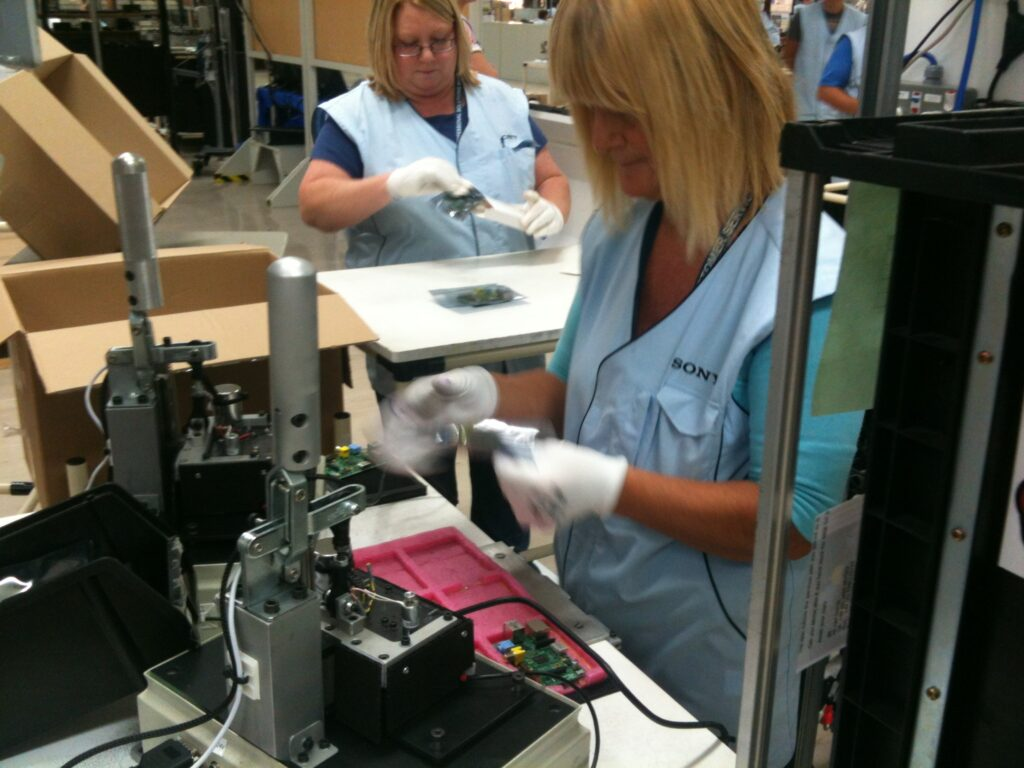
Production capacity is now being expanded with manufacturing partner Sony. Raspberry Pi increased utilisation of existing capacity during the first half and is co-investing to bring additional capacity online in the second half, a necessary step if it is to reduce the elevated backlog while maintaining supply to established customers. High volume board production, component sourcing and test processes have to scale together rather than simply increasing final assembly output.
Product development is also being directed towards higher value industrial workloads. Five new products and platforms were released in the half, including AI HAT+ 2 for Raspberry Pi 5, which extends the platform’s ability to run more demanding edge AI inference workloads. Moving more processing from cloud systems to local hardware is relevant in machine vision, monitoring and autonomous equipment where latency, connectivity, data handling and operating cost can determine whether an architecture is practical.
The company is also deepening direct relationships with larger OEMs and investing in application engineering to support longer and more demanding design cycles. Its Board-to-Board initiative has involved engagement with more than 50 senior decision makers over the past 18 months and identified 26 projects, with increasing activity around defence contractors and national military customers. Those opportunities are typically larger than Raspberry Pi’s traditional OEM engagements but require more design support and take longer to convert into production revenue.
Raspberry Pi is consequently operating more like an industrial electronics supplier as volumes increase. It is carrying strategic inventory, qualifying alternative component sources, adding production capacity, supporting OEM design programmes and balancing standard platforms against sector specific requirements. Greater scale brings more revenue opportunity but also more exposure to semiconductor cycles, customer concentration and working capital demands.
Management expects full year EBITDA to finish ahead of market consensus, although the unusually favourable unit economics achieved earlier in the year are already moderating as lower cost memory bought in 2025 is consumed. With 2.6 million units on back order and additional production capacity due online, the immediate operational test is whether supply can catch up with OEM demand without recreating the availability constraints that made strategic inventory such an advantage in the first place.