Piramal Pharma Solutions has installed a closed-loop spray-drying suite at its peptide active pharmaceutical ingredient facility in Turbhe, India, adding containment for potent peptides, highly potent APIs, and other biomolecules. The equipment is intended for small-volume, high-potency development work where solvent handling, particle properties, and product stability require close control.
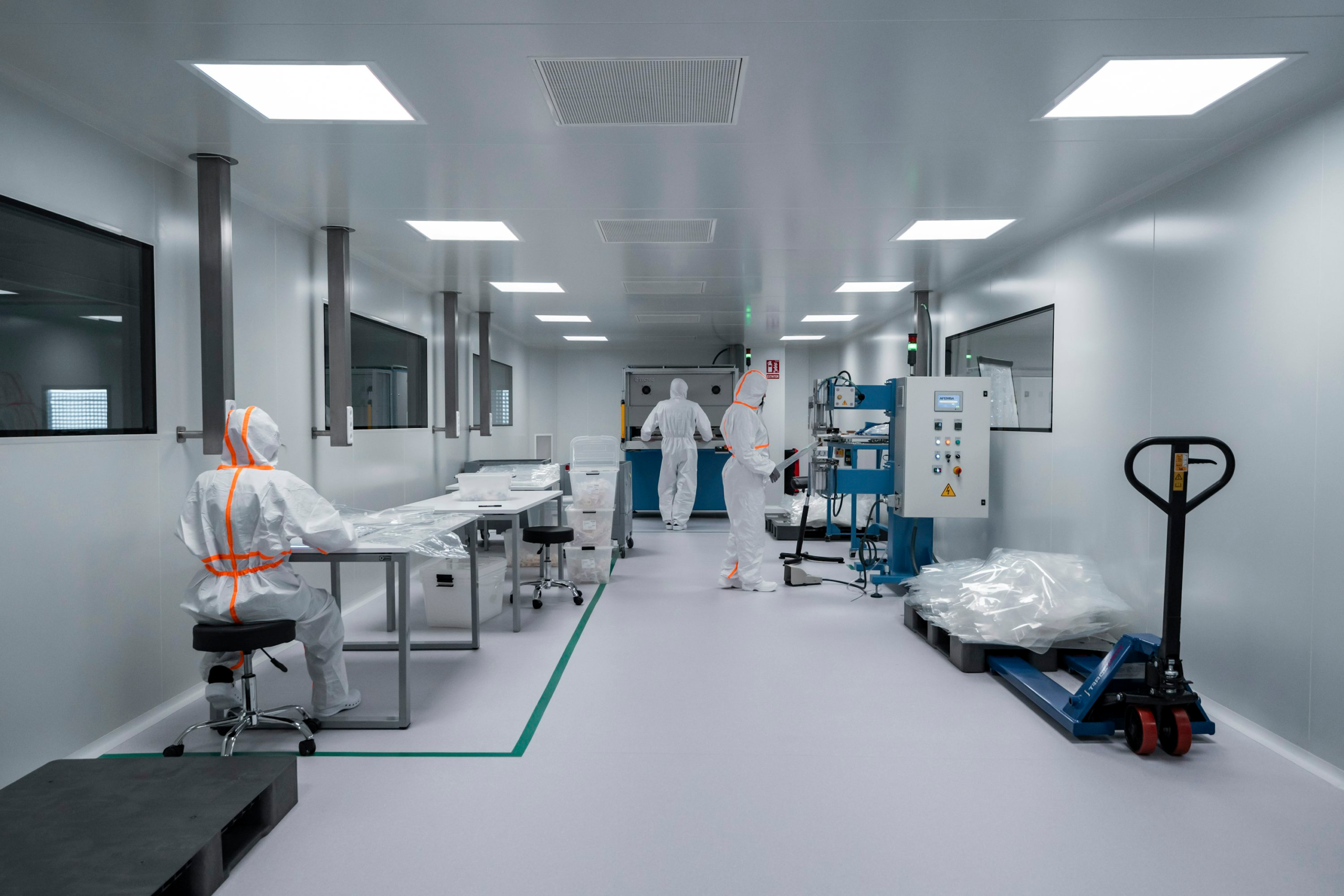
The suite has dedicated air-handling units, nitrogen supply, and control systems, together with specialised HVAC, airlocked entry and exit points, operator isolation, and a separate cleaning area. Its processing space is maintained to ISO Class 8, or Class 100,000, cleanliness standards.
Spray drying converts a liquid formulation into dry particles by atomising it into a controlled gas stream. Solvent evaporates from the droplets, leaving powder whose size, shape, density, and residual solvent can be influenced through feed concentration, atomisation, gas flow, temperature, and collection conditions.
For peptide APIs, the attraction lies in producing a controlled dry form while limiting extended exposure to heat. Peptides can be sensitive to temperature, moisture, oxidation, interfaces, and processing conditions, and their particle properties can affect solubility, stability, handling, and later formulation work.
The Turbhe unit supports a feed rate of up to one litre per hour and can process concentrated solutions containing as much as 30% water. Piramal has positioned it for large peptides and other biomolecules, while allowing for low-volume small-molecule formulations under suitable conditions.
Dr Jordi Bacardit, global technical lead on peptides and a member of the Piramal Pharma Solutions Science Collective, said: “Peptides present some of the most intricate formulation challenges in pharmaceutical development, owing to their inherent instability and sensitivity to processing conditions.”
The company said the closed-loop system allows tight control over temperature and solvent conditions while supporting potent compounds and organic solvents requiring up to Band 5 containment. That combination is central to the investment because atomisation creates fine particles and can introduce exposure, flammability, and cross-contamination risks if the process is not properly isolated.
Inert gas supply limits oxygen within the loop and supports the handling of organic solvents, while airlocks, pressure control, HVAC, and operator separation protect the surrounding processing area. Dedicated cleaning arrangements are equally important because a contained run is of limited value if residues cannot be removed and verified between campaigns.
The one-litre-per-hour feed rate places the unit firmly in development and small high-value batch work rather than bulk production. At that scale, material recovery, repeatability, and process understanding can be more important than throughput, particularly when the API is expensive or available only in limited quantities.
Piramal’s Turbhe facility already develops and manufactures peptide APIs through solid-phase and solution-phase synthesis. Its capabilities include synthetic process development, downstream processing, chromatography, filtration, reverse osmosis, impurity profiling, and freeze drying.
The site operates five independent synthetic lines for development work and has a combined production reactor volume of 4,500 litres. Piramal lists 14 production lines operating concurrently and 11 additional downstream-processing lines covering activities including HPLC purification, reverse osmosis, and filtration.
Adding spray drying extends that sequence into particle engineering. A contract development and manufacturing organisation that can synthesise, purify, dry, and characterise an API within one network can reduce transfers between suppliers, but it also assumes responsibility for maintaining one traceable process history across several complex unit operations.
Scale-up will require more than increasing the feed rate. Droplet residence time, heat and mass transfer, wall deposition, powder collection, solvent recovery, and cleaning behaviour can change with equipment geometry, so development data must define a process space that can be transferred to a larger validated unit or retained as an appropriate low-volume commercial route.
The Turbhe facility is accredited by the US Food and Drug Administration, the European Directorate for the Quality of Medicines, Italy’s AIFA, and South Korea’s KFDA. Those approvals establish the site’s wider quality environment, although individual products and the new process still require their own development, validation, and regulatory support.
Analytical work must accompany that process development. Particle-size distribution, residual solvent, moisture, potency, impurity profile, and physical form can all influence whether a spray-dried batch is suitable for the next manufacturing step. The value of the dryer therefore depends on the site’s ability to connect operating parameters with reproducible material attributes.
The new suite is modest in volumetric terms but technically dense, combining containment, solvent control, environmental classification, and particle engineering in one operation. Pharmaceutical capacity is often described by litres and kilograms; with potent peptides, the more useful measure is whether a small amount can be processed safely, repeatedly, and without losing the properties that made it valuable.