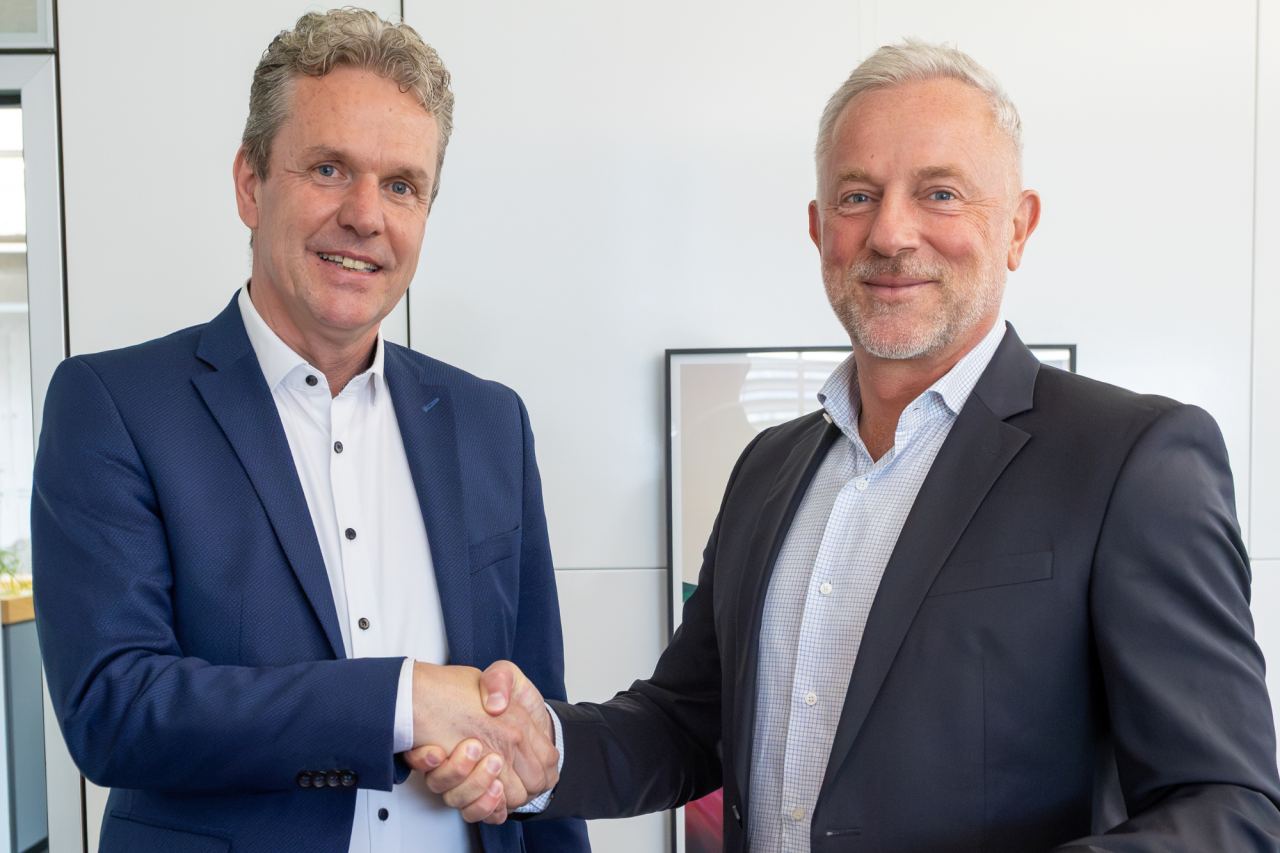
Bystronic has agreed to acquire Swiss automation specialist Isochronic, adding high-speed robotic sorting and proprietary software to its sheet-metal production portfolio as fabricators pursue more continuous automated workflows.
Bystronic says Isochronic will continue to operate under its own name after the acquisition. The transaction gives Bystronic rights to the company’s proprietary software and technology for further development and integration across its automation portfolio.
Founded in 2020 near Lausanne, Isochronic develops robotic systems capable of simultaneous pick-and-place movements for automated material handling and sorting. Its approach combines purpose-developed robotic kinematics with software that coordinates multiple movements at high speed.
Bystronic is particularly interested in heavy-duty sorting after laser cutting, where increasingly fast cutting machines can shift the production bottleneck into unloading and component separation once the laser has finished its work.
A modern fibre laser can process nested sheets quickly, but the completed parts still have to be removed from the sheet skeleton, identified, separated, stacked, and routed towards bending, welding, assembly, coating, or dispatch.
Automated loading and unloading solve only part of that problem. A system may move an entire processed sheet away from the laser without sorting each component into the sequence required by the next operation, leaving staff to perform manual separation after an expensive machine has already completed the cutting cycle.
That interruption becomes more visible as cutting speed increases. Improving one process in isolation can simply move work-in-progress into another part of the factory, reducing the overall productivity gain that justified the machine investment.
Automated sorting is intended to prevent that queue from forming. Robots identify cut components, remove them from the remaining material, and place them according to job, geometry, material, customer order, or downstream destination.
The task becomes more difficult in high-mix production, where contract manufacturers may process sheets containing numerous shapes in small quantities. A repetitive component can be automated around fixed routines; constantly changing nests require software capable of translating production data into reliable physical movements without demanding excessive programming from the operator.
Thin sheet introduces its own difficulties because parts can flex, overlap, or move slightly after cutting. Small components may be awkward to grip, while larger items demand more lifting capacity and create a greater collision envelope around adjacent parts and the remaining sheet skeleton.
Isochronic’s simultaneous-motion approach is intended to increase throughput by allowing several handling movements to occur together rather than forcing an automation cell through a purely sequential pick, move, place, and return cycle.
Bystronic says the technology can address a wide range of sheet formats while bringing additional robotics expertise and modern software architecture into the group. The two companies already have a long-standing relationship, giving the acquisition a period of prior technical familiarity rather than beginning integration between strangers.
The transaction fits Bystronic’s wider transition from individual machine sales towards complete manufacturing systems. Its portfolio already covers fibre-laser cutting, bending, tube processing, loading and unloading automation, software, service, and Smart Factory configurations.
The commercial logic becomes clearer as individual machine processes improve. A faster laser has diminishing value if material storage cannot feed it, parts cannot be removed quickly enough, or bending and welding operations are unable to absorb the additional output.
Whole-factory automation attempts to link those stages rather than optimising each machine independently. Production software increasingly connects quoting, nesting, scheduling, machine utilisation, material availability, job status, and downstream workflow, while robotic systems provide the physical movement needed to turn that digital plan into actual factory flow.
Labour availability adds another incentive. Repetitive component handling, overnight operation, and weekend shifts are difficult areas in which to retain experienced staff, particularly in mature manufacturing markets with shortages of skilled operators.
Automation does not make production labour disappear. It shifts demand towards programming, maintenance, process engineering, exception handling, quality control, and integration, while removing some of the repetitive lifting and sorting work between manufacturing stages.
That makes reliability especially important. A manual operator can often compensate for a slightly displaced component or an unusual nest in seconds; an automated cell has to recognise the problem, adapt safely, or stop without damaging equipment or disrupting the remainder of the job.
Software and sensing are therefore as important as maximum robot speed. The sorting system needs to reconcile the digital nest with the physical sheet while coordinating gripping, motion, collision avoidance, placement, and production data.
Bystronic’s industrial scale gives Isochronic a route into a much larger manufacturing customer base. Isochronic, in return, adds another specialist technology to the chain Bystronic wants to integrate between raw sheet and finished component.
The acquisition does not make fully autonomous sheet-metal production straightforward. Different materials, geometries, downstream machines, legacy layouts, and customer software environments will still make integration highly site-specific.
Its practical test will therefore come after the transaction closes, when Isochronic’s robotic sorting has to communicate reliably with Bystronic cutting machines, software, material stores, and downstream processes across real customer factories.
High-speed demonstrations establish what the mechanism can do under controlled conditions. Industrial automation earns its value by doing the same job through changing materials, nests, shifts, and production priorities without becoming the next bottleneck in the line.