PharmaLogic Holdings has agreed to acquire the contract development and manufacturing business and radiopharmaceutical production facility operated by Lantheus in Springfield, New Jersey, extending its planned therapeutic manufacturing presence in the United States.
The definitive agreement includes a long-term arrangement under which PharmaLogic’s Agilera business will manufacture lutetium Lu 177 dotatate for Lantheus. Financial terms have not been disclosed, and completion remains subject to regulatory review and customary closing conditions.
PharmaLogic and Lantheus will continue to operate independently until the transaction closes. The Springfield workforce is expected to join Agilera at that point, but no closing date, employee transfer schedule or detailed integration programme has been announced.
The Springfield operation has existing experience in radiopharmaceutical manufacturing, research and clinical development. Its acquisition would add US therapeutic production infrastructure to Agilera’s operations, which already support development and commercial supply of radioligand medicines.
PharmaLogic operates a network of more than 45 facilities across the United States, Puerto Rico, Canada and Norway. Its activities include the development, manufacture and distribution of radiopharmaceuticals for diagnostic imaging and therapeutic applications.
Agilera has more than 15 years of experience supporting radioligand therapies and currently supplies an alpha-emitting therapeutic product to more than 30 countries. PharmaLogic describes the proposed combination as a transatlantic contract manufacturing platform for radioligand treatment, although that position depends on the Springfield transaction being completed.
Radiopharmaceutical manufacturing combines pharmaceutical quality requirements with the handling of radioactive materials. A medicine may contain a radionuclide attached to a molecule that carries it to a selected tissue or biological target, with the properties of both components influencing the finished product.
Diagnostic radiopharmaceuticals are used with imaging technologies to generate information about biological activity. Therapeutic radiopharmaceuticals instead use radioactive emissions to deliver treatment, making radionuclide selection and the distribution of radioactive activity central to product development.
In radioligand therapy, the targeting molecule is designed to bind to a selected biological structure, while the radioactive isotope delivers ionising radiation near the target. The formulation, radioactivity, chemical purity and behaviour of the compound must all be controlled through development and manufacturing.
The new supply agreement concerns lutetium Lu 177 dotatate, a treatment that targets somatostatin receptors and is used for certain neuroendocrine tumours. Lantheus received final US Food and Drug Administration approval in November for its BRAVNETSA lutetium Lu 177 dotatate product.
Lutetium-177 is a beta-emitting radionuclide with a physical half-life of approximately 6.65 days. Its activity decreases through radioactive decay, so the quantity of usable radioactivity changes between manufacture, quality control, shipment and the point at which the product is administered.
That decay imposes a production and logistics constraint absent from many conventional medicines. Manufacturing schedules must account for the reference activity of the dose, the time needed to complete release testing and the transport arrangements required to deliver the medicine within its authorised specifications.
Preparation of a radiolabelled medicine may involve receiving the radionuclide, combining it with the targeting compound, carrying out purification and formulation steps, and producing a sterile final presentation. The exact route depends on the product and the process validated for its manufacture.
Quality controls may assess radiochemical purity, radionuclidic identity, radioactivity, chemical impurities and the conditions needed for sterile pharmaceutical supply. The requirements must be established for each approved product rather than assumed to be identical for all radiopharmaceuticals.
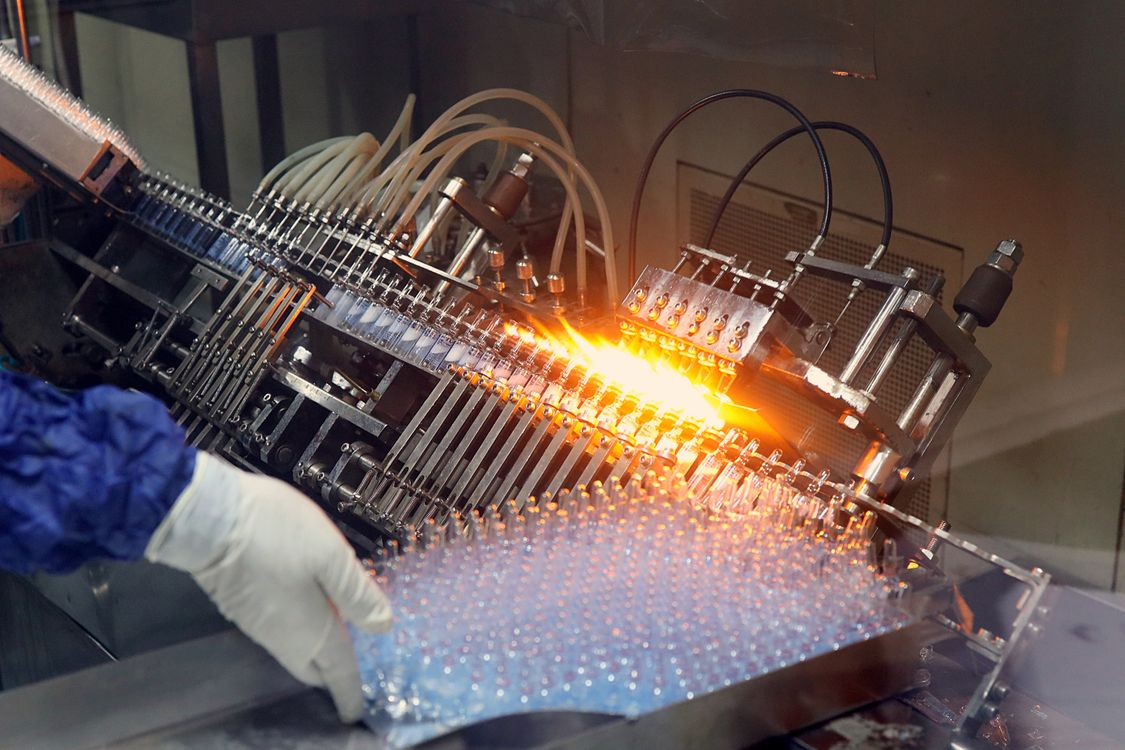
Production facilities also need shielding, containment and procedures appropriate to the radiation emitted and activity handled. Where feasible, automated transfer and dispensing equipment can limit direct handling, while monitoring and approved operating arrangements protect staff and maintain product quality.
The Springfield site already has relevant manufacturing capabilities, but its transfer into another company does not independently establish that new products or greater output can be introduced immediately. Changes to production or ownership arrangements may require contractual, technical and regulatory work.
A pharmaceutical manufacturing transfer can involve the qualification of equipment, comparison of analytical methods, validation of the process and updates to the documents controlling production. Customers and regulators may require evidence that material produced under revised arrangements continues to meet the authorised specification.
The conditions can be particularly demanding for radioisotopes because the available time for manufacturing and release is constrained by decay. Scheduling problems or failed quality checks may reduce the usable activity remaining, even where the manufacturing equipment itself is capable of meeting the process requirements.
The proposed acquisition would combine Springfield’s facility and staff with Agilera’s established operations. It could offer customers another location for therapeutic manufacturing and a coordinated route between development and commercial supply, but the company has not specified new filling lines, activity capacity or guaranteed additional doses from the transaction.
Lantheus says it has an existing manufacturing relationship with PharmaLogic for positron emission tomography products. The new supply agreement would extend that cooperation into the lutetium Lu 177 dotatate treatment programme, subject to the commercial and regulatory conditions governing the proposed acquisition.
Lantheus’ newly approved BRAVNETSA product provides a defined therapeutic application for the future supply arrangement. Regulatory approval of the medicine should nevertheless be distinguished from completion of the manufacturing business sale, and the companies have not disclosed future contracted output volumes.
The Springfield workforce will move to Agilera if the deal completes. Until then, the companies remain separate and the existing operation continues under its current ownership and applicable manufacturing authorisations.
The next confirmed step is regulatory review of the proposed transaction. The purchase price, expected completion date, capacity additions and implementation timetable remain undisclosed; those details will determine when the Springfield facility can begin contributing under PharmaLogic ownership.