Simtra BioPharma Solutions has opened Building H at its manufacturing campus in Bloomington, Indiana, establishing a new facility for sterile injectable medicines within an expansion programme valued at more than $250 million. The building adds space for high-speed syringe filling, vial production and freeze-drying equipment.
The 153,000-square-foot development was formally opened on 9 November, with company executives, local officials and Indiana Governor Mike Braun attending the ceremony. Simtra says the investment will increase its capacity to support pharmaceutical and biotechnology customers through clinical and commercial production.
Building H is part of the company’s existing Bloomington main campus rather than its separate Park Campus project. Its two-storey layout includes approximately 28,000 square feet of classified manufacturing space, alongside accommodation for the equipment, laboratories and supporting functions required by sterile production.
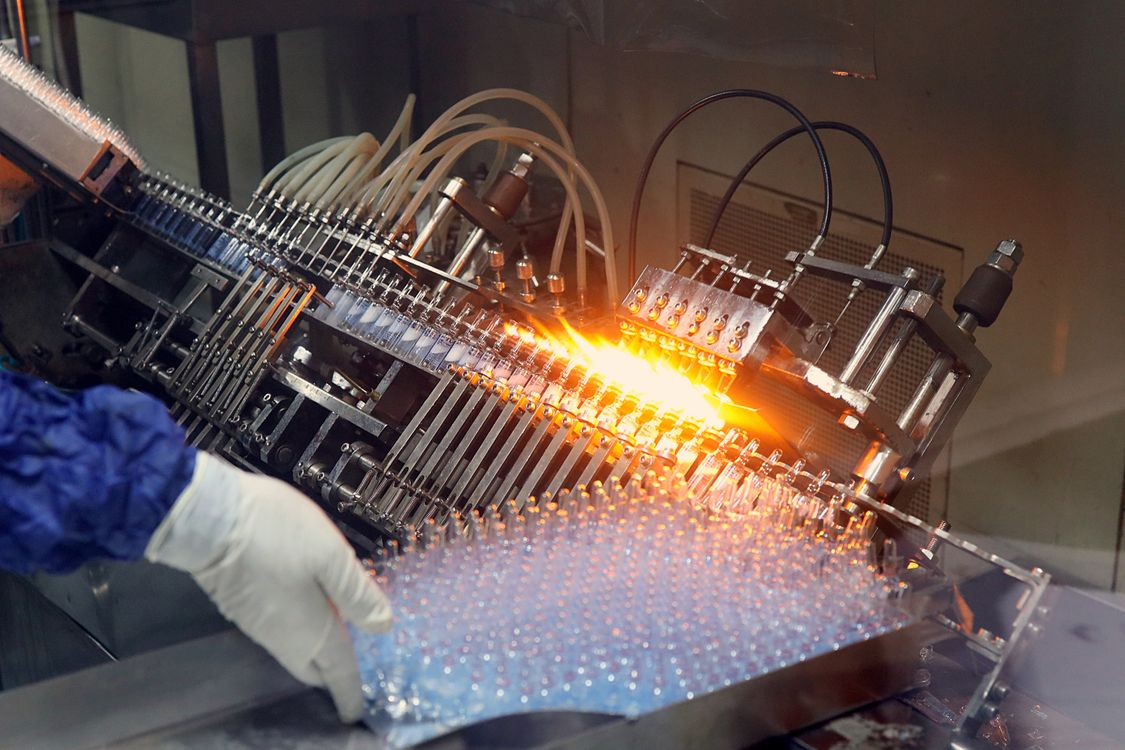
The main campus expansion has been designed around two Bausch + Ströbel prefilled syringe lines using SKAN isolators, together with an IMA vial filling line and three LYOMAX 30 freeze dryers. The equipment is being introduced in phases rather than becoming fully operational on the day the building opens.
Simtra’s published schedule identifies the syringe lines as available during 2026 and places the vial line and associated lyophilisers in 2027. The opening ceremony therefore confirms the completion of a facility milestone, not the commissioning and commercial qualification of all three filling lines.
Sterile injectable manufacturing places demanding requirements on contamination control because finished medicines enter the body through routes that bypass several natural protective barriers. The manufacturing environment, equipment and handling methods must reduce the risk of microbial or particulate contamination throughout preparation and filling.
Aseptic filling involves moving a prepared formulation into containers under controlled conditions, then closing those containers while protecting the product from contamination. The manufacturing process must be qualified and monitored, and the finished product must meet its approved quality specification.
An isolator establishes a physical barrier around critical operations, reducing direct contact between the processing area and personnel. Transfers of components and materials must be managed through arrangements that preserve the required conditions within the enclosure.
The equipment can support automated container handling and filling while limiting manual interventions at the most sensitive stages. Isolators nevertheless depend on validated decontamination, monitoring and maintenance procedures; their presence does not eliminate contamination risks or remove the need for process qualification.
Prefilled syringe production introduces additional requirements because the medicine is supplied in a container that may also form part of its administration system. Fill volume, container closure integrity, compatibility with the formulation and inspection of the assembled product all contribute to the manufacturing specification.
The two syringe lines planned for Building H will extend Simtra’s capabilities at an established site that already provides sterile formulation, filling, finishing and development services. Their actual commercial output will depend on the products manufactured, cycle times, changeovers, qualification status and acceptable production yield.
The vial line will accommodate another container format. Some injectable medicines are supplied in solution, while others require lyophilisation to produce a dry formulation suitable for storage and subsequent reconstitution.
Lyophilisation removes water from a frozen product under reduced pressure. During primary drying, ice is removed through sublimation; later drying stages reduce remaining moisture according to the formulation’s requirements. Shelf temperature, chamber pressure and the duration of individual phases must be controlled.
A freeze-drying programme can take much longer than the initial filling operation. Three lyophilisers therefore provide additional downstream capacity, but the number of batches completed depends on individual cycle times, loading conditions and the products processed rather than on the nominal filling speed alone.
Coordinating filling with freeze-drying is central to the design of a sterile injectable plant. Production scheduling must account for equipment availability and approved hold times, while transfers between process steps must remain consistent with the qualified manufacturing sequence.
Simtra says its global production network is expected to expand from 11 filling lines to 18 by 2027. That target covers investment at multiple locations and must not be interpreted as the number of operating lines within Building H.
The wider programme includes more than $125 million of investment in Halle/Westfalen, Germany, where Simtra has expanded injectable manufacturing capability. The European site and the Bloomington operations provide manufacturing options for different customer requirements, subject to product-specific approvals.
A second Bloomington investment concerns the Park Campus, a nearby 65-acre property with more than 300,000 square feet of available building space. Simtra has outlined an initial investment exceeding $150 million there, with plans for additional capacity focused partly on highly potent sterile injectables.
Highly potent products can require specialised containment to protect staff and prevent cross-contamination. Those requirements must be addressed alongside the measures used to protect the medicine from contamination, making the design of production suites and material flows particularly important.
The company has described the new capacity as a response to sustained demand from customers planning manufacturing programmes years in advance. It expects the Bloomington expansion to support hundreds of jobs, although the announcement does not establish a complete timetable for filling each newly created position.
Commercial manufacturing cannot begin solely on the basis of completed construction. Equipment qualification, aseptic process simulation, environmental monitoring, product validation and relevant regulatory requirements must be satisfied before new lines are used for applicable production programmes.
Simtra’s next milestones are therefore the qualification and utilisation of the filling equipment at Building H and progress on the separate Park Campus project. The newly opened building provides the physical infrastructure, while the company continues to bring the remaining planned capacity into service.