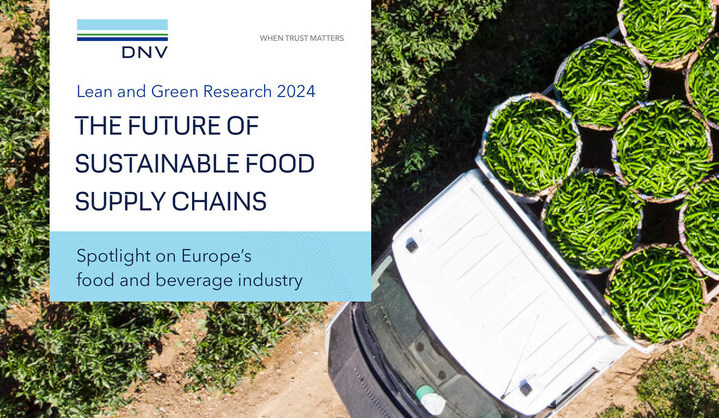

The food and beverage sector has to transform its supply chains to meet sustainability demands amid global challenges like climate change, regulatory shifts, and evolving consumer expectations.
This is the view of DNV, an independent assurance and risk management provider, whose report ‘The Future of Sustainable Food Supply Chains: Spotlight on Europe’s Food and Beverage Industry’ reveals that sustainability has become the number one supply chain priority for food and beverage companies, with 75% ranking it among their top three goals, ahead of cost efficiency (63%) and regulatory compliance (49%).
To succeed, companies must adopt a holistic approach that integrates visibility, digital transformation, and compliance with emerging regulations.
With food systems accounting for a third of global carbon emissions, the report identifies critical areas where the industry must focus to balance environmental responsibility, cost-efficiency, and compliance with increasingly stringent regulations.
The report’s key findings on critical challenges facing food and beverage supply chains include:
- Digital transformation as a catalyst: the adoption of digital tools such as supply chain traceability, connected product passport as well as supply chain risk management platforms is gaining momentum, but the sector lags behind others in integrating key technologies. A focus on verifiable and trusted data, as well as ease of use across all supply chain actors is essential to enable transparency and cost-effective compliance.
- Evolving regulatory landscape: new EU directives, including the Corporate Sustainability Due Diligence Directive and the Packaging Waste Directive, are driving companies to address sustainability comprehensively, from carbon footprints to human rights concerns.
- Consumer and retailer influence: today’s informed consumers demand sustainable and transparent food production practices and are willing to pay a premium for products aligned with their values. Retailers, especially those with private labels, are pushing for deeper collaboration with suppliers to meet these expectations.
“The food and beverage industry faces an era of significant transformation as sustainability within the entire supply chain becomes an urgent priority. Global disruptions, including the Covid-19 pandemic, geopolitical tensions, and the growing impact of climate change, have intensified existing challenges while introducing new complexities to the industry’s supply chains,” said Geir Fuglerud, CEO – supply chain & product assurance at DNV. “This report is a blueprint for companies to address the challenges ahead, leveraging digital innovation to balance cost-efficiency and environmental responsibility.”
While digital transformation is crucial for creating lean and green supply chains, the report’s findings highlight that it must be coupled with robust methodologies for data collection and verification. Technologies like AI offer immense potential to enhance visibility and traceability, but fragmented standards and siloed data systems remain key barriers.
As climate change accelerates and global populations grow, the food and beverage sector must embrace a holistic, technology-driven approach to sustainability. Collaboration across the supply chain, bolstered by strategic partnerships and adherence to rigorous standards, will be essential in shaping a more sustainable and efficient future.
For the full report, please visit: https://www.dnv.com/about/supplychain/the-future-of-sustainable-food-supply-chains-spotlight-on-europes-food-and-beverage-industry/