As temperatures rise, Tom Armenante, director at GTSE urges businesses to get summer-ready with simple, low-cost steps to keep workplaces cool, safe and compliant.
UK businesses are being urged to get summer-ready with simple, low-cost steps to keep workplaces cool, safe and compliant during the warmer months.
From improving ventilation and updating signage to reviewing PPE and managing cables to prevent overheating, small changes can make a measurable difference. According to Tom Armenante, Director at GTSE.co.uk, many organisations are still underestimating the operational and safety risks that come with sustained periods of heat.
The Met Office reported that the number of days with temperatures above 30oC has more than tripled in the most recent decade. That’s compared with the average across 1961-1990. Higher temperatures can negatively impact employee wellbeing and productivity, with studies demonstrating reduced productivity on days with temperature reaching 28 degrees and above. This is particularly important to factor in for those working in physically demanding roles or enclosed work environments. Fatigue and dehydration can increase the likelihood of accidents, while overheating equipment can create additional safety concerns.
Without preparation, businesses may also face operational disruption, caused by things like reduced output and staff absences. In more serious cases, failure to manage workplace temperatures appropriately can lead to reputational damage and potential legal consequences.
6 Low-Cost ways to reduce summer workplace risks
Commenting on why summer risks are often overlooked, Tom Armenante, director at GTSE said, “Heat is often overlooked compared to winter hazards, but it can present just as many risks in the workplace. Small oversights, like poor airflow, unsuitable equipment, or a lack of hydration and breaks for staff, can quickly escalate into bigger and more costly problems. On a more positive note, preparation doesn’t need to involve significant spending. In many cases, straightforward adjustments and thorough assessments can go a long way in reducing risk.”
1. Improve ventilation and airflow
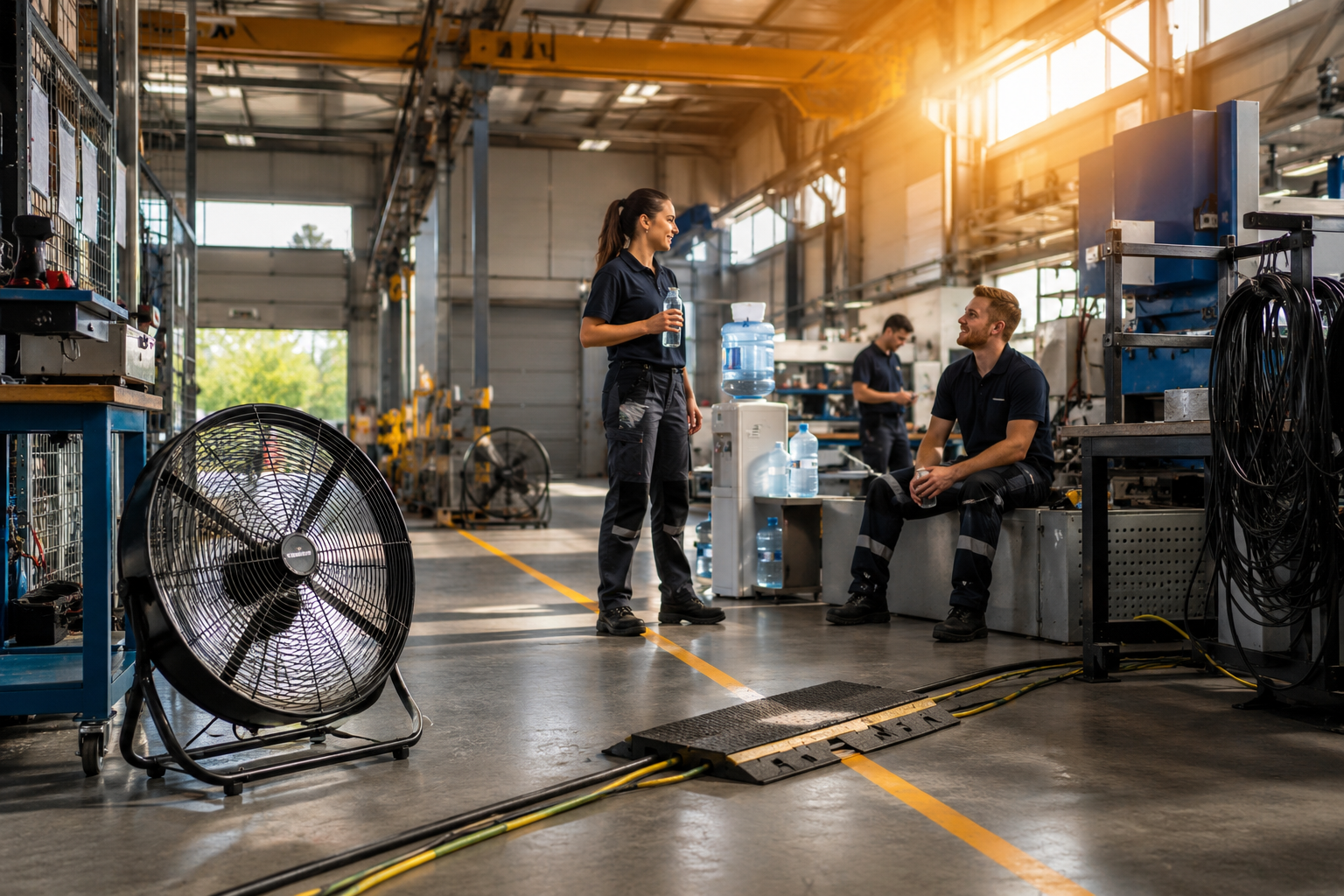
Even minor airflow improvements can make enclosed spaces more manageable. Simple measures such as opening windows at cooler times of day or using fans correctly can help reduce heat build-up. If outside is cooler than inside, then placing a fan near the window can help suck cooler air into the room and push warm air out.
Desk fans could also be provided for those who are specifically struggling with the heat, however, they won’t create a breeze through the room. One benefit is that any loose papers won’t be blown around though.
Air conditioning is far more effective at keeping workplaces comfortable during summer, as it actively cools the air rather than simply circulating warner around a room. It helps create safer and more comfortable conditions during periods of hot weather for staff, making it worth the initial investment and maintenance.
2. Update safety signage
Clear reminders around hydration, heat awareness and taking breaks can reinforce safe behaviours and help prevent heat-related illness in the workplace. Signage acts as a visual prompt for employees to look after themselves and recognise the signs of overheating during high temperatures. This is particularly important in environments like warehouses, construction sites and manufacturing facilities, where physically demanding work and limited airflow can quickly increase risk.
3. Review PPE requirements
Before periods of hot weather arrive, employers should review PPE requirements to ensure workers remain protected without being placed under unnecessary heat strain. Where possible, consider lighter, moisture-wicking or more breathable PPE options that still meet all relevant safety standards and compliance requirements.
Heavy or restrictive protective clothing can trap heat and make physically demanding tasks even more challenging during summer months. Regularly assessing PPE policies ahead of seasonal temperature changes can help businesses get the right balance between safety, comfort and productivity.
4. Manage cables and equipment
High temperatures can increase the risk of overheating equipment, particularly in workplaces where machinery and electrical systems run continuously throughout the day. Keeping cables organised, avoiding clutter and ensuring equipment has adequate ventilation can help reduce fire risks and trip hazards, whilst regular inspections help businesses remain BS compliant.
During warmer weather, things like tower fans can also create additional hazards if trailing wires are left across walkways or too many devices are plugged into an extension lead. Ensuring fans are positioned safely, cables are secured and sockets are not overloaded will help maintain employee safety and regulatory compliance.
5. Adjust working patterns
Moving physically demanding tasks to cooler parts of the day, such as early mornings or later afternoons, can help reduce the impact of high temperatures on employees. Introducing more frequent rest breaks, rotating the most strenuous duties and allowing staff time to cool down and rehydrate can significantly lower the risk of heat exhaustion and fatigue.
6. Provide hydration and cooling measures
Providing access to drinking water and shaded rest areas can make a noticeable difference for workers, particularly for outdoor or physically intensive roles.
In offices, this could include installing additional water dispensers, providing reusable water bottles or offering chilled drinks during particularly hot weather. For warehouses, factories and construction sites, employers may need to place hydration stations closer to active work areas so employees can access water quickly without disrupting tasks. For outdoor or physically demanding roles, supplying insulated water containers, electrolyte drinks or portable coolers can help workers stay hydrated for longer periods in the heat.
Providing covered seating areas, canopies, temporary shelters or air-conditioned rest spaces gives employees somewhere to cool down away from direct sunlight and heat.
Are some industries more at risk than others?
Certain sectors are more exposed to heat-related challenges than others. Construction and outdoor trades face direct sun exposure, while warehouse and logistics environments can trap heat and limit airflow. Manufacturing sites often involve heat-generating machinery, and hospitality kitchens can reach particularly high temperatures during service.
In these settings, the combination of physical exertion, equipment and environmental conditions can significantly increase the risk of heat stress if not properly managed.
Preparing for warmer weather doesn’t require significant investment, but it does require planning. Small, practical changes can help businesses protect employees, maintain productivity and reduce the risk of costly disruption or liability.
With temperatures expected to fluctuate more frequently, taking a proactive approach now can help avoid larger issues later in the season. For further information on how to reduce workplace risk, visit the GTSE blog.