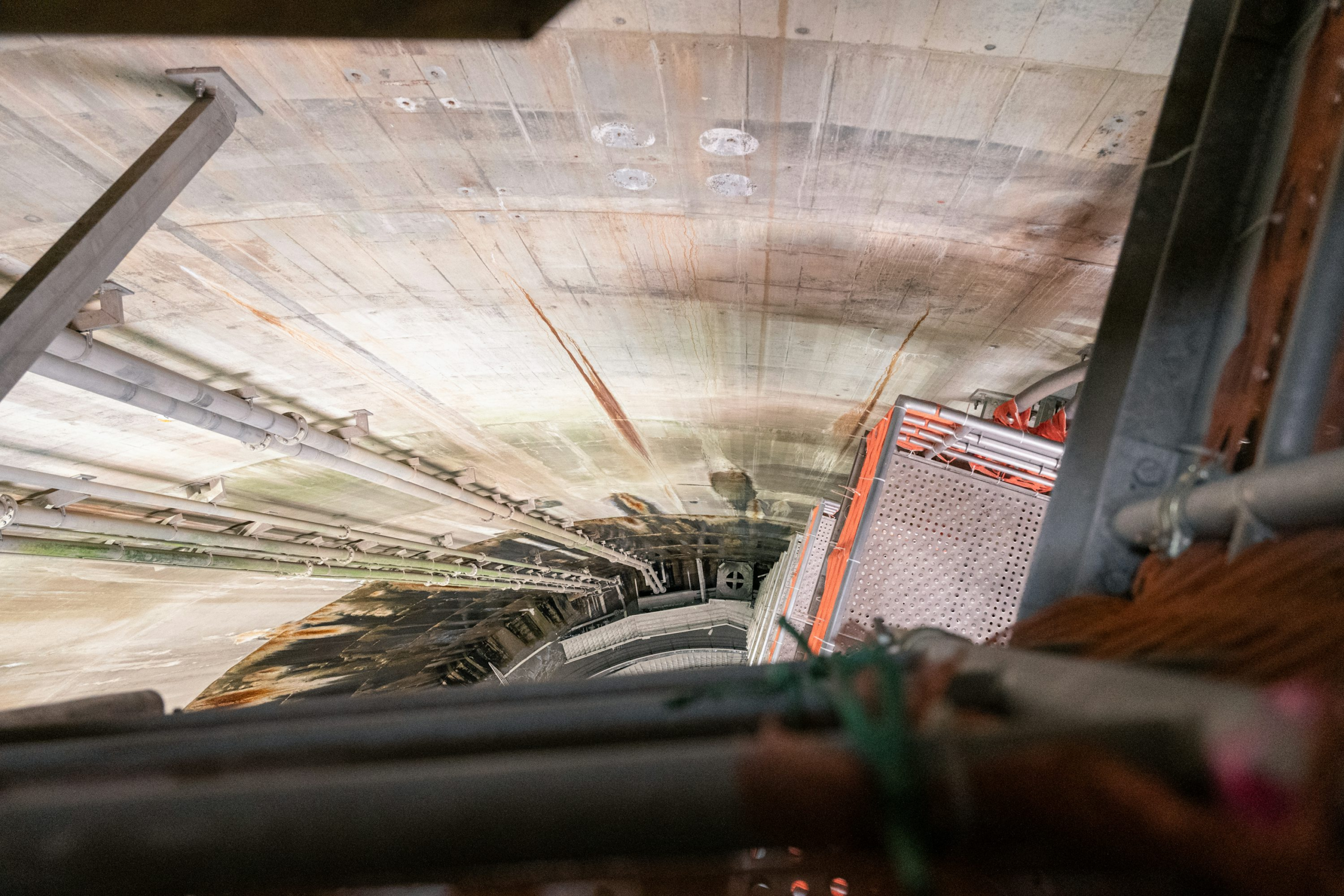
Barhale is preparing to reline part of the Southern Inlet abstraction tunnel at Ashford Common Water Treatment Works in Surrey after inspections identified defects in the existing glass-reinforced plastic lining.
The Thames Water contract follows mandatory five-year inspections carried out by Barhale’s Tunnels & Aqueducts team. Those inspections found inconsistencies in the GRP liner that could damage the wedgeblock tunnel behind it, leading to a full relining intervention across the affected section rather than another local repair.
Ashford Common is supplied from reservoirs within the West London Abstraction system, which uses a network of tunnels and large mains to move raw water towards treatment works serving the capital. Work inside one tunnel has to be coordinated with the continued operation of the wider abstraction system, limiting the amount of flow that can be removed from service while construction proceeds.
The contract was developed through an Early Contractor Involvement phase between Barhale and Thames Water. The underground layout is congested and layered, making access a major part of the construction method. Work is due to begin with excavation to around three metres to expose the chimney and riser used to reach the tunnel.
Segments of the riser will then be demolished to allow controlled access to the tunnel invert approximately 19.5 metres below ground. Scaffolding will be installed from that level along the work area, after which the existing GRP liner can be removed and the underlying grout and concrete broken out.
Barhale will construct a new reinforced-concrete lining to restore the structural integrity of the affected section. The sequence combines demolition, confined-space access, temporary works, materials handling, concrete construction, ventilation, lighting, communications, and emergency arrangements inside infrastructure that cannot simply be isolated without considering the effect on London’s wider raw-water supply.
Florin Edu, regional manager at Barhale, said: “The works will ensure the resilience and reliability of this strategic asset for the long term.” He said the construction approach had been shaped with Thames Water during the ECI phase and would be managed to maintain a minimum flow from the other West London Abstraction reservoirs into the treatment works.
Maintaining that inflow protects treatment continuity and prevents deterioration of treatment beds while the tunnel work is under way. The operating constraint changes the project from a straightforward lining replacement into a live-network intervention in which temporary works, construction access, and hydraulic planning have to remain aligned throughout the programme.
The physical access route also governs site logistics. Personnel, reinforcement, concrete, tools, demolition spoil, ventilation equipment, pumps, lighting, and emergency systems all have to pass through restricted underground spaces before reaching the workface. Every movement takes longer than it would on an open construction site, while material storage and escape routes cannot be allowed to obstruct each other.
Barhale has previous experience at Ashford Common, having completed a local repair in the Northern tunnel after earlier inspections identified defects. Full relining of that section has been earmarked for a later project, creating a broader renewal programme around ageing underground assets rather than a single isolated repair.
The contract also sits alongside a wider AMP8 tunnel inspection and maintenance workload for Thames Water. Statutory inspections across strategic tunnels and aqueducts are intended to identify lining defects, water ingress, structural movement, and other deterioration before service is affected. The engineering burden begins after the inspection, when a repair method has to be designed around the original construction, present condition, access limitations, and operational restrictions.
Large raw-water tunnels rarely attract the visibility of reservoirs, pumping stations, or treatment works, but their condition controls whether stored water can reach the process assets that make it potable. A relatively localised lining defect can therefore create a resilience risk well beyond the immediate tunnel if deterioration restricts flow or forces an unplanned outage.
The Ashford Common work will replace the defective GRP arrangement with reinforced concrete, trading a lighter lining system for a more substantial structural intervention. The new lining has to restore integrity without introducing unacceptable changes in hydraulic performance or creating interfaces that become future maintenance problems.
Barhale has not disclosed the contract value or final completion date. The published construction method is already unusually specific: excavate to the access chimney, demolish part of the riser, descend to a tunnel almost 20 metres below ground, remove the GRP and underlying material, rebuild the section in reinforced concrete, and maintain enough inflow through the rest of the abstraction system to keep treatment operating.
The award was first publicised in early July rather than on 19 August, when it resurfaced in trade coverage. Its continuing relevance lies in the engineering intervention now being prepared at Ashford Common, where underground access and water-supply continuity will dictate the programme as much as the permanent lining itself.