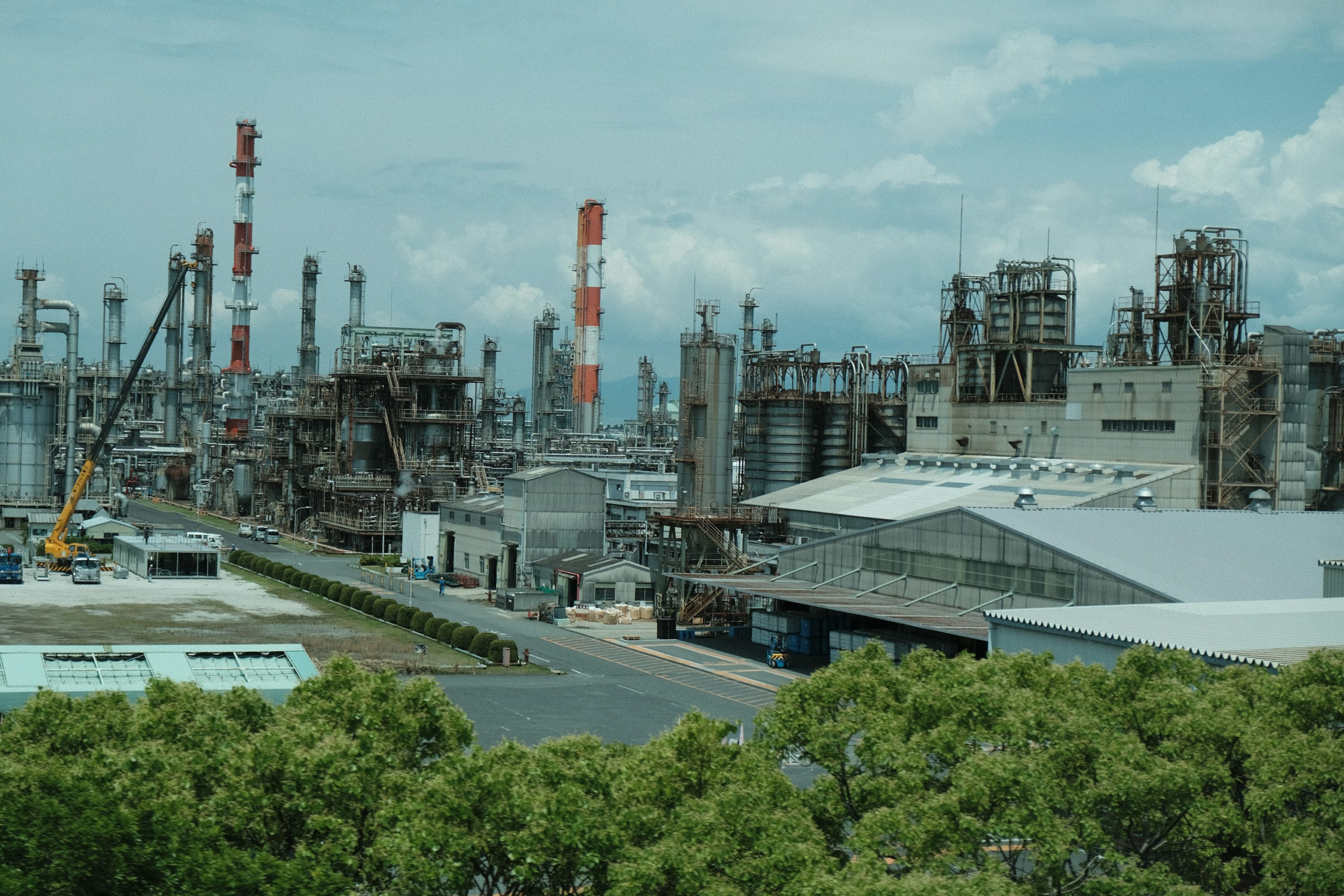
Avantium has commissioned the oxidation section of its FDCA Flagship Plant in Delfzijl, moving the first-of-a-kind facility closer to producing commercial-scale batches of furandicarboxylic acid after a prolonged and technically difficult start-up programme.
The oxidation stage follows earlier commissioning of the site’s utility systems and sugar-dehydration section. Work is now focused on completing the purification section before the individual units are operated as an integrated process, with Avantium targeting first FDCA production during the remainder of 2026.
The plant is designed to manufacture up to 5,000 tonnes of FDCA annually. FDCA is the principal building block used in polyethylene furanoate, or PEF, which Avantium markets under its releaf brand for applications including bottles, packaging, films, fibres, and textiles.
Delfzijl matters because it moves Avantium’s YXY process beyond pilot operation and into a factory intended to provide commercial material and industrial operating data. A 5,000-tonne facility remains small compared with conventional polymer-feedstock plants, but it is sufficiently large to expose process reliability, product consistency, maintenance requirements, yield, and customer qualification to conditions that cannot be reproduced completely at pilot scale.
The transition has taken longer than planned. Commissioning exposed construction-related quality problems involving titanium welds in piping around the oxidation and purification sections. Avantium subsequently carried out additional inspections and remediation, with the work adding around €7 million to project capital expenditure before the company reported completion of the repair programme in April.
That history gives the oxidation milestone more weight than the start-up of another isolated machine. Chemical plants rarely progress directly from mechanical completion to stable output. Utilities, feed preparation, reaction stages, separation, purification, controls, safety systems, product handling, and analytical quality systems have to be commissioned sequentially before operators can demonstrate that the entire process will run reliably.
The next step is to turn individually operating sections into repeatable integrated production. Initial FDCA batches will be followed by production campaigns and customer-qualification material, after which downstream users must establish that the resulting feedstock meets the requirements for polymerisation and final applications.
Avantium has said commercial deliveries under existing offtake agreements are intended to begin around the end of 2026. The company then expects a lengthy production ramp, with full design capacity currently targeted for the second half of 2028. That timeframe reflects the amount of work usually required to stabilise a first industrial implementation rather than an assumption that nameplate output begins as soon as first product appears.
During the ramp, engineers will be able to measure actual yields, equipment reliability, fouling, maintenance intervals, feedstock variation, energy use, control stability, product quality, and process bottlenecks. Those operating data will influence both the economics of Delfzijl and the design assumptions used for larger future plants.
That second role is central to Avantium’s commercial strategy. The company has assembled long-term offtake commitments for the flagship facility while also signing capacity reservations associated with prospective licensed FDCA and PEF plants. Delfzijl therefore has to function as both a production asset and an industrial reference for companies considering substantially larger facilities based on the same chemistry.
The economics of those licensed plants will depend on whether the process scales predictably. Equipment size, catalyst behaviour, heat and mass transfer, purification loads, uptime, maintenance, and product quality do not necessarily increase linearly from pilot equipment to commercial production. A working reference plant gives licensors and potential partners evidence that engineering models can be matched against real operating data.
The commissioning programme has also underlined why first-of-a-kind manufacturing carries financial risk even when the underlying chemistry has already been demonstrated. Construction defects, additional inspections, remediation, delayed start-up, and slower revenue all consume cash before the plant reaches stable output. Avantium is consequently preparing further financing alongside the industrial ramp.
Feedstock and downstream arrangements are already in place around the core process. High-fructose syrup has been delivered to Delfzijl, while tolling partner Selenis is intended to polymerise FDCA with biobased mono-ethylene glycol to produce PEF. That distributed chain means product qualification depends on performance across more than the Delfzijl plant alone.
The immediate engineering test is now straightforward to describe even if it remains difficult to execute. Oxidation has been commissioned, purification is approaching completion, and the separate plant sections have to become one stable production process. First FDCA will mark another milestone, but sustained batches meeting customer specifications will provide the more useful evidence that Avantium has moved from constructing a novel plant to operating one.