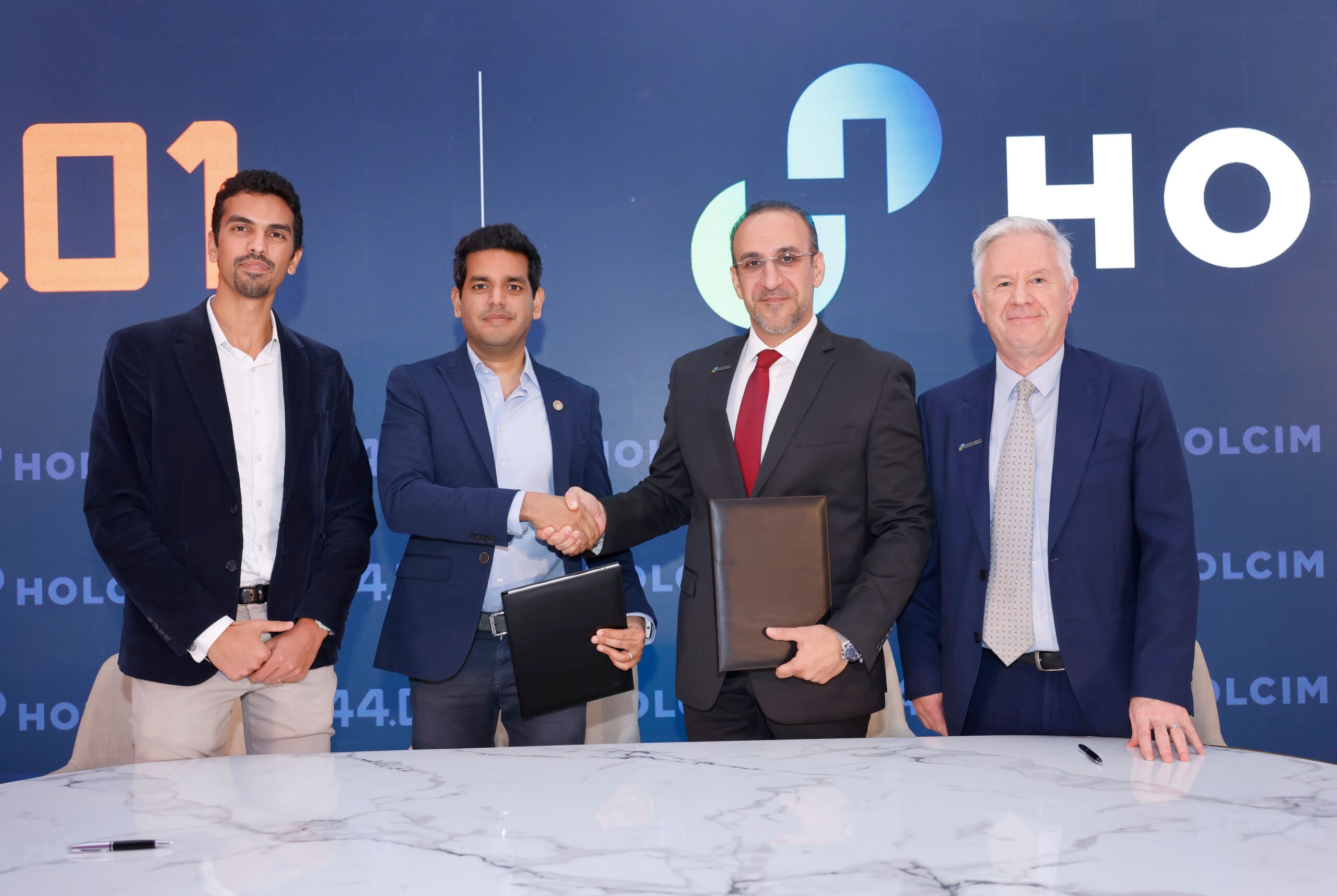
Holcim has invested in carbon mineralisation developer 44.01, extending a partnership that is already operating a pilot system for permanent carbon dioxide storage at a cement manufacturing facility in Fujairah, United Arab Emirates.
The investment, announced on 4 November, will support 44.01’s technology development and international expansion. Holcim has not disclosed the amount invested or the size of the ownership interest acquired.
The agreement follows the commissioning of a pilot connecting carbon capture at Holcim’s Emirates Cement Plant with an underground mineralisation operation managed by 44.01.
The system has been operating under industrial conditions since July 2026, with the partners marking its formal commissioning in October. Captured CO₂ is transferred from the cement facility to a nearby location and injected into naturally reactive ultramafic rock formations.
Within suitable geological formations, the injected carbon dioxide reacts with minerals to form stable carbonate materials. This converts the carbon into solid mineral compounds rather than relying solely on maintaining a separate reservoir of compressed CO₂ underground.
The pilot was designed to capture approximately four to 4.5 tonnes of carbon dioxide per day from the cement plant’s flue gas. The figure represents the installation’s intended capture capacity and should not be treated as a verified average achieved throughout its operating life.
The project provides experience of integrating industrial carbon capture, transport, injection and geological storage. Holcim and 44.01 intend to use the results to assess opportunities for deploying the technology at additional sites.
Cement production presents a substantial carbon management challenge because emissions are generated through both fuel combustion and the chemical reactions involved in manufacturing clinker.
During conventional clinker production, limestone is heated in a kiln system. Calcium carbonate decomposes into calcium oxide and carbon dioxide, producing process emissions independently of the fuel used to supply heat.
Replacing fossil fuels or improving energy efficiency can reduce combustion-related emissions, but those measures do not directly eliminate the carbon dioxide released during limestone decomposition.
Capturing the resulting gas offers one approach to addressing those remaining emissions. The equipment required depends on the characteristics of the gas stream, the capture process selected and the conditions under which the plant operates.
The captured carbon dioxide must subsequently be transported, used or stored. Each option introduces additional equipment, energy requirements and infrastructure considerations beyond the capture system itself.
At Fujairah, the captured material is directed to a geological storage process rather than being used as an industrial feedstock. The two companies describe the approach as carbon mineralisation because the storage mechanism involves chemical reaction with suitable rock.
Ultramafic formations contain minerals rich in elements such as magnesium and iron that can participate in reactions forming carbonate compounds. The composition of the rock and its physical characteristics influence how the injected material behaves.
Mineralisation depends on contact between the carbon-bearing fluid and reactive geological material. Relevant conditions include fluid chemistry, temperature, pressure, available mineral surfaces and the movement of fluids through the formation.
Permeability and fractures affect how fluid can circulate underground. Geological evaluation is therefore necessary before a formation can be considered suitable for injection and storage.
The design must also account for the pressure at which fluid is injected and the behaviour of the surrounding rock. Appropriate monitoring is needed to understand the location and condition of the injected material and the progress of the intended mineral reactions.
The Fujairah installation provides a practical setting in which these questions can be examined alongside an operating cement plant. It connects processes that would otherwise be studied separately, allowing the partners to observe how the capture and storage systems perform during industrial operation.
The pilot’s present capacity remains small compared with the emissions associated with a large cement manufacturing facility. It is intended to provide engineering and operational evidence rather than demonstrate that the plant’s total emissions have been captured or stored.
Scaling mineralisation would require assessment of the available geological resource, injection arrangements, capture capacity and supporting infrastructure. Larger storage volumes may also require changes to equipment, monitoring systems and the handling of captured material.
Ram Muthu, head of operational excellence at Holcim, said the Fujairah work was already storing captured carbon in rock formations near the plant.
He added: “This pathway can help us manage captured carbon at inland sites across our operations where access to offshore storage may be limited.”
The potential for local storage is an important consideration for industrial facilities located away from established carbon dioxide transport and storage networks.
Some carbon capture projects depend on pipelines, shipping or other infrastructure to move captured gas from an individual factory to a suitable geological storage site. Establishing those connections can involve substantial capital investment and coordination between several organisations.
Where reactive rock formations are available close to an industrial facility, mineralisation may provide an alternative storage route. Its feasibility depends on the geology and the performance of the complete capture and injection system.
Proximity alone is insufficient to establish suitability. A site must have geological formations capable of accepting the intended material under conditions that meet the relevant engineering, environmental and regulatory requirements.
The commercial economics will also depend on capture costs, transport distance, injection equipment, monitoring requirements and the quantity of CO₂ that can be stored reliably.
Holcim’s investment provides 44.01 with additional support for developing the technology and assessing further markets. It does not constitute a disclosed contract for a commercial-scale mineralisation plant at another Holcim facility.
44.01 has previously attracted investment from organisations including JERA, Breakthrough Energy Ventures, Equinor Ventures, Air Liquide Venture Capital and Siemens Financial Services.
Holcim has made 22 investments through its MAQER Ventures corporate investment and open innovation activities, covering technologies associated with industrial processes, construction materials and decarbonisation.
The company’s wider emissions strategy includes measures addressing production efficiency, materials, fuels and technologies for capturing residual carbon dioxide. Mineralisation provides one possible destination for captured emissions where the required geological conditions exist.
Future deployment will depend on the results obtained from Fujairah and the suitability of prospective industrial sites. The companies have not announced a verified cumulative storage volume for the pilot or a timetable for commissioning a larger commercial installation.
The investment extends an operating technical partnership, with further development expected to concentrate on increasing the scale of mineralisation while maintaining reliable capture, injection, monitoring and storage performance.