Bosch will establish a dedicated semiconductor division from 1 January 2028, reorganising its chip development and manufacturing activities within the Mobility business to support growth in robotics, industrial applications and other markets beyond its established automotive customer base.
The planned division, to be called Semiconductors, will bring together activities currently managed within Bosch Mobility Electronics. It will remain part of Bosch Mobility rather than becoming a separate independent company.
Bosch confirmed the plans on 3 November and set a target of approximately €5 billion in semiconductor sales by 2030. The company also intends to expand its foundry business and make more of its manufacturing capacity available to external partners.
The restructuring is intended to provide the semiconductor operation with a more distinct organisational structure and greater focus on customers requiring specialist chips and sensors.
Under the current arrangement, Bosch’s semiconductor business forms part of Mobility Electronics alongside activities involving automotive electronic control units and power electronics.
From January 2028, semiconductor operations will transfer into the new division, while Mobility Electronics will continue to manage the business relating to electronic control units for automotive applications.
The announcement does not establish a sale, stock market listing or legal separation of Bosch’s semiconductor operation. The change concerns how the business will be organised and managed within the group.
Bosch identifies microelectromechanical systems, silicon carbide power semiconductors and application-specific integrated circuits as important elements of its portfolio.
Microelectromechanical systems, or MEMS, combine very small mechanical structures with electronic components. They can be used to measure physical conditions such as movement, acceleration, rotation or pressure.
Manufacturing these sensors involves semiconductor processing techniques capable of producing miniature structures with controlled mechanical and electrical characteristics.
The devices must then be packaged, calibrated and tested to establish that their performance meets the requirements of the intended application.
Bosch’s established MEMS activities serve automotive and consumer markets, including vehicles, smartphones and wearable devices.
The company now intends to expand into further applications involving industrial robotics and increasingly sophisticated automated equipment.
Robotic systems use sensors to measure movement, orientation and operating conditions. That information can support control of motors and mechanical assemblies, allowing a system to respond to changes in its own position or the surrounding environment.
Humanoid robots introduce additional requirements because multiple actuators, sensors and electronic control systems must operate together during movement.
Processing and communication systems need to coordinate these components while meeting constraints associated with response time, power consumption and the available installation space.
Markus Heyn, deputy chairman of the Bosch management board and chairman of Bosch Mobility, said the company already supplies semiconductors used to control humanoid robots.
He said: “Semiconductors are the linchpin of our connected world and, at the same time, a key success factor for all of Bosch’s divisions.”
Bosch also intends to develop more opportunities in the manufacture of semiconductors for customers outside its own systems businesses.
A semiconductor foundry produces chips using manufacturing processes and equipment operated on behalf of customers. The commercial arrangements and extent of design involvement can vary according to the component and production technology.
Opening additional foundry capacity can allow external customers to use specialised semiconductor manufacturing capabilities without establishing their own fabrication facilities.
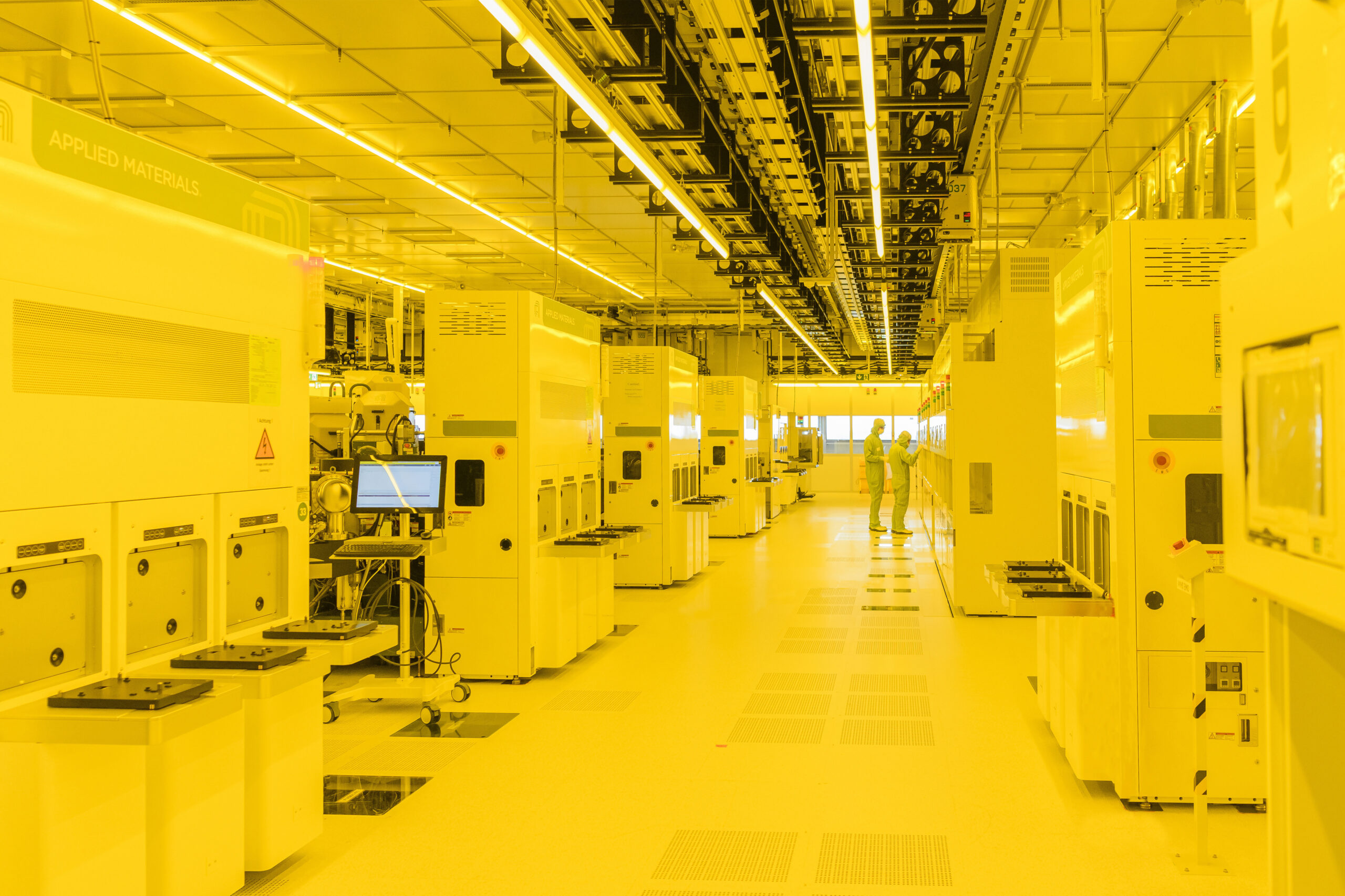
The manufacturing process must still be qualified for the device involved. Semiconductor fabrication requires tightly controlled processing conditions, measurement and inspection, with production yields influencing the number of usable components obtained from each wafer.
Bosch has not disclosed the proportion of its fabrication capacity that will be made available to external customers or a separate revenue target for foundry services.
Silicon carbide power semiconductors form another important part of the company’s manufacturing portfolio. These devices are used in power electronic systems where efficient electrical switching and operation under demanding voltage or thermal conditions are required.
Power electronic equipment uses semiconductor devices to control electrical energy flowing between circuits, motors and other components. Switching characteristics influence energy losses, heat generation and the design of supporting equipment.
Silicon carbide devices can provide performance advantages in suitable applications, although those advantages depend on circuit design, operating conditions and the characteristics of the semiconductor components selected.
Bosch has invested approximately €3 billion in its semiconductor wafer fabrication facilities at Dresden and Reutlingen in Germany in recent years.
It is also investing approximately $2 billion to equip its Roseville factory in California for specialised silicon carbide production.
These investments are part of the company’s established manufacturing programme rather than newly authorised capital expenditure arising solely from the divisional restructuring.
Converting a semiconductor facility to manufacture a different type of device can require specialised processing equipment, modifications to supporting infrastructure and qualification of manufacturing methods.
Production must establish that the resulting components meet electrical and reliability specifications consistently. Wafer processing, packaging and testing requirements vary according to the device and intended use.
Bosch has not provided a new operating capacity target for Roseville in the November restructuring announcement. The investment remains a manufacturing development programme whose output will depend on equipment installation, process qualification and subsequent production ramp-up.
The company also plans to expand its semiconductor test centre in Penang, Malaysia, by the middle of the next decade.
Testing is an important stage in semiconductor manufacturing because devices must be assessed for electrical performance and suitability before they can be supplied to customers.
Automotive and industrial applications may require additional qualification related to operating temperature, reliability and product lifetime.
Those requirements influence the manufacturing documentation, traceability and verification needed to establish that devices can be used within particular systems.
Bosch operates approximately 40 semiconductor research, development and manufacturing locations worldwide, supporting its production and technology activities across several regions.
The group also holds a 10% stake in European Semiconductor Manufacturing Company, the joint venture developing additional semiconductor manufacturing capacity in Dresden.
Its international footprint provides manufacturing and development capabilities, although the processes and products supported by individual locations are not necessarily interchangeable.
Erik Rein, the Bosch executive responsible for its semiconductor business, said the new structure would allow the company to respond more closely to requirements in automotive, consumer electronics and additional markets.
Rein identified MEMS sensors, silicon carbide chips and application-specific integrated circuits as the technologies on which Bosch intends to build its commercial expansion.
Demand for semiconductors is being influenced by developments in robotics, data centres and industrial automation. These markets require different combinations of processing, sensing, communication and power management components.
Bosch cited external analysis suggesting that growing AI infrastructure and robotics activity will increase demand for semiconductor production. Those forecasts concern prospective market growth rather than confirmed orders for the company’s factories.
The restructuring gives Bosch a way to manage its semiconductor activities more distinctly while continuing to supply established automotive and consumer customers.
Achieving the €5 billion sales target will depend on demand for its components, customer adoption, available manufacturing capacity and the execution of its investment plans.
The organisational change is scheduled to take effect on 1 January 2028. Until then, semiconductor development and manufacturing remain within the existing Mobility Electronics structure, while the factory investments in Germany, the United States and Malaysia progress under their respective programmes.