GSK will invest £400 million across Cambridge and Ware over the next three years, consolidating its UK research operations while strengthening the connection between drug development and commercial manufacturing.
Planned for Cambridge Biomedical Campus, the company’s new 300,000 sq ft research and development centre will accommodate more than 1,000 scientists working across oncology, respiratory medicine, hepatology, vaccines, and HIV. Technology enabled laboratories will support collaboration between scientific disciplines while placing GSK alongside hospitals, universities, biotechnology companies, and specialist research organisations.
Alongside the Cambridge development, laboratory upgrades at Ware will create a more integrated operation spanning product development, process preparation, and manufacturing scale-up. Some employees will move to the Hertfordshire site as GSK reorganises work currently undertaken at Stevenage, where research activity is due to end by 2029.
Because pharmaceutical programmes carry years of experimental records, validated methods, specialist equipment, and regulatory documentation, the transfer cannot be treated as a conventional office relocation. Scientific work must continue while laboratories are commissioned, instruments are qualified, data is migrated, and project teams are reorganised across two receiving sites.
GSK expects the Cambridge location to improve access to clinical expertise and external research partners, particularly where laboratory findings need to be tested against patient data or translated into clinical programmes. The campus already contains major hospitals and academic institutions, giving scientists closer contact with organisations involved in diagnosis, treatment, trials, and biomedical research.
Research decisions shape manufacturing outcomes
Although the Cambridge centre is primarily a research investment, decisions made during early development determine much of the equipment, control, and validation burden encountered later in production. A formulation or process that performs well at laboratory scale may become difficult to reproduce when batch size increases, raw materials vary, or manufacturing moves into sterile and highly automated conditions.
Bringing the Ware development teams more closely into the research estate should allow scale-up risks to be examined earlier. Process engineers can assess mixing, heat transfer, filtration, drying, filling, cleaning, and material handling requirements before a product reaches the point at which substantial changes become expensive or require additional regulatory evidence.
Analytical methods also need to progress with the manufacturing process. Tests developed to characterise a laboratory sample must eventually support raw material release, in-process control, finished product testing, stability studies, and investigations across commercial batches. Earlier coordination can reduce the risk of methods becoming too slow, complex, or sensitive for routine production.
The Ware programme follows wider investment in facilities intended to shorten the route between scientific research and industrial production. A UK drug delivery centre providing external access to formulation and analytical capability is addressing a similar gap, particularly for smaller businesses that cannot maintain every specialist technology internally.
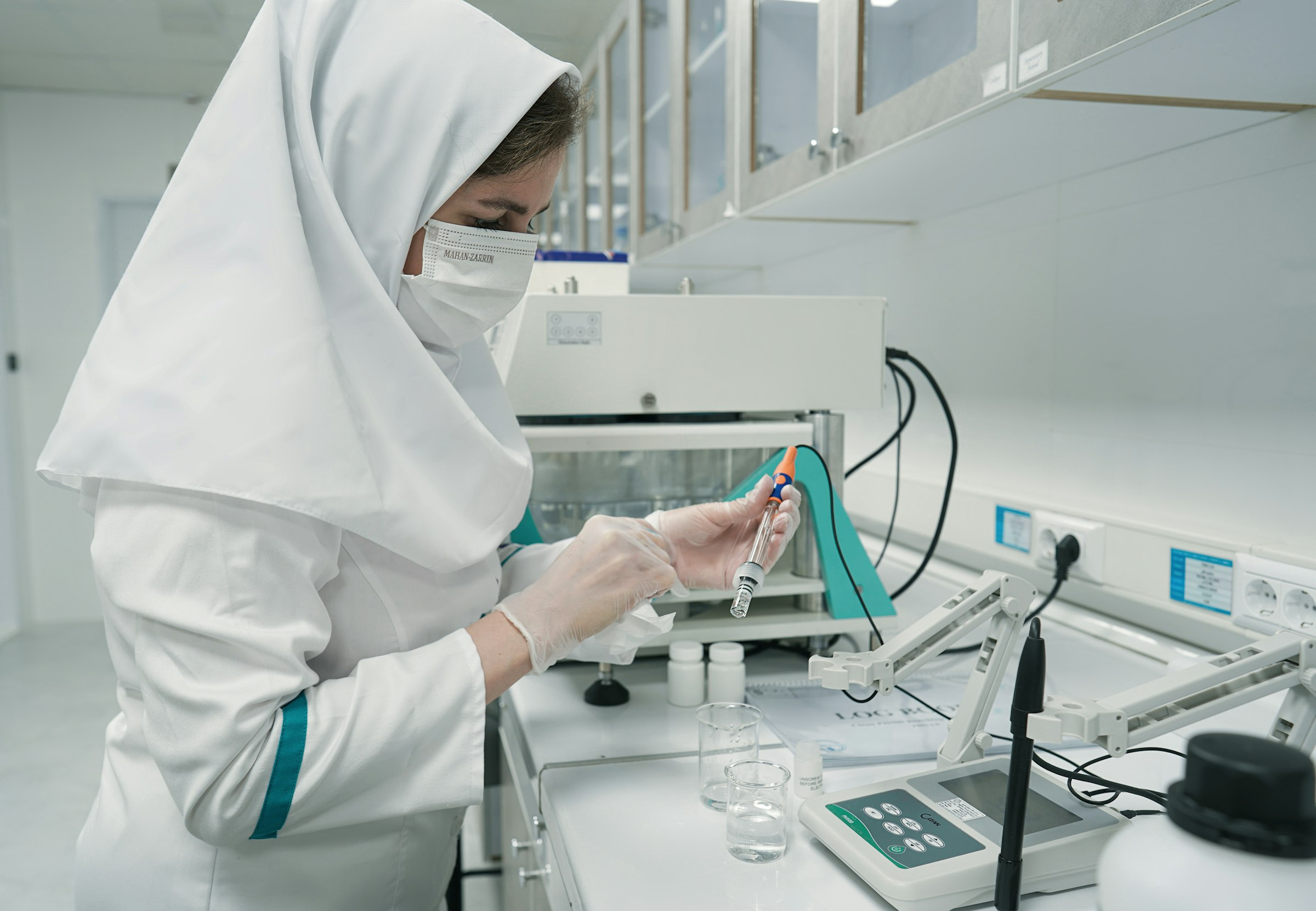
Within the new laboratories, connected instruments, automated sample systems, and digital records will produce larger volumes of data than conventional manual workflows. These systems can improve experimental throughput and traceability, although they also require validated software, controlled interfaces, resilient cyber security, and clear ownership as information moves between teams and sites.
Laboratory design will have to accommodate technologies that may change several times during the building’s operating life. Flexible utilities, modular work areas, controlled environments, segregation, ventilation, and sufficient capacity for new analytical or automation equipment will influence how readily the centre can respond as GSK’s development portfolio evolves.
Cambridge’s concentration of life sciences activity offers access to specialist skills, but it also creates intense competition for scientists, engineers, data specialists, laboratory technicians, and quality personnel. The phased transition from Stevenage gives GSK time to manage recruitment and retention, although experienced employees may face substantial changes in commuting, location, and working arrangements.
Construction and commissioning will continue alongside the transfer of active research programmes, leaving little tolerance for laboratory delays or incomplete technical infrastructure. Instruments must be installed, calibrated, and qualified before work can move, while regulated data and methods require controlled transfer rather than informal duplication.
GSK spends more than £6 billion annually on research and development worldwide, including more than £1.5 billion in the UK. The new programme concentrates a substantial part of that UK activity within Cambridge while giving Ware a larger role in the transition from experimental medicines to production-ready processes.
Whether the two sites operate as a connected development system will become clearer as scientific programmes begin to move. Faster technical decisions, fewer scale-up problems, and earlier resolution of manufacturing constraints would provide stronger evidence of success than the physical completion of either building.