Deutsche Telekom is extending the industrial use of its Munich AI computing infrastructure through a collaboration with robotics company microagi, which plans to train robot models using simulated versions of manufacturing and logistics operations.
The arrangement, announced on 18 November, will give microagi access to computing resources through Telekom and T-Systems’ Industrial AI Cloud. The companies intend to use recordings of real industrial work to develop transferable robot skills, while keeping customer production information in Germany and under the control of the businesses supplying it.
Munich-based microagi develops AI methods intended to reduce the engineering effort needed to prepare robots for different physical tasks. Its approach begins with recorded examples of work performed in operating environments, including machine operation and workpiece handling.
Information from these demonstrations is used to develop a simulated training environment. The robot model can then practise the relevant activity repeatedly before the resulting skill is transferred to a physical machine for further testing and application.
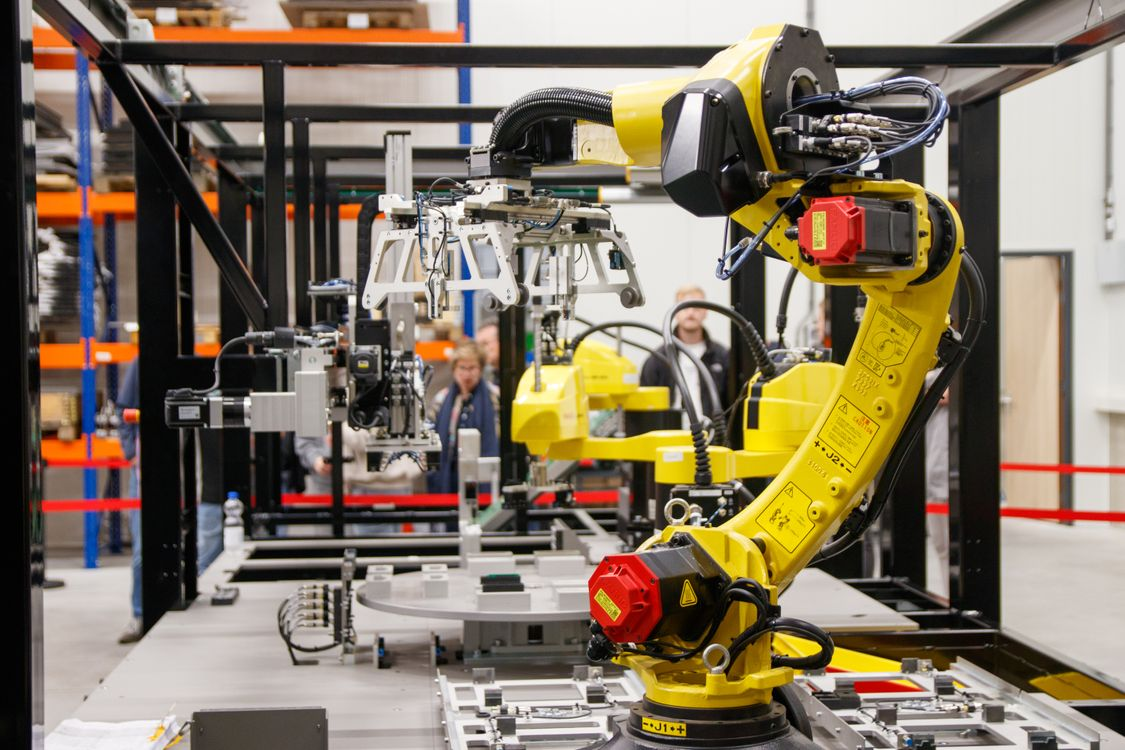
Conventional industrial robot installations often rely on programmed movements, defined positions and established operating sequences. Such arrangements can provide repeatable performance when equipment, workpieces and production conditions remain sufficiently consistent.
Changes to component geometry, fixture position or the required task may nevertheless require additional programming and commissioning. More variable applications can also require machine vision and other sensing systems to help the robot respond to conditions that differ from a fixed sequence.
Microagi is attempting to reduce some of this task-specific programming work by deriving robot behaviour from demonstrations and simulated practice. Rather than manually specifying every movement for each individual work cell, the training process is intended to develop a reusable capability for an identified operation.
Simulation allows a model to repeat a task without occupying the corresponding production machine throughout training. Computing resources can be used to process many training attempts, investigate variations represented in the simulated environment and update the model before physical testing.
The relationship between simulation and real equipment remains a central technical challenge. A digital environment may not reproduce every physical characteristic of a workpiece, machine or surrounding area, particularly where friction, sensor behaviour, component positioning or unexpected obstructions affect the operation.
Training performance must therefore be distinguished from successful operation on a factory floor. A model that performs reliably within simulation still requires testing against the behaviour of actual machinery and the tolerances of the intended manufacturing process.
The amount of computational work needed for this development can be substantial. Repeated simulations and model training create demand for processing capacity, particularly when a company is preparing skills for several different tasks or robot configurations.
Telekom’s Industrial AI Cloud provides the infrastructure on which microagi intends to run those workloads. The service is operated through Deutsche Telekom and T-Systems and is being developed to support industrial applications requiring significant AI computing resources.
The partnership also addresses the handling of manufacturing information. Video recordings of industrial work can contain details about production methods, equipment layouts and operating procedures that businesses regard as commercially sensitive.
Transferring that information into a training system requires decisions about data access, storage and the purposes for which models developed from it may be used. A business supplying examples of its manufacturing processes may want to retain control over the information and the resulting industrial knowledge.
Deutsche Telekom and microagi say production data and manufacturing expertise will remain in Germany and under customers’ control. The companies are positioning that arrangement as an alternative to conducting all model training through overseas computing services.
Data location alone does not establish the complete security of a system. Access management, contractual restrictions, network protection and the treatment of derived model information also influence whether an industrial customer can maintain the intended control over its material.
Bercan Kilic, founder and chief executive of microagi, has identified control of production data as the main consideration in the company’s infrastructure strategy. The business intends to use suitable computing technology while keeping the industrial information used for training within an agreed European environment.
T-Systems chief executive Ferri Abolhassan has similarly linked the collaboration to the ability of European manufacturers to use their own operating knowledge when developing industrial AI systems.
Manufacturing and logistics are the principal application areas identified. Potential tasks include handling components, interacting with production machinery and moving materials through operations where changes in the environment can complicate conventional automation.
Deploying a trained skill requires integration with the physical robot and surrounding equipment. Robot movements must be coordinated with workholding, sensors, machine controls and any other systems involved in the operation.
Safety requirements also remain separate from the performance of a trained AI model. The completed installation must address hazards associated with moving machinery and establish how the equipment will behave when unexpected conditions occur.
Industrial validation consequently extends beyond demonstrating that the robot can complete a task under favourable conditions. The system must be assessed against the range of circumstances expected during production, including changes in component position, equipment state and interactions with other machinery.
The companies have not identified a completed customer installation or supplied comparative figures showing a particular reduction in robot programming time, manufacturing cost or production cycle time under the new arrangement.
The collaboration establishes computing infrastructure for the development of simulated robotics capabilities. Its industrial results will depend on whether the trained skills can be transferred reliably to real equipment and integrated into manufacturing and logistics processes that meet the required operating and safety standards.