Costain has taken control of the reactor buildings worksite at Trawsfynydd in North Wales, following a formal handover by Nuclear Restoration Services (NRS) that allows the next phase of the site’s decommissioning programme to begin. Preparatory engineering and a joint project review have been completed, clearing the way for work to reduce the height of both former reactor buildings by nearly half.
Appointed principal contractor in October 2025 under an agreement worth up to £70 million, Costain is responsible for work expected to run for up to four years. The October 2026 handover transfers control of the designated worksite after the preparatory engineering phase, allowing the contractor to establish access and lifting arrangements before sections of the redundant reactor buildings are dismantled.
Built for the former Magnox power station, the reactor buildings belong to a site that began generating electricity in the 1960s and ceased operation in 1991. Decades of decommissioning have followed, with the surviving structures and services retaining characteristics of their original industrial and nuclear functions. The present reduction programme must therefore operate within the site’s established safety arrangements.
The handover follows enabling work to prepare the buildings for a reduced height, including the construction of internal roofs at a lower elevation, removal of redundant boilers and changes to electrical services. Those roofs provide a boundary beneath the sections due to be removed, while cleared equipment areas make room for access systems and the lifting operations that will follow.
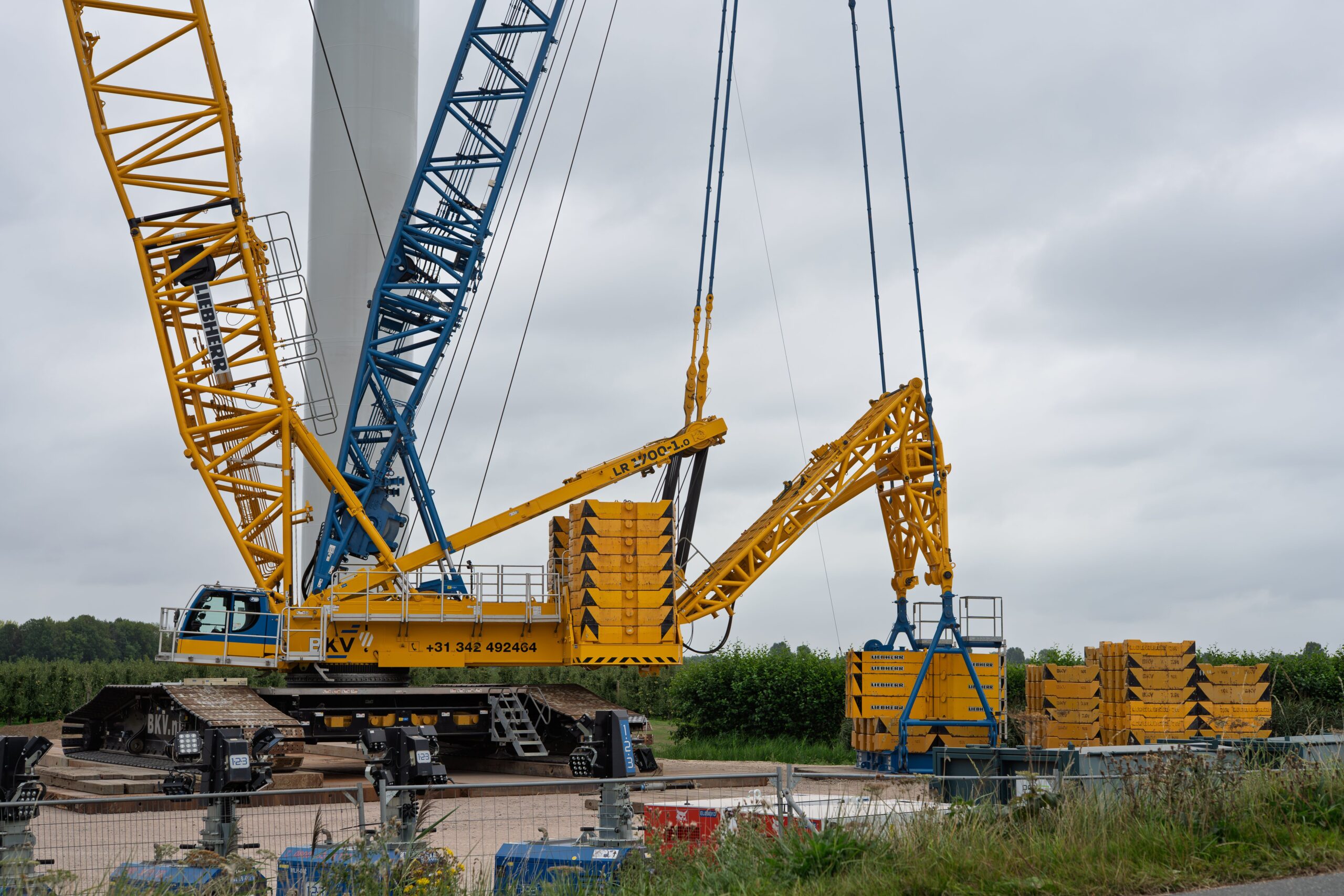
A crane is already on site to assist with scaffolding, hoist installation and electrical infrastructure, with larger crawler cranes expected later in 2026 and two substantial tower cranes planned inside the buildings in early 2027. The equipment will support the controlled removal of the upper structures after suitable access, lifting points and temporary works have been established.
Operating tower cranes inside redundant reactor buildings will require careful assessment of the structures as their geometry and loading conditions change. Lifting plans must account for component mass, access routes, clearances and the supports remaining after each removal; wind conditions and the position of other plant will also constrain the sequence in which individual sections can be taken down.
As components are separated from the original structure, their removal changes the way loads pass through the remaining building. Temporary supports and other engineering measures must maintain stability at intermediate stages, and each lifting operation needs to be compatible with the load paths, clearances and working space available at that point in the programme.
Dismantling within a former nuclear installation also requires knowledge of the plant’s operating history and the condition of individual work areas. Radiological and conventional industrial hazards need to be assessed before the applicable method is chosen, with arrangements for isolating services, controlling access and handling removed material integrated into the structural work. Space for segregating and moving dismantled sections has to be coordinated with scaffold positions and crane routes, while inspection findings can change the method used for particular components. These arrangements must allow the remaining structure to stay stable and accessible as the worksite changes.
In May 2026, Nuclear Restoration Services completed a separate campaign lasting around 20 years to recover higher activity waste at Trawsfynydd and place it in safe storage, reducing hazards ahead of later decommissioning work. The final package was transferred after work that had included robotic retrieval and specialist vacuum equipment to recover difficult material.
Even with that long campaign completed, individual areas must still be assessed for residual radiological and industrial hazards before dismantling begins. The earlier waste retrieval, subsequent engineering preparation and current structural programme involve different sets of controls, reflecting the different conditions encountered during each stage of decommissioning.
Experience gained from the building reduction is expected to inform Nuclear Restoration Services’ wider decommissioning estate, particularly the planning of access and lifting operations in large redundant structures. Each subsequent site will still need its own structural and safety assessment because construction methods, remaining equipment and the condition of supporting steelwork can differ substantially.
Costain expects more than 100 people to work on the project at its peak, including specialist engineering personnel, with apprenticeships and opportunities for local businesses forming part of the delivery programme. Workforce demand will vary as scaffolding, crane systems and removal activities reach different stages, rather than representing a permanent employment total.
Once the upper sections have been removed, substantial parts of both former reactor buildings will remain. Their later treatment belongs to the site’s longer decommissioning programme, while the handover enables a defined phase lasting four years focused on bringing the structures down to their planned reduced height.