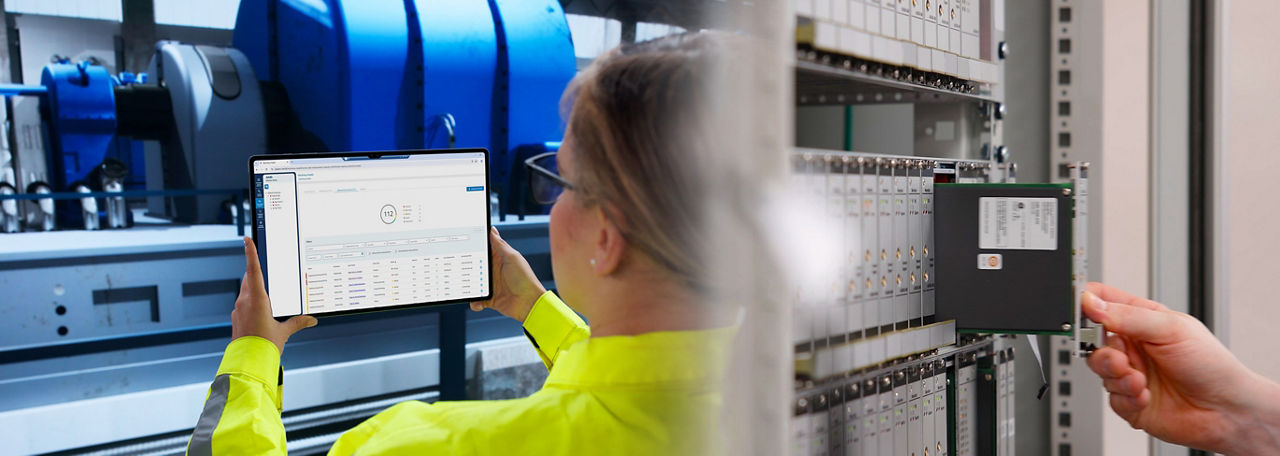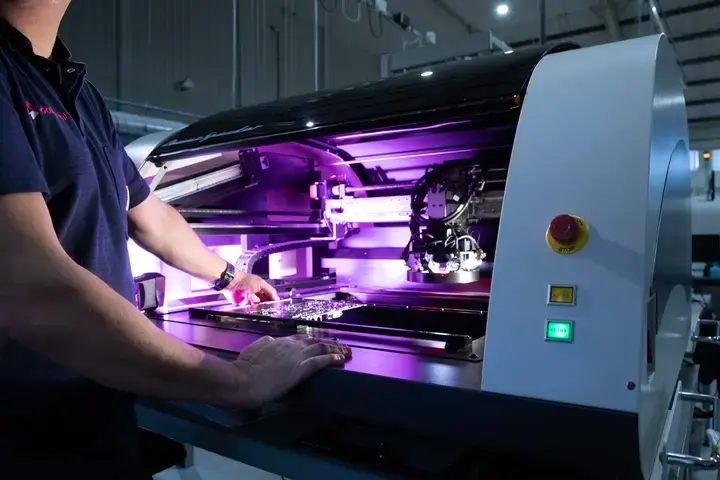
Concurrent Technologies has installed new machinery and expanded its Colchester manufacturing area to double production capacity as a sharp increase in orders moves more customer programmes from design into manufacture. The embedded-computing group expects the additional capacity to ramp during the second half of 2026, with an unusually heavy production workload anticipated in the fourth quarter.
For the six months to 30 June, revenue increased 10% to £23.2 million and profit before tax rose 19% to £3.2 million. Order intake climbed 110% to £46.9 million, matching the total recorded across the whole of 2025, while closing cash increased 24% to £9.7 million. The order book has continued to strengthen since the period end, with year-to-date intake exceeding £68 million.
The capacity increase is tied to that order profile rather than a general expansion plan. Concurrent said new machines have been purchased and installed in an enlarged factory area in Colchester, enabling a doubling of capacity as output requirements rise. Upgrades to the existing building and newly leased office accommodation next door are due to complete in October.
The company spent about £3.0 million during the first half on its new facility and manufacturing line, with a further £2.5 million incurred in the second half. That investment is material for a business that generated £45.9 million of revenue in 2025, and it reflects the long lead times between securing an embedded-computing design win and reaching sustained production.
Concurrent estimates that further design wins secured across its Products and Systems businesses during the half carry a lifetime value of around £129 million. The group says a typical design win may generate purchase orders two to three years after the initial award and then deliver revenue over a programme life of seven to ten years. Manufacturing capacity therefore has to be added against a pipeline that may be visible well before the corresponding production volumes arrive.
Several recent orders are now filling that pipeline. A roughly £17 million European programme covers three variants of an established VME-based computer board over four years, while a $9.4 million order from a major US defence prime contractor was confirmed after the period end. The mix gives Concurrent greater production visibility into 2027, but it also concentrates more operational pressure into the second half as programmes move from engineering into scheduled deliveries.
The Systems division is beginning to contribute differently as well. Acquired through Phillips Aerospace in 2023, Systems delivered its first profitable first half, with gross margin rising to 26.3% from 13.3% as the revenue mix moved towards a larger share of production work. That improves the economics of the division, but production brings a greater requirement for repeatability, materials planning, quality control, and factory capacity than lower-volume design activity.
Component availability remains one of the main constraints on that expansion. Concurrent said longer lead times and allocation continue to affect key electronics parts, including memory and processors. The company has secured critical DRAM requirements through the end of 2027 and is using forward purchasing, supplier engagement, and customer coordination to manage shortages and end-of-life component changes.
Those measures are particularly important in defence and aerospace programmes, where a component cannot always be replaced with a newer commercial alternative without fresh qualification. Embedded computers are frequently designed into platforms expected to remain in service for years, making configuration control and long-term component support part of the manufacturing requirement rather than an after-sales issue.
The Colchester expansion therefore increases physical capacity but does not remove the supply-chain limits on output. A production line can only run to plan if processors, DRAM, connectors, printed circuit assemblies, and other qualified parts arrive in the required sequence. Inventory increased by about £0.9 million to £12.6 million during the half as Concurrent bought more supply-constrained components and absorbed wider price inflation.
Management now expects full-year revenue to be materially ahead of market expectations and profit to be ahead, principally because of the timing of revenue and profit recognition on large contracts. The company has also warned that order timing can vary and that the fourth quarter will be exceptionally busy, giving the newly installed capacity an immediate operating test.
Concurrent has moved beyond the point where factory expansion is being justified by prospective design wins alone. Machines are installed, orders are in hand, and production planning extends into 2027. The next measure is execution: converting a record order intake into dependable output while preserving component availability, quality, and delivery performance across long-life defence and aerospace programmes.