Cellares has added ARK Invest to its Series D financing, with a $20 million investment that lifts the round to $277 million and strengthens backing for automated cell therapy manufacturing.
The investment joins existing backers including BlackRock, Eclipse, T. Rowe Price Investment Management, Baillie Gifford, Duquesne Family Office, Intuitive Ventures, EDBI, Gates Frontier, DC Global Ventures, DFJ Growth, and Willett Advisors. Cellares is using the funding to build its automated Integrated Development and Manufacturing Organisation model for cell therapies.
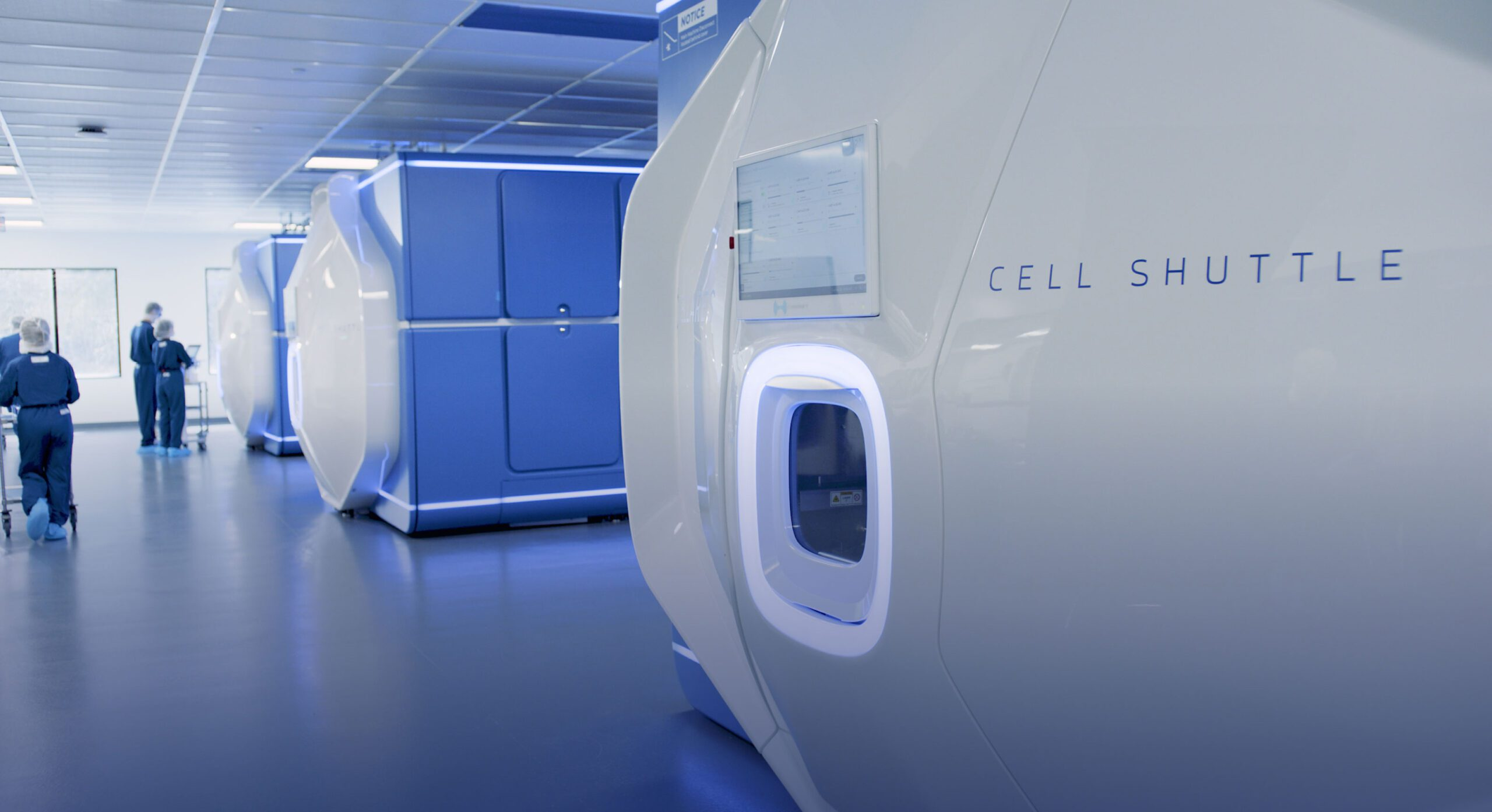
The company’s approach is centred on the Cell Shuttle platform, an end-to-end closed manufacturing system designed to automate cell therapy production, and Cell Q, which automates in-process and release testing. Cellares is developing a global network of Smart Factories, including sites in South San Francisco, Bridgewater in New Jersey, Leiden in the Netherlands, and Kashiwa City in Japan.
Recent milestones include delivery of first GMP cell therapy doses to patients using the Cell Shuttle, a 10-year commercial supply agreement with Cabaletta Bio, and a $380 million global manufacturing agreement with Bristol Myers Squibb. The BMS agreement reserves commercial-scale manufacturing capacity in the US, Europe, and Japan for cell therapy programmes.
Cellares expects commercial-scale manufacturing across its Smart Factory network to begin in 2027. The Leiden facility gives the company a European manufacturing base in a market where advanced therapy production remains constrained by cost, complexity, and limited available capacity.
Cell therapy has advanced faster than the industrial infrastructure needed to manufacture it at scale. Autologous and patient-specific therapies are difficult to produce through conventional batch-based, labour-intensive models. Each patient can effectively create an individual manufacturing campaign, with strict controls over chain of identity, quality control, release testing, sterility, and timing.
That creates a production problem unlike traditional small-molecule or biologics manufacturing. Scaling is not simply a matter of building larger vessels or extending production runs. It requires repeatable processing, automated handling, digital records, closed systems, quality control, and site networks that can serve clinical and commercial demand without pushing cost beyond practical limits.
Cellares is trying to industrialise that model through integrated automation. Automated Smart Factories could deliver higher throughput and lower per-patient costs than conventional CDMO facilities of similar scale, provided the platform can manage product variability, process transfer, and GMP requirements across multiple therapy programmes.
Pharmaceutical manufacturers are under pressure to reduce development timelines, improve production reliability, and secure capacity for complex therapies. Healthcare systems will struggle to absorb advanced therapies if manufacturing cost and availability remain major bottlenecks. In cell therapy, manufacturing is not a supporting function behind the medicine; it is central to whether the product can be delivered commercially.
The supporting infrastructure around advanced healthcare products is also becoming more specialised. Temperature-controlled pharma shipping capacity, including reusable shipper expansion in Europe, shows how logistics, packaging, and manufacturing are being pulled into the same resilience problem. Cell therapy pushes that requirement further because production, release, transport, and treatment timelines are tightly connected.
Automation changes the skills profile inside advanced therapy manufacturing as well. Facilities still need scientific and quality expertise, but more of the process is mediated by robotics, software, sensors, data systems, and automated QC platforms. Pharmaceutical manufacturing moves closer to high-integrity industrial automation, where uptime, validation, data integrity, calibration, and maintenance are central operating concerns.
Leiden’s role in the Smart Factory network will be watched closely. The Netherlands already has a strong life sciences base, and additional automated manufacturing capacity could influence clinical trial planning, commercial launch strategy, and regional supply decisions for therapy developers. European access to scalable advanced therapy production remains an important constraint as more cell and gene therapy candidates move towards later-stage development.
Cellares now has to demonstrate that automated infrastructure can handle real-world therapy variability while meeting regulatory and partner-specific requirements. Process transfer, analytical bridging, quality release, and regulatory acceptance will determine how quickly the platform can scale across products and regions. ARK’s investment strengthens the financial backing, but commercial-scale output will decide whether the Smart Factory model can shift cell therapy manufacturing from a bottleneck into an industrial platform.