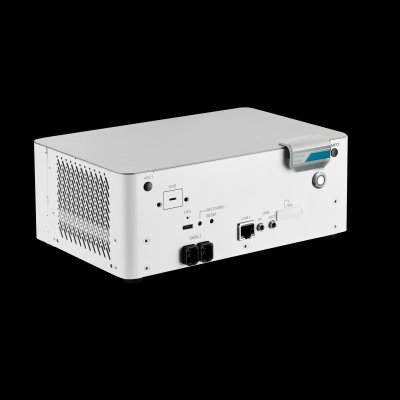
Assel has completed the modernisation of a surface-mount technology production line in Poland, replacing existing pick-and-place machines with three ASM SIPLACE SX systems.
The electronics manufacturing services provider expects the investment to increase SMT production efficiency by approximately 20–30%, depending on product characteristics. The new equipment is also intended to improve placement accuracy and reduce line changeover times.
The upgrade addresses one of the central pressures in electronics manufacturing: assembling denser and more complex boards while maintaining flexibility across customer programmes. Smaller components, tighter tolerances, and more varied product mixes make placement accuracy, feeder management, changeover discipline, and line balancing more important than headline machine speed alone.
Contract manufacturers rarely run one stable product at high volume for long periods. Their lines often move between industrial electronics, medical devices, automotive systems, communications equipment, and specialist assemblies. Each product brings different component packages, board sizes, documentation requirements, inspection needs, and test routines.
Improved placement capability helps handle smaller passive components, fine-pitch packages, and densely populated boards. It also reduces the risk of defects that become expensive later in the process. A misplaced component may be caught at inspection, but it still consumes rework capacity, creates traceability work, and can delay customer orders. If it reaches test or field use, the cost rises further.
The investment comes as electronics manufacturing capacity is being reshaped by AI infrastructure, industrial demand, and regional supply chain planning. Semiconductor capital spending and wafer shipment trends point towards a market where advanced memory, power electronics, sensors, and embedded systems are competing for production attention. Rising memory equipment investment, pulled upward by AI demand, is already influencing the wider electronics production landscape, with effects that eventually reach board-level assembly through component availability, redesigns, and customer programme timing.
Equipment investment is also a credibility signal for EMS providers. Customers increasingly expect manufacturing partners to support design for manufacture, prototype build, production ramp, lifecycle management, and supply chain resilience. SMT capability sits at the centre of that offer because it determines whether a company can handle current component geometries and future board complexity.
Changeover time is commercially important in medium and low-volume production. Many industrial and medical electronics programmes do not justify long uninterrupted production runs, so a line that loses too much time between jobs can lose efficiency even when the placement machines themselves are fast. Faster changeover protects margin and gives manufacturers more room to respond to urgent customer requirements.
Placement accuracy also supports quality expectations in regulated and high-reliability sectors. Automotive, medical, aerospace, rail, and industrial control products can require extensive documentation and process control. Manufacturing defects create internal cost, customer audits, corrective actions, and qualification delays. Stronger placement control reduces risk earlier in the process, before defects become more difficult to correct.
The modernisation reflects Europe’s continuing need for regional electronics manufacturing capacity. Supply chain disruption has pushed more customers to examine where boards are built, how quickly changes can be implemented, and whether manufacturing partners can support long product lifecycles. Eastern and Central European EMS providers have benefited from that scrutiny when they combine competitive production with engineering support and EU market proximity.
Assel’s upgrade is therefore a capacity, quality, and flexibility investment rather than a simple machine replacement. The gains will vary by product mix, but the direction is clear: SMT lines must handle smaller components, shorter runs, faster changeovers, and tighter documentation without losing throughput.
As industrial products continue to absorb more sensing, connectivity, power control, and embedded processing, board-level manufacturing will remain a strategic capability rather than a commodity service. EMS providers that invest ahead of component and product complexity will be better placed to support that shift.