Théa has secured a €150 million loan from the European Investment Bank (EIB) to support ophthalmic pharmaceutical research and industrial investment, including the development of technologies used to formulate and deliver medicines for eye conditions.
The financing agreement, confirmed on 19 November, is backed by the European Commission’s InvestEU programme and follows an earlier €50 million EIB loan signed in 2021. The new transaction will support Théa’s research programmes and its continued investment in European pharmaceutical production capabilities.
The company specialises in ophthalmology, developing medicines and associated products for conditions affecting different structures of the eye. Its current research priorities include retinal diseases, rare inherited eye conditions, glaucoma and dry eye.
Headquartered in Clermont-Ferrand, France, Théa operates in more than 75 countries through 35 subsidiaries and employs approximately 2,500 people. The family-owned group reported turnover of €1.02 billion in 2025 and invests more than 12% of annual revenue in research and innovation.
Its development activities involve new therapeutic molecules, pharmaceutical formulations and drug delivery methods. These areas are closely connected because the effectiveness of an ophthalmic treatment depends on the properties of the active ingredient and the way it can be delivered to the intended tissue.
Different parts of the eye present different treatment requirements. A medicine intended to act on the ocular surface may be administered through a topical preparation, while treatment of conditions affecting deeper structures can require other formulations or delivery routes.
The physical and biological barriers protecting the eye also influence pharmaceutical design. A formulation must deliver an appropriate amount of active substance while maintaining the characteristics required for stability, administration and patient use.
Improving a delivery method may involve investigating how a medicine is retained at the administration site, how the active ingredient reaches its intended target and whether the formulation remains consistent throughout its shelf life.
These requirements connect pharmaceutical research with manufacturing technology. A formulation that performs satisfactorily during laboratory development must also be capable of reproducible production using equipment and processes appropriate to commercial manufacturing.
Manufacturing scale can affect mixing, material handling, filling and other operations. The conditions achieved during a small laboratory batch may differ from those encountered when producing larger quantities, requiring engineers and pharmaceutical scientists to establish suitable process parameters.
Maintaining consistency involves controlling the identity and quality of starting materials, the sequence of manufacturing operations and the characteristics of the resulting product. Analytical methods are needed to verify that the medicine meets its established specifications.
Sterile ophthalmic products present additional requirements because microbiological contamination can create serious risks when a medicine is administered to the eye. The appropriate contamination controls depend on the product and manufacturing route, but may involve controlled environments, validated sterilisation processes and specialised filling operations.
Packaging can also form part of the pharmaceutical system. Containers and dispensing arrangements must be compatible with the formulation while supporting the quality and administration requirements of the finished medicine.
Developing a new delivery technology therefore requires consideration of its industrial production method, not solely its performance during initial research. Equipment, packaging materials and manufacturing controls may all need to be established before a formulation can progress towards commercial use.
Théa’s financing supports an integrated approach linking these development activities with the company’s industrial capabilities. The EIB has identified the strategic importance of the group’s European manufacturing infrastructure, particularly its existing Milan industrial site.
The Milan operation is described as a cornerstone of Théa’s development strategy. The financing agreement does not, however, specify an individual investment value, production line or capacity increase at that site.
The distinction is important because the overall loan covers research and industrial investment rather than a single announced factory project. Subsequent company disclosures will be needed to establish the precise allocation of financing between development programmes and manufacturing facilities.
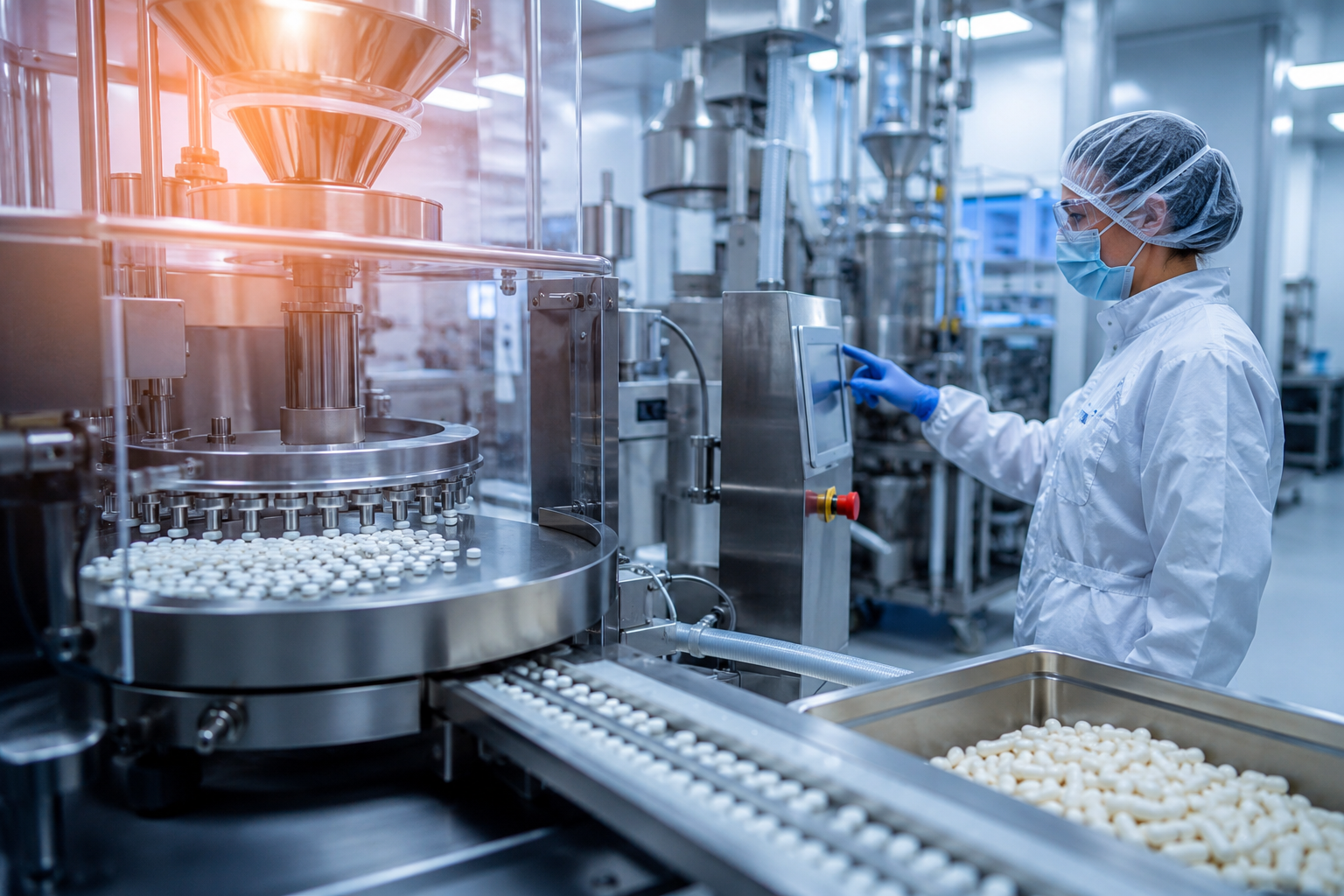
Pharmaceutical production investments can require substantial expenditure before new capacity becomes operational. Facilities may need specialist utilities, cleanroom infrastructure, production equipment and analytical systems, with installation and qualification completed before routine manufacturing begins.
Manufacturing qualification establishes whether equipment and processes can consistently operate within the required conditions. Depending on the product, this can include evaluating environmental controls, processing parameters, cleaning arrangements and the quality of the manufactured material.
The resulting production records are important to regulatory oversight because medicines must continue meeting their approved requirements after they enter commercial manufacture. Changes to equipment or production processes may require evaluation to determine whether product quality could be affected.
Théa’s industrial investment programme sits alongside the development of treatments for conditions where existing options may be limited or inadequate. The EIB financing is intended to support work across these therapeutic areas, although the agreement does not confirm that any individual research programme has completed clinical development or received authorisation.
The EIB’s earlier €50 million loan in 2021 established a previous financing relationship with Théa. The additional €150 million agreement is a separate transaction supporting the next phase of the company’s research and industrial strategy.
InvestEU backing forms part of the financing framework through which European institutions support investment aligned with EU policy priorities. The use of an EU guarantee does not make the loan a non-repayable grant or establish that the full financing amount has already been spent.
The EIB has linked the transaction to maintaining pharmaceutical knowledge, industrial capabilities and skilled employment in Europe. Such activities require specialist personnel in formulation science, process engineering, analytical testing, quality assurance and regulatory affairs.
Théa’s European production network also contributes to the relationship between research and the commercial supply of ophthalmic medicines. Manufacturing capacity must be capable of supporting approved products while accommodating the development and introduction of new formulations.
The company has not attributed a specific number of new jobs or a quantified increase in manufacturing output to the November loan. Its stated programme covers continued research and industrial investment, with the operational results dependent on the facilities and projects subsequently developed.
The financing provides Théa with additional resources for work extending from new ophthalmic molecules to the production systems required for commercial medicines. Its next measurable industrial milestones will concern the manufacturing investments undertaken and the progress of individual pharmaceutical development programmes.