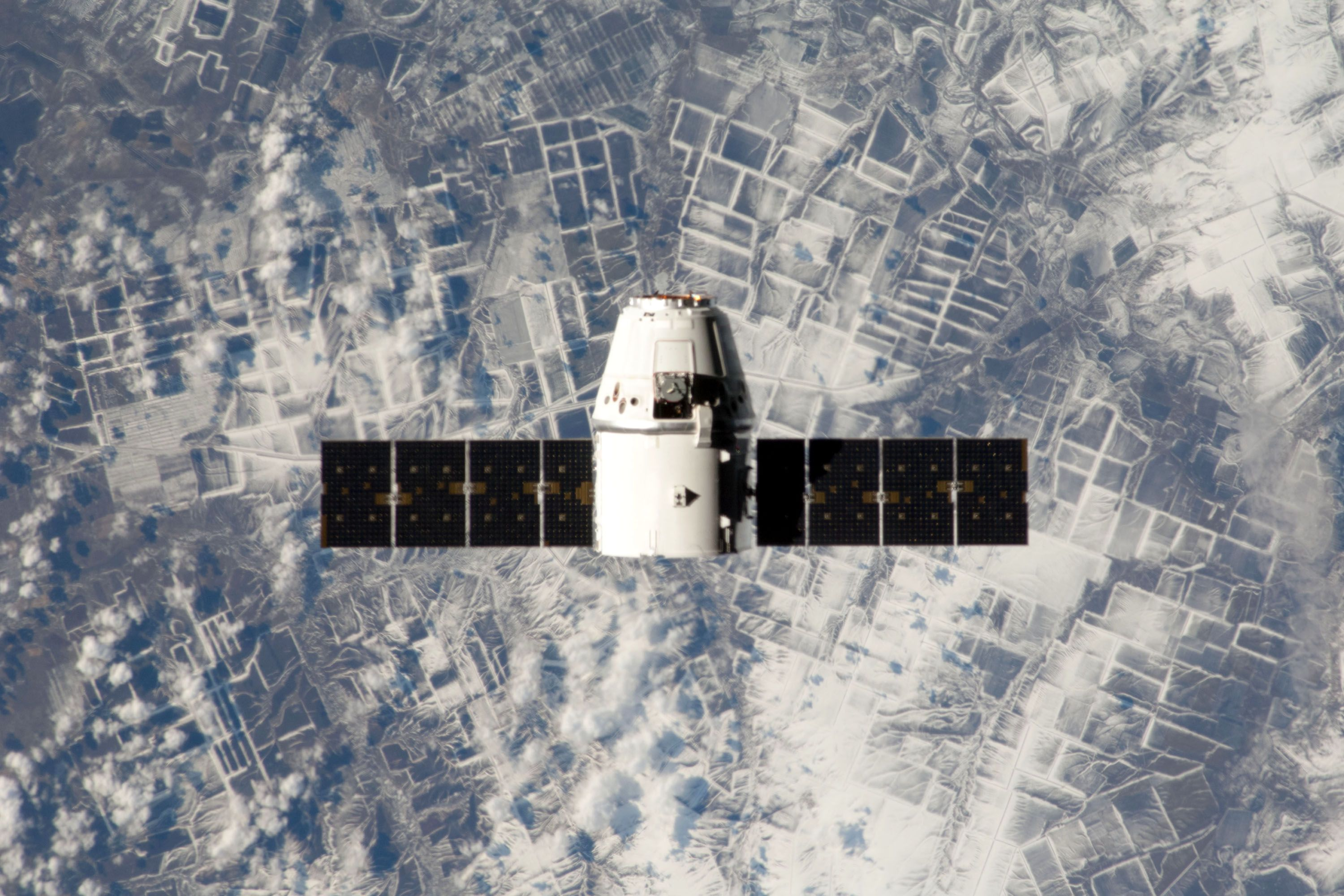
OHB System AG has secured a €554 million contract from the European Space Agency (ESA) to develop the next generation of Copernicus Sentinel-3 topography satellites, placing the German manufacturer in charge of a European industrial consortium responsible for the new spacecraft.
The contract, announced on 4 November, covers development of the Sentinel-3 Next Generation Topography mission, known as S3-NGT, and includes an option for a second satellite. OHB System, a subsidiary of OHB SE, will act as prime contractor.
The programme is intended to improve satellite measurements of ocean surface height, coastal regions, inland waters and ice-covered areas. It will use dedicated radar altimetry instruments to deliver more accurate observations, wider geographical coverage and shorter revisit intervals than the existing Sentinel-3 system.
ESA and OHB have not confirmed a launch date in the contract announcement. The immediate commitment concerns spacecraft development and the associated industrial programme, rather than an operational satellite already providing measurements.
Copernicus is the European Union’s Earth observation programme, supporting environmental monitoring, scientific research and operational services through satellites and associated ground infrastructure.
The current Sentinel-3 system uses satellites carrying instruments for several observation functions. Its payloads include radar altimeters, spectrometers and sensors measuring surface temperature, allowing a single spacecraft to collect different types of environmental data.
Two identical Sentinel-3 satellites are currently operating with these combined instrument suites. Their measurements support monitoring of ocean conditions, inland waters, ice and the characteristics of land and sea surfaces.
The next generation will distribute the observation functions between separate missions. Optical instruments will measure reflected radiation and surface temperature, while the S3-NGT spacecraft will concentrate on radar altimetry.
This change allows the topography mission to be designed around the performance requirements of height measurement. The planned S3-NGT configuration comprises two identical satellites in sun-synchronous orbit, although the newly awarded contract retains the second spacecraft as an option.
That distinction is important when assessing the contracted manufacturing programme. The €554 million award is confirmed, but OHB has not presented the optional second satellite as a separately exercised order.
Radar altimetry measures distance by transmitting radar signals towards a surface and analysing the returned signal. Precise timing information allows the instrument to determine the distance between the spacecraft and the reflecting surface.
When combined with accurate information about the satellite’s orbit, the measurements can be used to calculate surface elevation. Corrections are required to account for factors that influence the radar signal or the interpretation of its return.
Ocean surface height measurements provide information about sea level and the movement of water. Observations collected over long periods can also contribute to the study of changes in ocean circulation and regional sea level.
Coastal regions present more complicated measurement conditions than open ocean surfaces because reflections from nearby land can affect the returned radar signal. Inland lakes and rivers introduce further challenges involving smaller water bodies and surrounding terrain.
Measurements over ice-covered regions require the instrument and processing system to account for surfaces with different characteristics from open water. Establishing whether an observed change reflects surface elevation, seasonal conditions or measurement effects depends on the quality and interpretation of the data.
OHB says the next-generation instruments are intended to improve performance across these environments, including measurements of sea ice and inland water surfaces.
The design is also intended to increase coverage and shorten the time between observations of particular regions. Revisit frequency depends on orbital configuration, the coverage of each instrument and the number of satellites operating within the mission.
Ann-Theres Schulz, S3-NGT project manager at OHB System AG, said the mission would improve the accuracy of height measurements while supporting more frequent observations.
She said the programme would bring together Europe’s accumulated experience in radar altimetry through a consortium of specialist industrial partners.
The spacecraft manufacturing programme will involve the integration of several engineering systems. A satellite requires a structure capable of supporting its instruments, electrical power generation and storage, onboard processing, communications equipment and systems for controlling its orientation.
Radar measurement performance depends partly on the stability of the instrument and the spacecraft carrying it. Electrical, thermal and mechanical characteristics must be controlled within the conditions established for the mission.
Thermal control is particularly relevant because spacecraft equipment operates in an environment where temperatures can vary substantially. Components must remain within their specified operating ranges while maintaining the performance required for measurement and communication.
Power systems must support both the satellite platform and its instruments. The available electrical capacity influences equipment operation and must be coordinated with other spacecraft requirements.
Attitude control systems maintain the spacecraft’s required orientation during observations. The ability to point instruments consistently contributes to measurement quality, while orbital determination provides the positional information needed to calculate surface heights.
Individual subsystems must undergo qualification before integration into the finished spacecraft. Testing can examine their ability to withstand launch vibration, thermal conditions and other environmental stresses associated with operation in space.
Further testing establishes whether the assembled satellite can perform its intended functions. The requirements depend on the spacecraft design, instrument specifications and the verification programme agreed with ESA.
OHB will coordinate these activities across its industrial partners. The company has not disclosed the distribution of the contract value between individual suppliers or the precise manufacturing contribution of every participating facility.
Marco Fuchs, chief executive of OHB SE, said: “As prime contractor, we will develop them together with a strong European industrial consortium.”
Fuchs identified climate research, environmental monitoring and observation of polar ice as intended applications for the improved measurements.
Continuity of data is another requirement. Environmental monitoring often depends on observations collected across successive spacecraft generations, making calibration and the interpretation of changes between measurement systems important.
The new instruments will need to provide data that can be understood alongside existing Sentinel-3 observations, while delivering the improvements in accuracy and coverage specified for the programme.
The next development phase will establish the detailed spacecraft and instrument configurations, followed by manufacturing, integration and qualification. The second satellite remains subject to the contractual option, while the first spacecraft progresses under the confirmed €554 million award.