KION Group increased nine-month revenue by 3.9% to €8.522 billion as growth in automated warehouse systems outweighed weaker performance in its industrial trucks business. Adjusted operating profit rose 9.9% to €632.5 million, lifting the group margin to 7.4%. The two operating segments developed differently: Intelligent Automation Solutions gained revenue and profit, while Industrial Trucks & Services faced a less favourable product and regional mix despite higher unit shipments.
KION’s Intelligent Automation Solutions business generated €2.519 billion in revenue during the first nine months, up 16.9% from €2.154 billion a year earlier. Its adjusted earnings before interest and tax increased 36.6% to €172.2 million, giving an adjusted margin of 6.8%. The main driver was higher gross profit on project work, while contributions from the service business were slightly below the prior-year level. Automation installations and their related project execution therefore made a larger contribution to the group’s results.
Industrial Trucks & Services produced revenue of €6.034 billion, slightly down from €6.079 billion. Adjusted EBIT was €528.7 million, broadly level with the €529.5 million recorded a year before. Higher unit shipments did not translate into higher sales because the mix shifted towards lower-priced entry-level warehouse trucks and towards business in Asia-Pacific. Currency movements also weighed on the segment, partly counterbalanced by better service margins and the effects of efficiency measures.
Group order intake declined to €8.445 billion from €8.882 billion over the nine months. Industrial Trucks & Services booked €5.897 billion, against €5.970 billion a year earlier, while automation orders decreased to €2.575 billion from €2.941 billion. A particularly strong second quarter in 2025 raised the automation comparison. The current results reflect two stages of the operating cycle: new orders for trucks and automation systems, and revenue earned as previously commissioned systems are delivered.
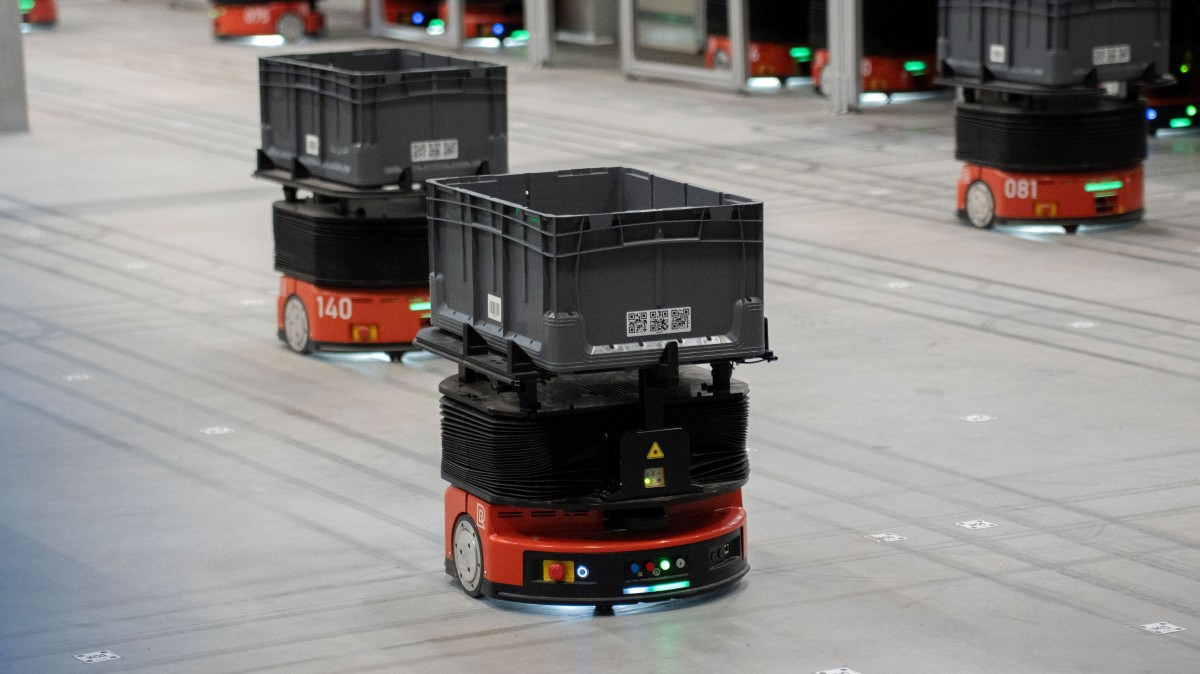
Warehouse automation contracts can encompass storage and retrieval machines, conveyors, handling equipment, controls and software integration. Engineering, factory testing, on-site installation and acceptance frequently span multiple reporting periods. Revenue and profit from an established project can therefore rise while new orders booked during the same months are lower. KION’s automation operation expanded revenue and improved project gross profit as it progressed work already under contract.
Forklift and warehouse truck purchasing follows a shorter equipment cycle, driven by fleet replacements, distribution capacity and customers’ capital spending. KION reported that demand growth by unit volume was concentrated in lower-priced warehouse trucks. That mix increases the number of vehicles moving through production and distribution without delivering the same average sales value as higher-priced counterbalance equipment. Financing terms, service coverage and customer utilisation influence the decisions made by fleet operators.
KION’s industrial truck business grew more slowly than the wider market, especially in value and economy models. Chinese manufacturers intensified competition in Asia-Pacific, while the group missed anticipated growth in Europe, the Middle East and Africa. These regional differences contributed to the fall in industrial truck order intake, even as the overall material handling market expanded in unit terms.
Nine-month net income rose to €309.1 million from €167.1 million, with the previous period carrying larger one-off costs from KION’s efficiency programme. Free cash flow nevertheless fell to €121.1 million from €392.8 million amid higher payments for acquisitions and efficiency measures. The resulting cash generation is smaller than the rise in adjusted operating profit might suggest, while equipment development, project delivery and restructuring continue to require funding.
Service operations helped limit the effect of weaker new truck sales. Industrial Trucks & Services achieved a higher service gross margin, offsetting part of the pressure from exchange rates and lower-value equipment orders; its adjusted EBIT margin edged up from 8.7% to 8.8%. In Intelligent Automation Solutions, increased gross profit from project delivery drove the adjusted EBIT margin to 6.8% from 5.8%, overcoming a slightly lower earnings contribution from service work. The contrast follows the divisions’ different order and delivery cycles.
KION revised its 2026 guidance on 14 October, following preliminary third-quarter figures. It now expects group revenue of €11.450–11.750 billion and adjusted EBIT of €815–875 million. The same revision moved the target of double-digit group and segment adjusted EBIT margins beyond 2027. The completed nine-month results provide the revenue, order and cash-flow figures against which that existing guidance can be assessed.
Automation project execution will continue to contribute to KION’s revenue as installations reach their delivery and acceptance stages. Industrial Trucks & Services faces a different challenge in recovering orders where the market favours lower-priced products and competition has intensified. Fourth-quarter revenue, order intake and cash flow will show how the two operating businesses develop against the October guidance.