Gradian Thermal Solutions has formally opened a 500,000-square-foot factory in Dayton, Minnesota, expanding its manufacturing and testing capacity for cooling equipment used in data centres and other industrial facilities. The investment is approximately $60m. Production began in June, several months before the October opening event, and the company says it is continuing to increase output. The site includes fabrication equipment, assembly lines and an end-of-line chiller testing laboratory, supporting an established product range that includes air handling, liquid cooling, chillers and prefabricated systems.
The new site operates alongside Gradian’s 180,000-square-foot manufacturing facility in Maple Grove, Minnesota, and a 100,000-square-foot site in Guadalajara, Mexico. Their combined footprint is approximately 780,000 square feet. That total is a measure of occupied industrial space, not the rated number of chillers or liquid cooling units that the company can ship each year. Gradian has not published the site’s line count, production mix or current utilisation, although it describes the Dayton investment as additional capacity for data centre, industrial and commercial customers.
The expansion is intended to support equipment used to control the temperature of computing facilities as well as commercial and industrial operations. Such projects require several linked functions: heat must be collected from the equipment or occupied space, transferred to an air or liquid circuit and then rejected to the surrounding environment. Different arrangements place different demands on air handlers, heat exchangers, pumping systems and chillers. The Dayton factory is intended to manufacture products across those parts of the thermal system rather than a single appliance category.
Gradian’s air cooling range includes computer room air handlers and fan coil arrays. These systems move conditioned air through a building or data hall and transfer heat through internal coils or other cooling elements. Airflow distribution, fan power and temperature control determine how effectively an installation serves equipment with different heat loads. For installations with higher heat densities, the company also offers liquid cooling products, including coolant distribution units, rear-door heat exchangers and manifolds.
A coolant distribution unit typically manages the circulation and separation of liquid cooling loops so that heat can be transported from equipment to a facility system. Its selection depends on the temperature, flow, pressure and liquid compatibility requirements of the installation. Rear-door heat exchangers instead capture heat as air leaves a rack. These methods can operate alongside conventional air handling, and the choice depends on rack design and the loads the system must remove. Gradian has not announced a new cooling performance benchmark in connection with the factory opening.
Chiller production is supported by a dedicated end-of-line test laboratory at Dayton. A chiller transfers heat from a circulating liquid through a refrigeration or other thermal circuit, and final testing can establish whether an assembled unit meets specified flow, temperature and operating requirements before shipment. That reduces the chance of identifying basic equipment faults only after delivery, although site commissioning remains necessary. The announcement does not identify the laboratory’s test range, number of simultaneous bays, accepted output or any independently measured change in defect rates.
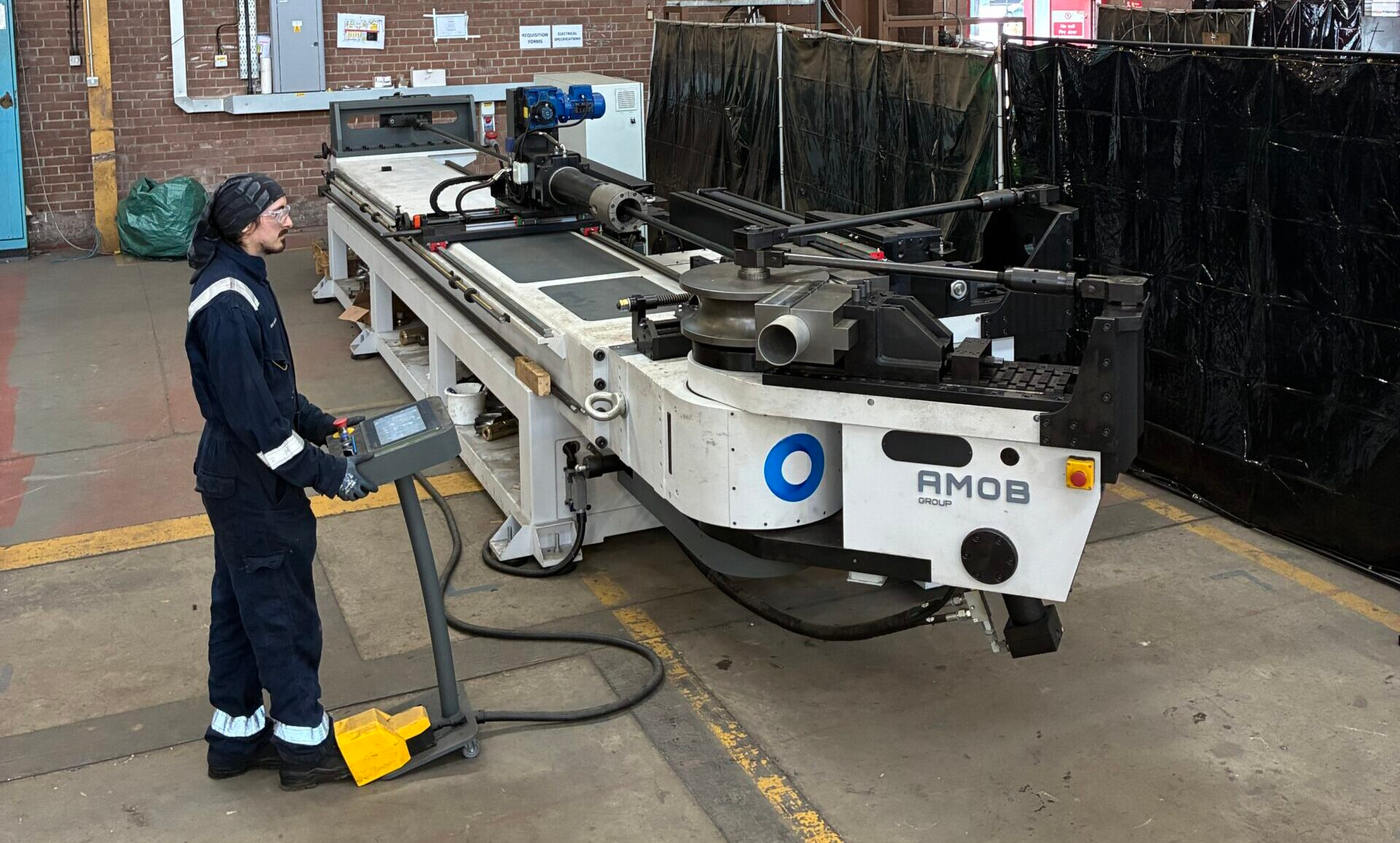
The company says the factory includes dedicated assembly lines and fabrication equipment. Bringing more of those activities together can reduce the number of separate handovers involved in completing an engineered product, but that outcome depends on suppliers, line balancing and the final scope of manufacturing performed on site. Gradian describes its operating model as vertically integrated and intended to improve quality control and scalability. The announcement does not contain comparative lead-time, scrap-rate or failure-rate data demonstrating a measured improvement.
Prefabricated cooling equipment forms a further part of the company’s product range. Integrating pumping, heat exchange, controls and other items into an assembled module can move part of the installation and testing effort away from the final project location. That may simplify site coordination where construction access or commissioning schedules are constrained. It still leaves engineering decisions about electrical connections, piping, control integration and performance under actual operating conditions. Factory assembly does not remove the need for acceptance tests and commissioning at the installation site.
Gradian says it expects to increase its workforce from approximately 150 to about 1,000 employees companywide as operations expand. The larger figure is a future ambition across the business, not a report that Dayton has already created 850 jobs. The company is recruiting in engineering, fabrication, assembly, project management and support functions. Dayton’s proximity to its Maple Grove base allows management and engineering teams to work between both Minnesota facilities, but the company has not provided a schedule showing when its projected staffing level will be reached.
The $60m investment and new floor space provide additional manufacturing infrastructure, but the business has not specified a date by which all proposed capacity will be in service. It has also not published the order book or annual revenue associated with the expansion. Those missing measures limit any independent assessment of how quickly the new plant will translate into higher shipments. The opening nevertheless establishes an operational facility with production already under way, rather than a future construction proposal.
With manufacturing under way since June, the next evidence of Dayton’s contribution will come from output, delivery performance and repeatable factory test results. The company has not disclosed unit production since start-up, the proportion of work performed in-house or a timetable for reaching a stated capacity target. Its $60m investment has nevertheless added an operating US factory capable of assembling and testing a range of cooling systems, rather than only a planned building. How much demand it can meet will depend on the production mix, suppliers, engineering capacity and pace of recruitment.