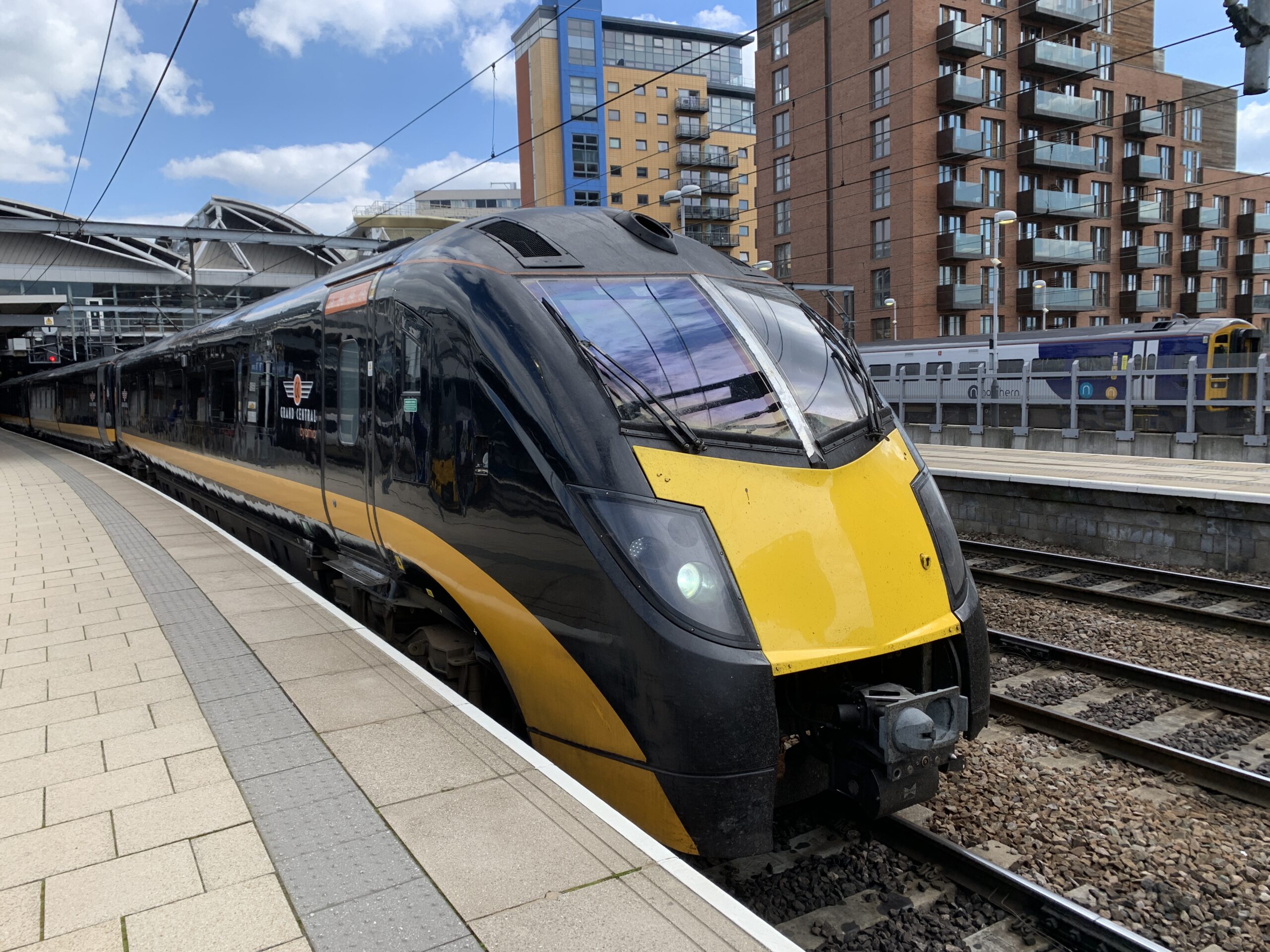
Alstom has received first-in-class regulatory authorisation for an upgraded Grand Central Class 180 train equipped with the European Train Control System (ETCS). Unit 180108 has achieved Authorisation for Placing into Service (APiS) for the signalling retrofit, allowing the project to move into further software and reliability work. The approval is a significant engineering milestone, but it does not mean all ten trains in the Grand Central fleet are already operating with ETCS Level 2 in normal passenger service.
Grand Central, the Arriva Group’s open-access operator, runs Class 180 trains owned by Angel Trains. Alstom has equipped the first train with the signalling hardware and software needed for the East Coast Digital Programme. The next steps for the wider fleet are software updates and a planned 50,000 miles of fault-free running from December 2026. Driver training is also under way for Level National Train Control (L-NTC) operation, which allows ETCS-equipped trains to run on conventional routes while wider digital signalling is introduced.
Authorisation for Placing into Service establishes that unit 180108’s first-in-class fitment has achieved the required regulatory milestone. It does not finish the programme for the other nine vehicles. Extended running is intended to expose problems that may arise during normal operation, including interaction with the train’s existing systems, cab equipment and on-board software. Alstom and Network Rail expect the Class 180 fleet to begin using ETCS Level 2 between Welwyn and Hitchin by spring 2027, subject to the remaining testing and operational preparations.
Under ETCS, the train’s on-board equipment receives movement authority and speed information and continuously supervises the driver’s adherence to the permitted profile. If the train exceeds the supervised limits, the system can initiate braking. ETCS Level 2 uses a radio communications link and supporting signalling infrastructure to deliver movement authority to the cab, rather than relying on the driver observing only lineside signals. Retrofitting that capability requires validated interfaces with train speed measurement, braking, power supplies, displays and existing controls; a working screen alone does not provide an approved safety system.
The Class 180 is an established diesel multiple unit design, built in Britain by Alstom between 2000 and 2001. Retrofitting digital signalling to this generation of passenger train creates a different engineering task from fitting ETCS to a new train designed around the system from the outset. Equipment must be accommodated within existing space and electrical constraints while retaining the vehicle’s approved operational functions. Cab displays, wiring, control interfaces and diagnostic arrangements need to be integrated in a way that maintainers and drivers can use without compromising normal service.
A 50,000-mile fault-free running period offers operating evidence beyond the first regulatory authorisation. The equipment needs to work across different services and conditions without recurring faults that interfere with train availability. Software anomalies, intermittent electrical faults and communications problems can require investigation even after laboratory and static tests have been passed. The December reliability programme has not yet been completed, and faults found during running could still require configuration changes and further verification before the full fleet uses ETCS Level 2 routinely.
Training is another part of the migration. Drivers must understand the information and alerts displayed by an ETCS-equipped cab and how its controls relate to sections where conventional signalling remains. The introduction of Level National Train Control mode allows the fleet to work within the existing railway while preparing for routes where digital supervision is available. Such mixed operation is important during a phased infrastructure transition, when trains may encounter both conventional signals and ETCS-controlled sections during their scheduled duties.
Digital cab signalling is being introduced in stages along the southern East Coast Main Line. The Finsbury Park–Moorgate route began operating without conventional lineside signals in 2025, and some Great Northern services started using ETCS in the Welwyn–Hitchin area in August 2026. The Class 180 work extends the capability to an older high-speed diesel fleet rather than replacing signalling across the entire railway in one operation. Other passenger fleets are scheduled to begin operating on digital signalling sections during 2027 as vehicle approvals, infrastructure readiness and driver training progress.
Alstom maintains the Class 180 fleet at its Crofton depot near Wakefield, providing an established maintenance base for the upgraded equipment as the service programme progresses. Diagnostics, software configuration control and component replacement procedures become increasingly important as a digital fleet develops from its first authorised unit into a maintained population. A fault identified on one train may require examination across others using the same configuration, making disciplined software and maintenance records central to reliable deployment.
Alstom continues to maintain Grand Central’s Class 180 fleet at Crofton near Wakefield while supporting the signalling retrofit programme. The next published milestones are software updates, 50,000 miles of fault-free running and the intended start of ETCS Level 2 operation in spring 2027. Maintenance procedures and configuration records will need to remain consistent across the ten units as the new equipment is introduced. Authorisation of 180108 is therefore an important completed step, but wider fleet reliability and route readiness will determine when digital operation becomes routine.
Archival/illustrative image: Image: Oliver Youd / Wikimedia Commons, CC BY-SA 4.0. Licence. No changes to the photograph.