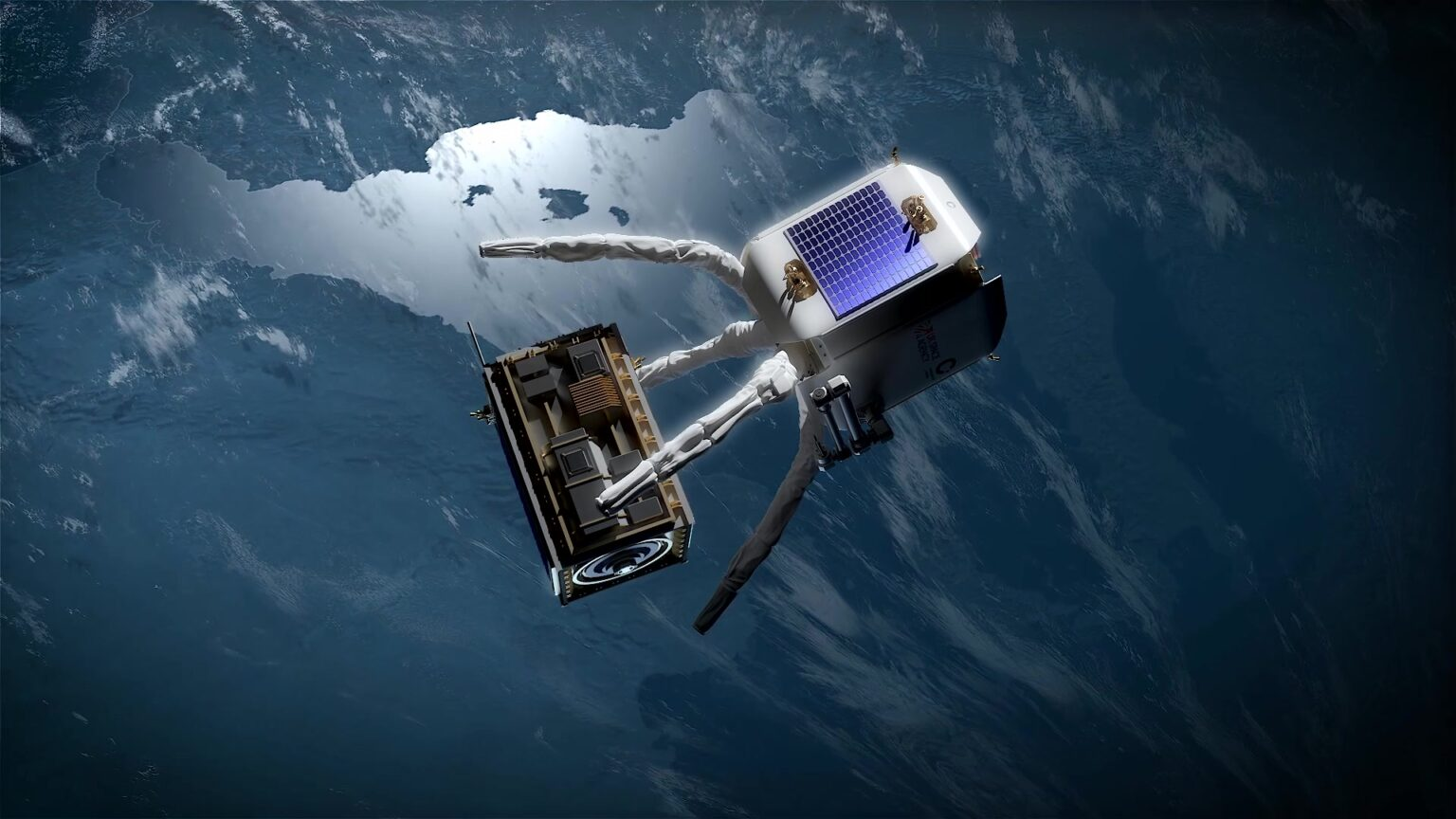
ClearSpace UK has been selected as prime contractor for Britain’s national active debris removal mission, intended to capture and remove two defunct British satellites from low Earth orbit. The award advances a programme of spacecraft design, integration, testing, and mission preparation, but the capture system has not yet flown or removed material from orbit.
The mission is backed by approximately £61 million of UK government support. The spacecraft is planned for launch from Saxavord in 2029, with both targeted satellite removals expected by 2032. These are future milestones rather than completed activity. The amount relates to a future engineering undertaking rather than a completed space operation, and procurement or development milestones must be distinguished from achievement of the final removal objective.
Orbital debris poses a practical engineering challenge because inactive satellites and fragments continue travelling at speeds capable of causing severe damage in a collision. Even relatively small objects can present a hazard to operational spacecraft, increasing the importance of collision avoidance, tracking, and eventual removal of selected large objects.
Active removal is particularly difficult where the target was not designed to be recovered. A defunct spacecraft may have limited position information, no functioning communications system, and uncertain mechanical condition. The servicing spacecraft must estimate its motion and approach safely without relying on the target to cooperate.
A controlled encounter requires more than arriving at the right orbital altitude. The spacecraft must determine its relative position and velocity, account for orbital motion, and manage the effect of small disturbances as it moves closer to the target. Sensors and onboard guidance provide measurements used by the navigation and control systems.
Cameras and other proximity sensors can help establish the orientation of a target, although illumination, surface reflectivity, and changes in viewing geometry can affect the information available. The mission software must distinguish between a reliable measurement and data that could lead to an unsafe manoeuvre.
The planned robotic capture mechanism must accommodate the physical properties of each satellite selected for removal. Where a target has protruding equipment, damaged surfaces, or uncertain rotation, the approach and capture configuration need to avoid applying loads that destabilise either spacecraft.
After capturing the first satellite, the mission plan also requires the spacecraft to address a second target, making the ability to perform repeatable rendezvous and capture manoeuvres an important objective. Once an object is secured, the combined system will behave differently from the servicing vehicle alone. Its mass distribution, moments of inertia, and available control authority can change, requiring propulsion and attitude-control systems to maintain a safe orientation.
The proposed mission includes the subsequent removal of the target, with the end state dependent on the approved orbital plan. Controlling the resulting trajectory is essential because simply moving debris to another orbit would not necessarily reduce risk to other spacecraft.
Engineering teams must also demonstrate that failures during approach or capture do not create a greater hazard than the original object. The mission therefore needs defined abort and retreat conditions, fault monitoring, and procedures for suspending the operation when navigation uncertainty becomes unacceptable.
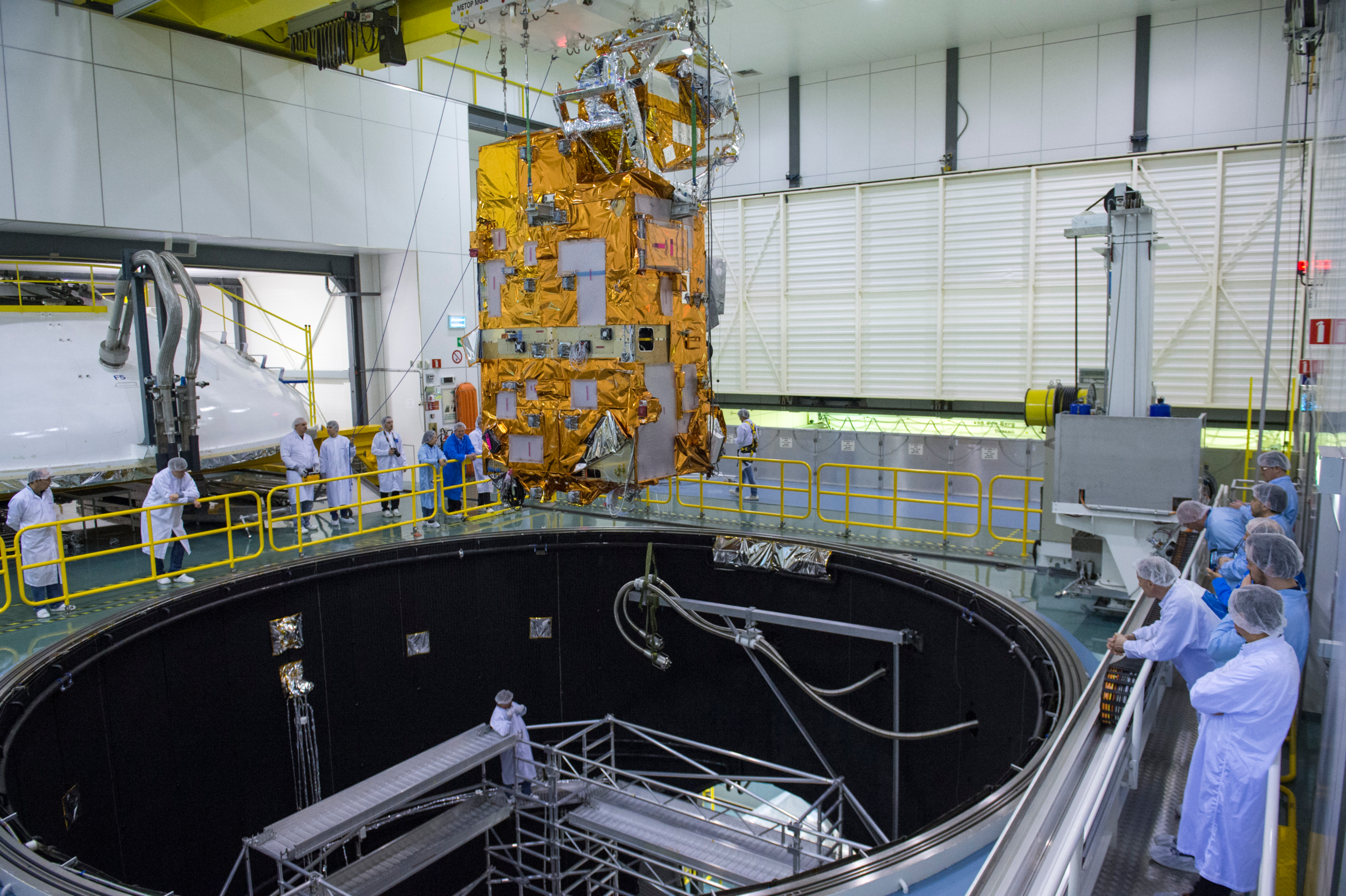
Hardware development involves propulsion equipment, sensors, structures, electronics, communications systems, and software that have to operate together. Components may be qualified separately, but end-to-end tests are required to establish how the complete spacecraft responds to commands, changing observations, and simulated faults.
Thermal and environmental testing provides evidence that systems can tolerate launch loads and conditions encountered in orbit. Power generation and storage must support both routine operations and short periods of higher demand associated with manoeuvring or capture.
Autonomous operation has limits. Ground teams can plan the mission and monitor progress, but signal delays, communication windows, and the rapid dynamics of close-range manoeuvres mean that selected decisions may need to be made onboard within pre-established safety constraints.
The development also creates work for a network of specialist suppliers. Precision mechanisms, radiation-tolerant electronics, optical systems, propulsion components, and testing facilities must meet detailed interface and reliability requirements before they can be integrated into a flight article.
The UK programme contributes to the broader effort to develop services that manage the condition of the orbital environment. Active debris removal is related to, but distinct from, satellite inspection, refuelling, repair, and controlled end-of-life disposal. Each application requires suitable proximity-operation capability, with different tools and risk assessments.
Demonstrating a single capture would not by itself establish an economically viable fleet service. Commercial operations would also depend on mission costs, launch availability, regulatory permissions, target selection, and demand from satellite operators or public bodies.
International responsibilities are relevant because a non-functioning satellite is still a space object associated with an owner and launching state. Removal activity requires the appropriate authorisations and coordination, rather than treating abandoned hardware as ownerless material that can be collected at will.
The project remains on a development timetable, with a planned 2029 launch and both satellite removals targeted by 2032. Future qualification, launch, rendezvous, capture, and disposal milestones will establish whether the system performs as intended. Until those stages are completed, the announcement records a contract and mission selection, not operational debris-removal capability.