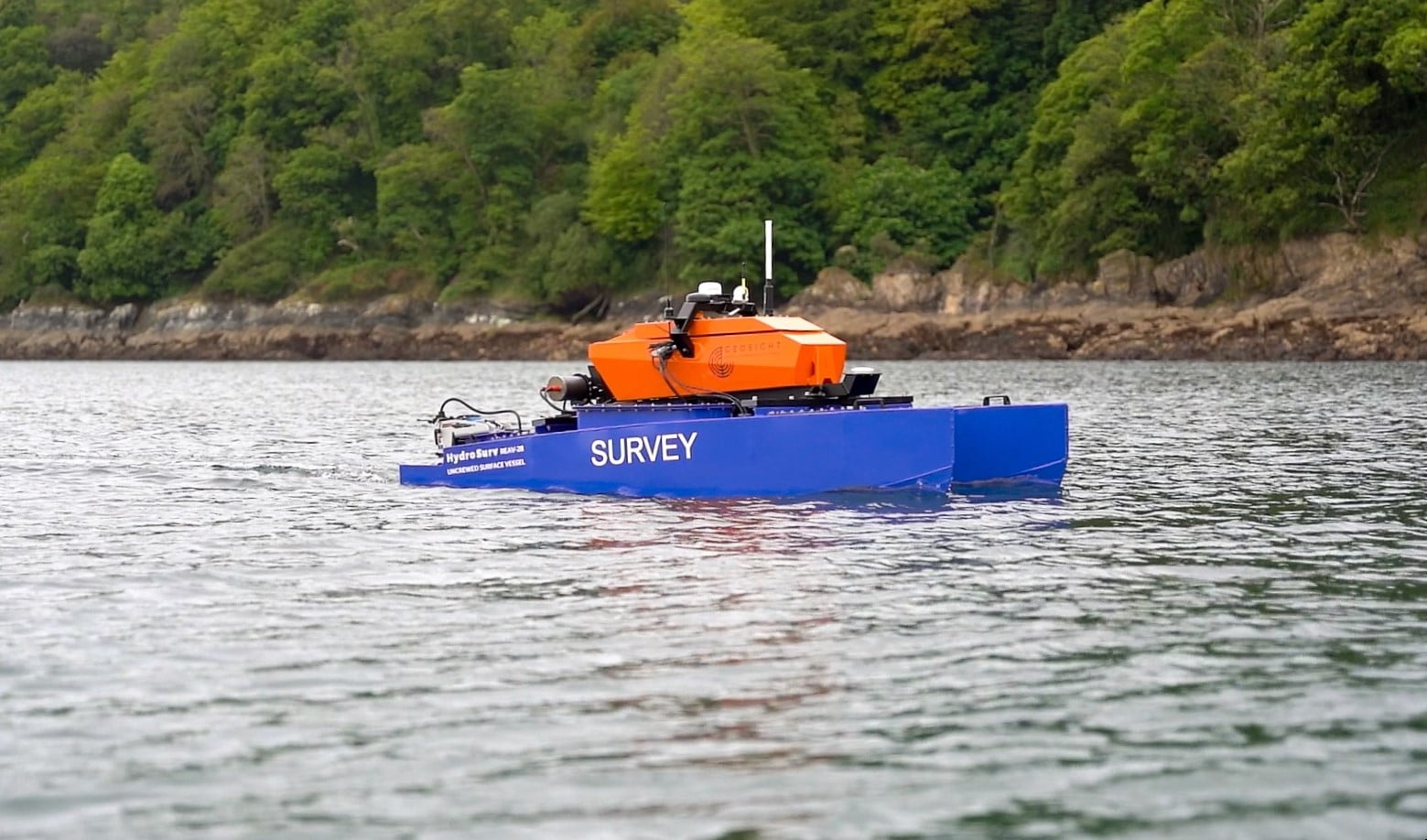
HydroSurv, an Exeter manufacturer of uncrewed surface vessels, has obtained a £150,000 trade loan from Nighthawk Export Finance, backed by a UK Export Finance guarantee. The company expects the financing to support deliveries to customers in Norway and Italy and plans to add seven skilled roles, taking its workforce from 12 to 19. The arrangement is intended to support international sales and working capital requirements for its autonomous and remotely operated marine equipment, rather than constituting a new manufacturing plant or an order for a fixed number of vessels.
The finance is linked to export activity at a company supplying specialist workboats used for hydrographic survey, environmental monitoring, and other marine data collection tasks. Its value is the stated size of the financing support, not reported revenue from completed deliveries.
Uncrewed surface vessels can undertake selected operations without carrying a crew aboard the craft. They use propulsion, navigation equipment, onboard computers, communications links, and specialist sensors to follow planned routes or respond to commands from personnel operating elsewhere.
The operational benefit depends on the task. Removing crew from a small vessel can reduce exposure to some offshore hazards, but it creates requirements for reliable remote supervision, communications, collision avoidance, and recovery arrangements when equipment faults occur.
Hydrographic work often involves maintaining a controlled track across a survey area while instruments collect measurements. A small surface vessel may carry sonar or other sensors that record water depth, current profiles, or related environmental parameters, with the final equipment fit determined by the customer’s application.
Accurate survey work requires more than navigation between waypoints. The position of the vessel, orientation of its sensors, local water conditions, and timing of measurements can affect the usefulness of recorded data. Integration and calibration are therefore important parts of delivering a survey system.
Autonomous route-following software can reduce some repetitive piloting activity, although the vessel must be able to respond to traffic and unexpected conditions within its authorised operating limits. An autonomy feature demonstrated in one environment cannot automatically be assumed suitable for unrestricted operation in congested ports or exposed waters.
Communications provide another constraint. Radio links can enable remote control and monitoring, while satellite or cellular equipment may be used according to the range and environment. Coverage, latency, and availability affect how much supervision can be performed in real time.
A vessel intended to operate beyond the immediate view of an operator requires procedures for loss of contact. The correct response may vary with the craft, its mission, surrounding traffic, and applicable rules. Operators need a defined approach for maintaining safety rather than assuming remote control will remain available throughout every operation.
Propulsion and energy storage influence both endurance and payload capacity. Carrying additional batteries can extend some operations but adds mass, while instruments and communications equipment create electrical demand alongside the propulsion motors.
The resulting engineering trade-offs affect hull design, stability, speed, and the available time on task. A craft designed to cover a large survey area may have different requirements from one intended for precise positioning near a structure or in confined water.
Manufacturing these systems involves more than constructing the hull. Electrical harnesses, control hardware, navigation receivers, communications equipment, and mission payloads must be installed, protected against environmental exposure, and integrated into a complete operating system.
Factory and acceptance tests provide evidence that those elements perform as specified. Individual sensors may meet supplier requirements yet still encounter integration difficulties when installed near power electronics, radio equipment, or other components on a small vessel.
Export finance can support companies facing a gap between expenditure on materials and labour and payment by overseas customers. A trade facility may help a manufacturer or supplier accept orders while meeting the costs of production and delivery, subject to the conditions of the funding arrangement.
The availability of finance does not eliminate commercial risk. A potential export sale still depends on customer procurement, technical qualification, required operating permissions, and the company’s ability to deliver a suitable system at the agreed price and date.
Overseas customers may also require training, maintenance support, spare parts, and software updates. The long-term value of a specialised marine platform depends partly on keeping its communications, navigation, and sensing equipment serviceable in the intended environment.
The UK export-support announcement establishes a financing milestone for HydroSurv, with seven additional skilled positions planned at its Exeter operation. Recruitment is intended to increase the workforce from 12 to 19, but completion of those appointments has not been verified. The loan also does not establish new factory capacity or completed overseas vessel deliveries.
Progress can be assessed through subsequent customer contracts, manufacturing activity, and confirmed exports. The £150,000 facility gives HydroSurv a source of trade finance for that work, while the underlying operational and commercial results remain to be demonstrated.