BioBTX has signed a €20.8 million EU Innovation Fund grant agreement for its proposed PETRA chemical recycling plant in Delfzijl, the Netherlands. The financial commitment supports construction of a commercial facility intended to turn mixed plastic waste into aromatic chemical feedstocks, but the plant is not yet operating.
The agreement was signed with the European Climate, Infrastructure and Environment Executive Agency under the Innovation Fund's IF24 Net-Zero Technologies medium-scale call. It follows BioBTX's positive final investment decision in July 2026, a separate milestone that enabled the project to move from development towards commercial execution.
PETRA is designed to process around 20,000 tonnes of mixed plastic waste each year, making approximately 10,000 tonnes of renewable aromatic oil rich in benzene, toluene and xylenes. Earlier BioBTX project information also forecasts about 8,000 tonnes of other sustainable products annually. These are design expectations, not verified output or conversion yields from an operating Delfzijl plant.
The company developed its Integrated Catalytic Cracking Process, or ICCP, to process waste streams that may be unsuitable for conventional mechanical recycling. Mechanical methods require useful sorting and separation, and can face practical limits when plastics are mixed, heavily contaminated or assembled into complex multilayer products.
ICCP first subjects prepared polymer waste to thermal conversion, breaking longer polymer structures into smaller hydrocarbon molecules. A subsequent catalytic stage changes the product distribution towards aromatic compounds of interest to chemical manufacturers. Distinguishing thermal conversion from catalytic upgrading is important: heating mixed polymers does not by itself guarantee an oil containing the required proportions or purity of the target chemicals.
Catalysts help promote desired reactions, but their operating behaviour can be influenced by feedstock composition, temperature, residence time and substances carried into the reaction system. Material handling, vapour treatment and recovery equipment are therefore integral to producing a marketable chemical stream rather than only decomposing waste.
Benzene, toluene and xylenes, often grouped as BTX, are established ingredients in the production of polymers and other chemicals. A recycled source could displace part of the fossil-derived feedstock traditionally used in these value chains, provided the resulting product meets the purity and contamination limits of downstream users.
That qualification requirement is distinct from demonstrating that the process can convert mixed waste. Chemical manufacturers need consistent composition, dependable volumes and information about impurities that might affect later reactions or finished products. A commercial PETRA plant would have to sustain those conditions across a variable supply of incoming material.
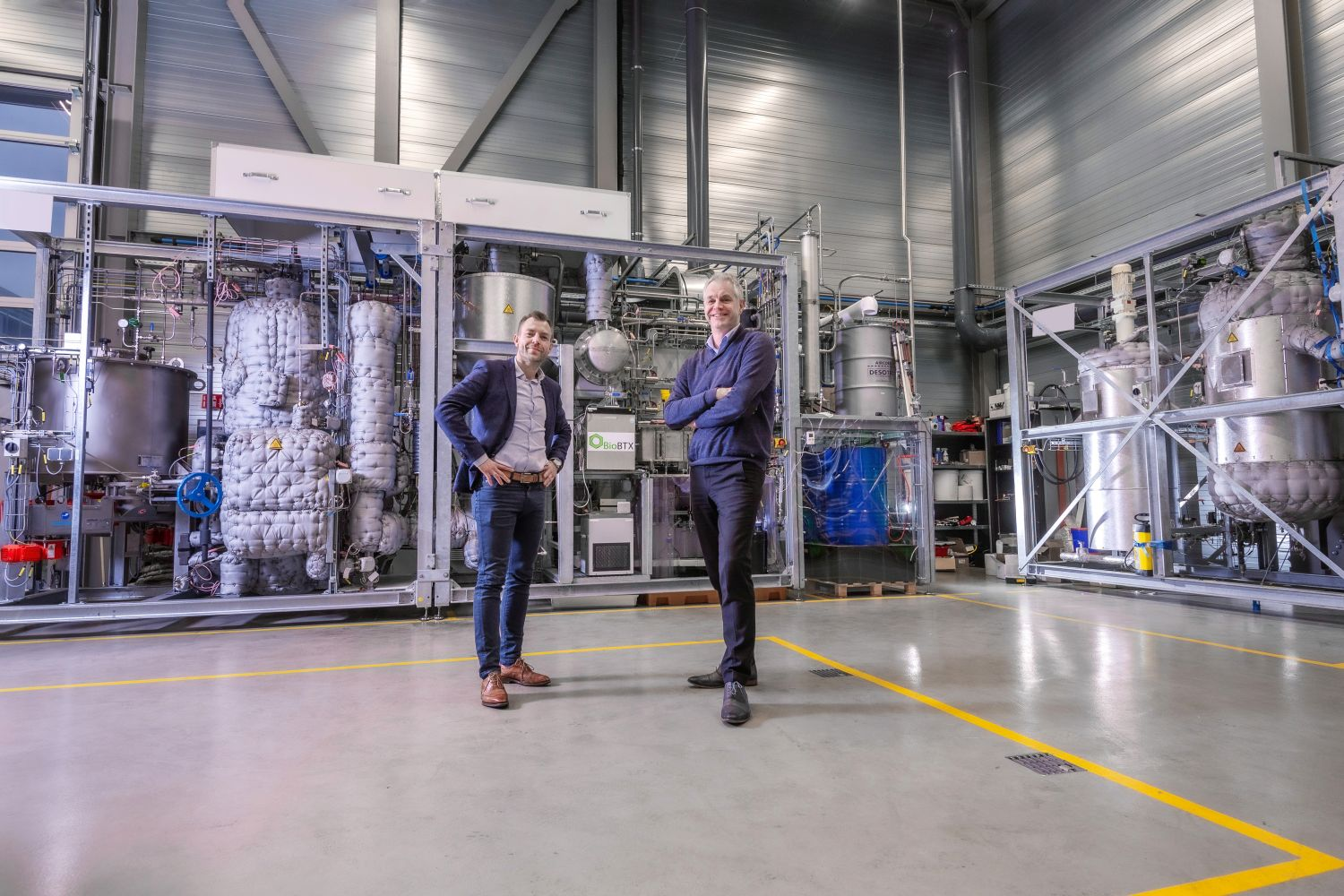
BioBTX has tested the technology in laboratory and pilot facilities, but translating the process to an integrated commercial installation requires different engineering controls. Equipment must handle continuous feed, separate gaseous and liquid streams, manage solids and maintain stable reaction conditions over extended operating periods.
The positive investment decision in July established a construction commitment, and BioBTX previously reported selecting principal equipment suppliers and signing construction arrangements. The October announcement is a grant signature, not a second final investment decision, factory commissioning or evidence of commercial chemical deliveries.
Construction has been described as commencing in early 2027, with operation targeted for 2028. BioBTX has given different anticipated start-up points within that year. The grant announcement provides no revised commissioning date, and PETRA remains subject to construction, integration and the commissioning of its conversion and recovery systems.
BioBTX estimates that PETRA could avoid more than 517,000 tonnes of carbon dioxide equivalent over its first ten years in operation, equivalent to 72% greenhouse gas emissions avoidance under the Innovation Fund methodology. The comparison uses a reference case involving fossil-derived aromatics and incineration of mixed plastic waste.
The estimate is a projected lifecycle outcome, not measured emissions from the proposed factory. Its eventual validity will depend on process energy, actual material yields, feedstock characteristics, treatment of residual streams and the assumptions used to describe the materials and disposal methods being displaced.
BioBTX expects the plant to create around 35 direct jobs at Chemie Park Delfzijl. Additional regional construction and engineering activity is possible, but no independently established employment figure or completed recruitment programme was supplied with the October grant announcement.
The location within a chemical industrial area offers potential access to utilities, technical contractors and existing chemical distribution routes. The operating and commercial benefits will depend on the project's final design and supply arrangements. The announcement does not establish that all future production is contracted to identified customers.
In September, BioBTX and Rain Carbon announced a strategic collaboration intended to explore the supply of renewable aromatics into established chemical manufacturing routes. That commercial development is separate from the October public grant agreement and should not be treated as evidence that PETRA has begun supplying products.
The funding adds an identified contribution towards delivering the first commercial installation of ICCP. Construction, commissioning, reliable production at intended rates and downstream product qualification remain future milestones. Those steps, rather than the grant signature alone, will show whether BioBTX can translate its pilot technology into a sustained source of circular chemical feedstocks.