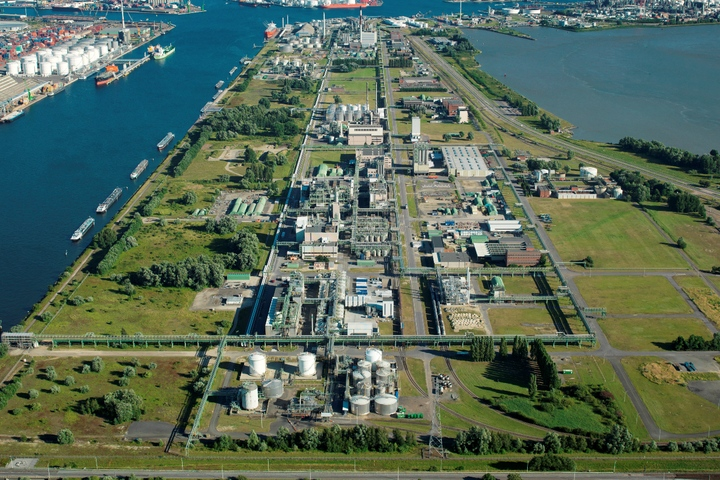
Covestro has proposed reducing polycarbonate production at its Antwerp chemical complex from four operating lines to one and discontinuing local manufacture of bisphenol A, the precursor used in conventional polycarbonate production. The intended reorganisation could affect up to 260 employees, but no final decision has been made.
The German materials company announced its plans for the Belgian site on 15 October and began a formal information and consultation process with employee representatives. Covestro says the outcome must be considered before any decision is taken. The proposal is therefore not an implemented shutdown, and a date for ending the affected production has not been announced.
Antwerp employs approximately 970 people in production and support functions. The 260 figure describes the maximum number of people potentially affected by the proposed changes, not confirmed redundancies. Any final changes to staffing, individual roles or equipment will depend on the consultation and subsequent decisions.
The company attributes the proposal to a combination of high European production and energy costs, weak demand, strong international competition and global overcapacity in standard polycarbonates. Capacity additions in Asia have increased available supply, while the lower utilisation of European assets has made their existing cost structures harder to sustain.
Polycarbonate is an engineering thermoplastic used where components require combinations of toughness, dimensional stability, heat resistance and, in some applications, optical clarity. It appears in automotive assemblies, electrical equipment, construction products and other manufactured goods. Different formulations are selected to meet the needs of particular manufacturing processes and operating conditions.
Bisphenol A is an important feedstock in conventional polycarbonate chemistry. Polymer manufacturing involves converting chemical intermediates into chains that determine the resulting material's characteristics. The proposal to stop local BPA production therefore concerns a connected part of Antwerp's chemical operations, although Covestro has not detailed future sourcing arrangements for the remaining line.
According to Covestro, all four polycarbonate lines and the BPA unit were still operating when the proposal was announced. Covestro has given the plant's existing polycarbonate nameplate capacity as 240,000 tonnes annually, but has not disclosed the capacity of the line it intends to retain. No output reduction should therefore be calculated simply by dividing the existing total by four.
The proposed remaining line would concentrate on higher-value specialty polycarbonate materials, including heat-resistant APEC grades. Such products may be used where elevated temperatures require a material to retain more of its properties than standard polycarbonate can provide. The precise suitability still depends on product design, formulation and the conditions under which the component operates.
Specialty production imposes different commercial and technical requirements from high-volume standard grades. Equipment settings, material composition, product consistency and qualification processes can differ between customers. Switching the portfolio towards specialist materials is thus not equivalent to preserving today's product mix on a smaller number of identical lines.
For commodity materials, manufacturers compete in markets where large production capacities and international pricing exert considerable influence. Chemical plants also carry substantial fixed costs in equipment, maintenance, utilities and skilled labour, which become harder to recover when production falls below economic operating rates.
Covestro says its Antwerp polycarbonate activities have become increasingly loss-making since 2022. Its management regards the present configuration as economically unsustainable under existing market conditions. These are the company's explanations for proposing the change; the announcement does not supply a quantified cost-saving target or forecast operating margin for the smaller configuration.
The intended restructuring is limited to specified activities rather than the entire Antwerp complex. Covestro says the polyether production lines would remain unaffected, alongside the site's Technology Centre, which works on process technology for polycarbonates across the wider group.
A previously announced investment in new aniline production would also proceed as planned. The company intends Antwerp to remain an important European centre for that chemical. Aniline is associated with a different industrial chemical value chain from polycarbonate, so continuation of the project should not be misrepresented as replacing BPA production directly.
Retaining manufacturing, research and specialist chemical activity would preserve a substantial industrial presence in Antwerp even if the restructuring proceeds. The exact remaining production footprint, however, cannot yet be established from a proposed number of lines alone; associated equipment, utilities, intermediate supplies and plant operating arrangements may also require decisions.
Antwerp's location within an established chemical cluster provides access to industrial services, skilled personnel and logistics infrastructure. Those advantages do not prevent individual production routes from coming under pressure when international capacity and input costs change, but they help explain why a company might retain selected technologies while withdrawing from others.
Covestro has presented the proposal as a way of making room for higher-value materials and future investment. That strategy remains subject to both technical execution and customer demand, and there is no evidence yet that the intended new production mix has restored the economics of the Antwerp polycarbonate business.
Employee consultation is now the decisive near-term step. Until it concludes, the proposed reduction from four lines to one, the end of BPA production and the potential effect on 260 jobs must remain conditional rather than being reported as completed plant closures or workforce reductions.