Brandauer has secured £199,500 from the West Midlands Supply Chain Transition Programme to develop a more repeatable manufacturing process for bonded motor lamination stacks used in electric vehicle propulsion systems.
The Birmingham precision stamping and tooling manufacturer will work with Warwick Manufacturing Group (WMG) at the University of Warwick on a 12-month programme due to finish in May 2027. The principal objective is to overcome production inconsistency that results in rejected components and defects being discovered too late in the manufacturing cycle.
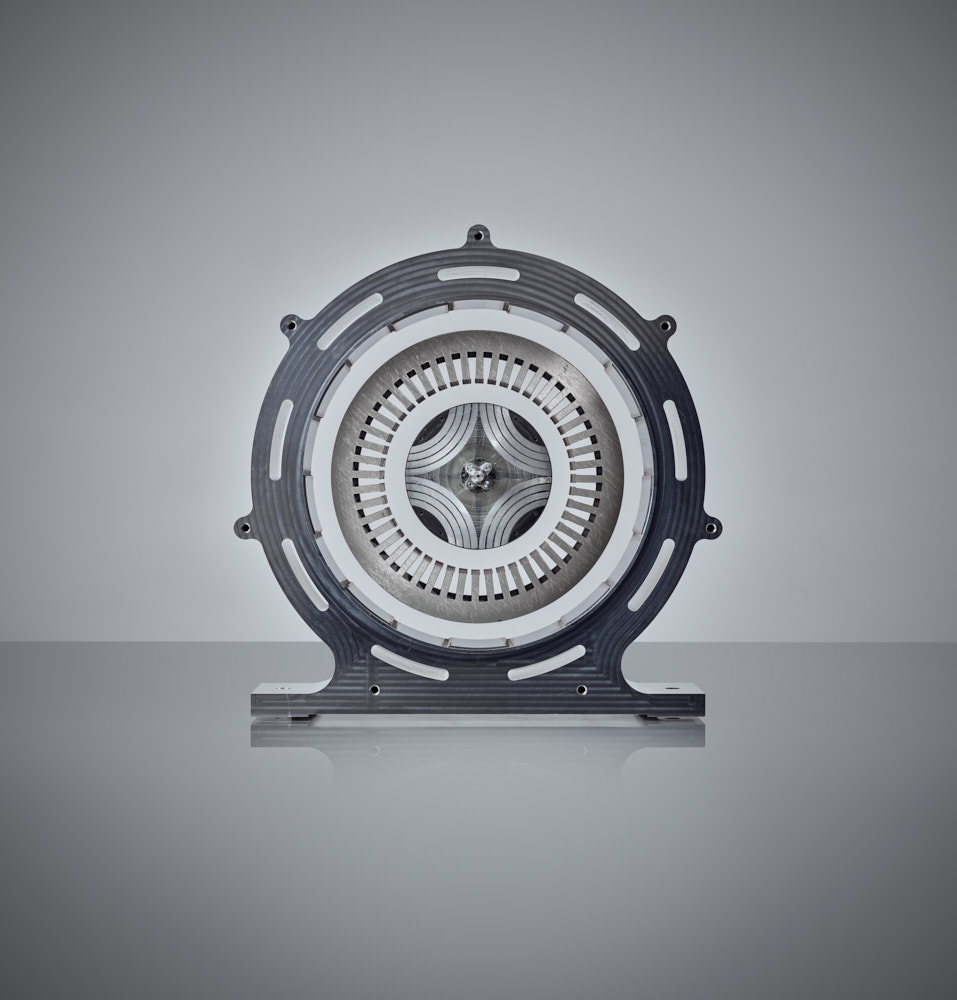
Lamination stacks form the magnetic cores of electric machines. Rather than using a solid piece of metal, motor manufacturers assemble large numbers of thin electrical steel sheets, helping to restrict circulating currents within the core and the energy losses associated with them. The geometry and repeatability of those sheets influence the efficiency and performance of the finished motor.
The process covered by the new award involves stacks of more than 3,000 individual laminations. Producing each sheet accurately is only one part of the challenge: the sheets must also be aligned and bonded to form an assembly that meets dimensional and mechanical requirements. Variations introduced during either stage can make the finished component unsuitable even when much of its constituent material is within specification.
Brandauer chief executive and co-owner Rowan Crozier MBE has identified late fault detection and excess scrap as persistent difficulties in the company’s existing process. The consequences are particularly demanding in high-volume automotive work, where production equipment must deliver consistent results over many successive batches and suppliers are expected to demonstrate effective quality control.
Rejecting a completed lamination stack wastes more than the electrical steel it contains. The loss can include stamping time, tool use, handling, adhesive application, inspection and the manufacturing capacity consumed before the fault was identified. Detecting variation earlier could limit that accumulation of wasted work, although Brandauer has not stated a numerical scrap-reduction target.
The programme will examine how to create a reliable process for bonded stacks that can be transferred into larger-scale manufacture. It is a development project, not an announcement that a new high-volume line is already producing commercially qualified components. The project has not been accompanied by a confirmed electric vehicle production order.
Material thickness, punching accuracy and tooling condition are important variables in the manufacture of electrical laminations. Thin steel can reduce certain magnetic losses, but it also places demands on feeding, handling, burr control and tool maintenance. Small defects at the individual sheet stage may accumulate when thousands of layers are brought together in a single core.
Bonding adds a further requirement for control over stack alignment and final geometry. An adhesive process must hold the sheets securely without introducing unacceptable distortion, while the manufacturing sequence needs to avoid trapping defects within an assembly that cannot easily be repaired. The precise adhesive system and future equipment configuration for the new project have not been disclosed.
The industrial objective is therefore broader than achieving a nominal dimension on a single sample. Repeatability must hold across successive production cycles, and appropriate inspection must give customers confidence that the completed stacks satisfy their specifications. Brandauer and WMG have not yet published a validated yield, output rate or process capability figure for the proposed method.
WMG brings applied manufacturing research expertise to a collaboration that has lasted approximately 15 years. The research group and Brandauer previously worked on electrification-related projects, including an earlier programme focused on producing thin electrical steel laminations and developing adhesive dispensing and advanced stamping capabilities.
That previous work must not be confused with the latest £199,500 award. The earlier research programme explored high-volume motor stack production and associated tooling, whereas the new Supply Chain Transition Programme project focuses on resolving identified inconsistency in bonded-stack manufacture. The October funding is a separate award with its own development timetable.
Support for the project comes through the West Midlands Combined Authority’s Investment Zone programme. Delivery is coordinated by the Supply Smarter West Midlands Consortium, which includes C&W Business Solutions, WMG, the Manufacturing Technology Centre and regional university partners. Its wider remit is to help existing manufacturers diversify into emerging supply chains through technical support, management development and research funding.
Brandauer has been expanding beyond its historical automotive customer base into aerospace, defence and drone-related engineering. Such diversification can provide additional markets for precision components, but each sector brings different requirements for qualification, documentation and manufacturing assurance.
Electric motor supply chains present particular pressure to combine precision and cost control. Suppliers must produce components that meet electromagnetic and mechanical design requirements while maintaining enough process stability to avoid excessive rework or rejection. A solution proven only at small batch scale would still require evidence of performance under the conditions of sustained automotive production.
The new programme is scheduled to finish in May 2027. Its technical result will depend on whether the partners can demonstrate a bonded lamination process with improved consistency and earlier identification of defects. The present milestone is the funding and start of development work, not the achievement of those manufacturing improvements.