Stanlow Terminals has agreed a strategic partnership with Verwater Tank & Industrial Services to support the maintenance and long-term integrity of its UK bulk liquid storage infrastructure. The agreement will bring specialist tank engineering expertise into the operator’s continuing asset management programme, although neither company has disclosed a contract value, duration or schedule of individual maintenance projects.
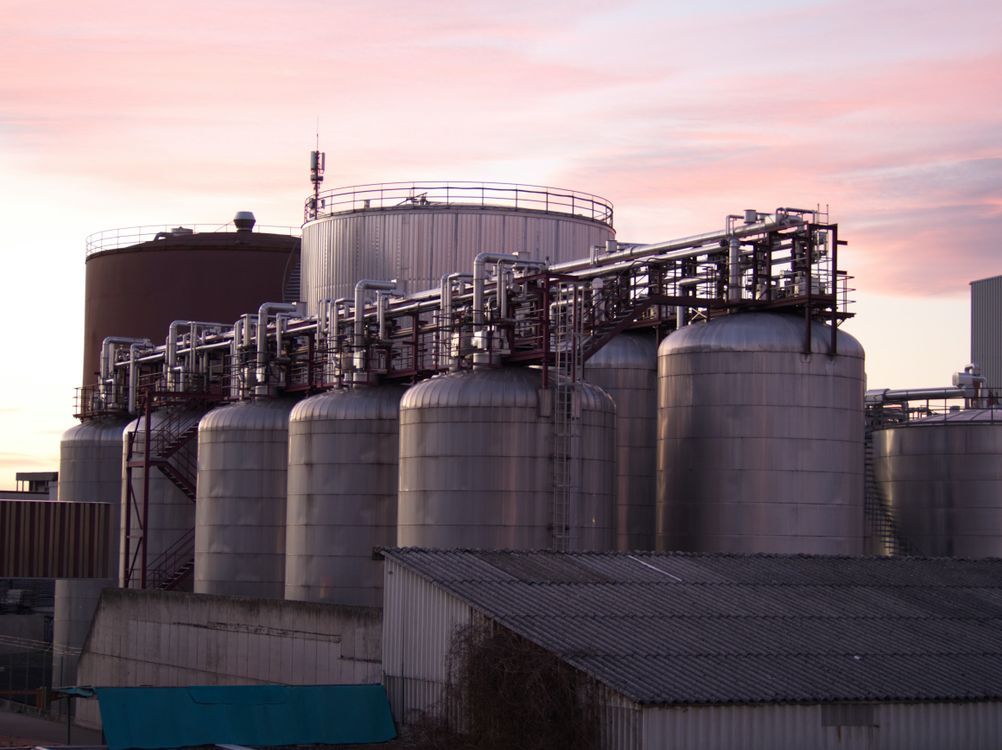
Stanlow Terminals, part of Essar Energy Transition, operates approximately three million cubic metres of bulk liquid storage capacity at Stanlow and Tranmere in north-west England. Its infrastructure supports the reception, storage and distribution of energy products, with connections to maritime, road, rail and pipeline logistics.
Verwater specialises in tank maintenance, construction and industrial asset services. Founded in 1922, the company works with storage terminals, refineries and other process industry facilities. Its new relationship with Stanlow is intended to support asset reliability and the terminal operator’s existing investment programme rather than deliver a separately announced capacity expansion.
Storage tanks are long-life industrial structures whose performance depends on maintaining the condition of their shells, floors, roofs, foundations and associated equipment. The products being stored, operating conditions and surrounding environment can all influence deterioration, making periodic inspection and maintenance essential throughout an asset’s working life.
Corrosion presents one of the principal engineering challenges. Internal surfaces may be affected by the chemical characteristics of stored liquids, while external structures can be exposed to moisture and atmospheric conditions. Tank floors introduce further inspection requirements because deterioration may occur in areas that cannot be examined directly while the vessel remains filled.
Inspection programmes use appropriate examination techniques to determine whether the structure remains suitable for its intended service. Visual assessment, ultrasonic thickness measurement and other non-destructive methods can provide evidence of material condition, with the selection of techniques determined by the tank design, accessibility and expected deterioration mechanisms.
The results must be interpreted against the equipment’s design and operating requirements. A reduction in material thickness does not have the same significance at every location, while defects affecting a connection, supporting component or area subject to concentrated loading may require different engineering action from more general surface corrosion.
Liquid storage also places substantial loads on a tank’s structure. The pressure exerted by the contents increases with depth, while filling and emptying introduce changing operating conditions. Tank foundations, shell courses, joints and other structural elements must maintain their integrity as these loads change over time.
Maintenance decisions therefore involve assessing the condition of individual assets and determining whether repairs, replacement components or further monitoring are required. Where deterioration affects continued safe operation, a tank may need to be removed from service until appropriate engineering work has been completed.
Withdrawal from service introduces operational constraints at a bulk liquid terminal. Tanks must be managed within a wider storage and handling system, and their availability can influence the capacity allocated to different products or customers. Inspection and repair activities may require emptying, isolation, cleaning and preparation before personnel or equipment can enter the working area.
Those preparations can account for a substantial part of a maintenance programme. The extent depends on the substances previously stored and the work planned, with procedures required to control residual materials, hazardous atmospheres and other risks associated with industrial tank entry.
Contractors must also coordinate inspection and repair activities once a tank is available for work. An initial examination may identify defects that change the repair scope, requiring additional materials, equipment or specialist personnel. Effective planning can reduce avoidable delays, but the final duration remains dependent on the condition of the asset.
Verwater’s broader capabilities include tank construction and industrial services alongside maintenance. The partnership creates a means for Stanlow Terminals to draw on those capabilities, although the October announcement does not identify particular tanks, repair techniques or construction packages included in the agreement.
The operator has been investing in its existing infrastructure. During 2025, Stanlow Terminals reported maintenance on large crude transfer lines, control valve overhauls and the recommissioning of a 100,000 cubic metre crude storage tank at Tranmere. Those activities provide background to the continuing asset programme but are not newly announced work under the Verwater partnership.
Valve and transfer line condition is closely connected to tank availability. A storage vessel may remain structurally sound yet be unable to operate as intended if associated isolation equipment, pumps or pipework cannot safely transfer its contents. Inspection and maintenance planning consequently needs to consider the terminal’s connected infrastructure rather than treating each tank as an isolated item.
Stanlow Terminals is also examining infrastructure associated with lower carbon fuels and future energy products. Its previously announced plans include biofuels storage and potential facilities supporting hydrogen, ammonia and carbon dioxide logistics. These remain distinct development programmes and should not be interpreted as specific construction commitments within the latest agreement.
Changing the service of existing storage equipment requires consideration of product compatibility. Different liquids can impose different requirements on construction materials, seals, coatings and operating systems, while changes in temperature, density or other properties may affect whether existing infrastructure can be reused.
The terminal operator’s chief executive, Mike Gaynon, identified Verwater’s technical capability and international experience as reasons for selecting the company. Marloes Oude Breuil, chief executive of Verwater Group, said the partnership would allow its teams to apply their experience to the safety and reliability of Stanlow’s assets.
The companies expect representatives from Verwater to visit Stanlow and meet operational teams as the relationship develops. No additional workforce numbers, investment value or completed refurbishment have been announced in connection with the agreement.
The partnership establishes a framework for specialist support across a substantial existing storage operation. Its practical contribution will be determined by the maintenance programmes subsequently agreed, the condition of the assets examined and the engineering work undertaken to sustain reliable service at Stanlow and Tranmere.