UK Research and Innovation has opened a £1.5 million research competition to develop new technologies for critical mineral extraction, processing, recovery and recycling. The funding will support early-stage projects intended to strengthen UK manufacturing supply chains, with successful teams able to compete for further support if their initial research demonstrates sufficient technical and industrial potential.
The opportunity opened on 14 October 2026 and forms part of the £20 million Critical Minerals: From Research to Industry programme, known as CMR2i. Up to six projects will receive initial funding for research lasting no longer than 12 months, with work required to begin by 3 May 2027.
Individual projects can have a maximum full economic cost of £305,000, of which UKRI will fund 80%. That figure describes the total eligible project cost rather than a cash grant of £305,000 awarded in full to each successful applicant.
The competition is open to eligible UK research organisations, with participation from different research disciplines and collaboration with industrial partners encouraged. Applicants must identify a credible UK market opportunity and demonstrate how their proposed technology could support manufacturing activities that depend on critical or growth minerals.
Critical minerals are materials considered economically important but exposed to significant supply risks. Their applications include batteries, electrical equipment, advanced electronics, aerospace and other manufacturing technologies requiring particular combinations of mechanical, electrical or chemical properties.
Supply constraints can arise at several stages. A country may have access to a mineral deposit without possessing the processing facilities needed to turn extracted material into a form suitable for industrial use. Refining, separation, purification and the manufacture of intermediate products can therefore be as important to supply security as the location of mineral resources.
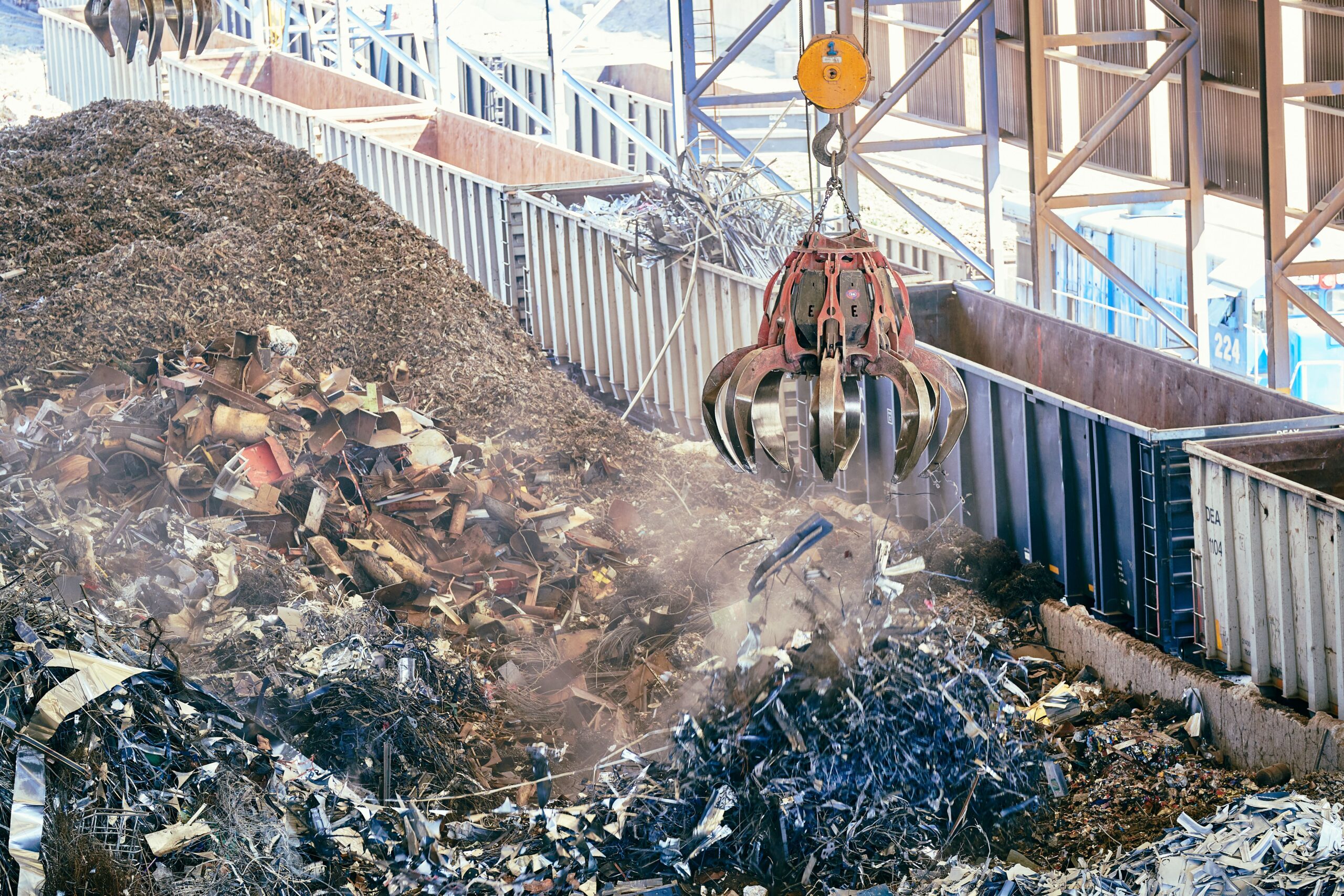
UKRI’s competition covers both primary and secondary sources. Primary production includes material obtained from deposits, while secondary resources may be recovered from industrial waste, by-products, previously manufactured equipment or sites containing materials left by earlier mining activity.
Those sources create different engineering problems. Ore processing may require crushing and grinding to liberate valuable minerals from surrounding rock before separation can begin. Recovering a low concentration of material from an industrial by-product may instead depend on selective chemical treatment or other methods capable of separating the required substance from a complex mixture.
Material composition strongly influences which technique can be used. Particle size, mineral associations, chemical behaviour and the presence of impurities affect the performance of separation and recovery processes. A method suitable for one feedstock may produce significantly different results when applied to another.
Recycling introduces additional variation because recovered materials may contain coatings, adhesives, mixed alloys or other substances introduced during the manufacture and use of the original product. Removing those materials can require several processing stages before the recovered mineral reaches an acceptable specification.
Recovery rate is only one measure of technical performance. The purity of the output, energy consumption, reagent requirements and amount of residual waste also influence whether a proposed method could operate economically at industrial scale.
A process recovering a high proportion of the target material may still face commercial barriers if it requires expensive chemicals or consumes excessive energy. Equally, a process that performs well with carefully prepared laboratory samples may prove difficult to operate when incoming materials vary in composition or moisture content.
UKRI wants phase-one projects to test and validate potentially transformative approaches while examining these wider constraints. Applicants must provide evidence of technical feasibility and consider the economic, environmental, regulatory and social conditions that could affect eventual adoption.
The initial grants are described as pump-priming funding. They are intended to support proof-of-concept research and identify promising routes for further development, rather than finance the construction of fully operational mineral processing plants.
Project teams are expected to determine what their proposed technology can achieve under defined test conditions and how those results compare with existing approaches. Relevant measurements may include material recovery, product quality, processing time, energy use and waste generation, depending on the technique being investigated.
The results must also identify the limitations of the research. Performance measured in a laboratory does not establish that the same process can operate reliably with larger quantities of material, different feedstock conditions or continuous industrial production.
Scale-up can introduce constraints involving heat and mass transfer, material handling, equipment wear and process control. Increasing the size or throughput of a system may alter how material moves through it, how reactions proceed and how consistently the required operating conditions can be maintained.
These challenges affect investment decisions because an industrial operator needs evidence that equipment will provide predictable output over extended periods. A promising laboratory result must therefore be supported by a credible development route, including the further testing, engineering and qualification work required before commercial deployment.
The CMR2i programme has three broader funding pillars: applied strategic research, research to innovation and industrial pilots. The new £1.5 million competition sits within the applied strategic research pillar, with subsequent opportunities intended to support the progression of promising technologies towards industrial use.
A second phase is planned for projects that complete the initial competition successfully. Only phase-one recipients will be eligible to apply, and UKRI expects to fund up to three follow-on projects through a separate competitive assessment.
Each phase-two project could have a full economic cost of up to £1.6 million, supporting a further 24 months of research and innovation. The additional work is intended to advance technologies to higher readiness levels while developing the commercial and regulatory evidence required for possible deployment.
Selection for the initial competition will not guarantee a second award. UKRI intends to assess the performance and potential impact demonstrated during phase one, including evidence that the proposed solution could improve UK supply capabilities or create an opportunity for industrial adoption.
The first-stage programme also includes restrictions on expenditure. Individual equipment items costing more than £25,000, including VAT, are not eligible for funding under this opportunity. Smaller equipment purchases may be included where they satisfy the published conditions.
Applicants must submit a mandatory notification of intent by 1 December 2026 at 16:00 UK time. This preliminary submission provides information about the proposed team and research, allowing UKRI to plan its assessment process. It is not itself the full funding application.
Completed applications must be submitted through the UKRI Funding Service by 7 January 2027 at 16:00. Applications submitted without the required notification of intent will be rejected, while applicants must also satisfy the eligibility and submission rules set out in the funding opportunity.
UKRI expects to assess applications during February and March 2027, with initial grants beginning no later than 3 May. A second competition is provisionally planned for summer 2027, with follow-on projects expected to start in April 2028.
The wider programme supports the government’s ambitions to meet at least 10% of UK critical mineral demand through domestic production and 20% through recycling by 2035. These are policy targets, not outcomes guaranteed by the projects funded through the latest competition.
The £1.5 million allocation will establish an initial group of research projects capable of testing new approaches to mineral production and recovery. Their contribution to manufacturing supply chains will depend on whether the resulting technologies demonstrate credible performance, survive further scale-up and attract the investment needed to move beyond laboratory development.