Statera Energy has secured a significant minority investment from funds managed by Ares Infrastructure Equity across a portfolio of approximately 1.9GW of UK battery storage and flexible generation assets. The transaction includes projects at Carrington in Greater Manchester and Thurrock in Essex, with Statera retaining majority ownership and responsibility for operating and managing the portfolio.
Announced on 14 October, the agreement represents Ares Infrastructure Equity’s first investment in Europe. Neither party has disclosed the financial consideration or percentage interest acquired. Statera intends to use the additional capital to support its growth plans while continuing development of a wider 16GW pipeline.
The portfolio includes the 680MW Carrington Storage development and the 750MW Thurrock Flexible Generation project. These installations use different technologies and are at different stages of development, so the 1.9GW transaction should not be interpreted as an announcement that every megawatt of capacity is already operating.
Carrington Storage is a 680MW battery installation under construction at Trafford Low Carbon Energy Park near Manchester. Its planned energy capacity is 1,360MWh, equivalent to two hours of discharge at its full rated power output under nominal operating conditions. Construction began in autumn 2025, with energisation targeted for late 2027.
Power and energy ratings describe different properties of a storage installation. The 680MW rating indicates the rate at which the batteries can supply electricity, while the 1,360MWh figure measures the energy available over a period of operation. Discharge duration varies with output, state of charge and the operational limits imposed on the battery system.
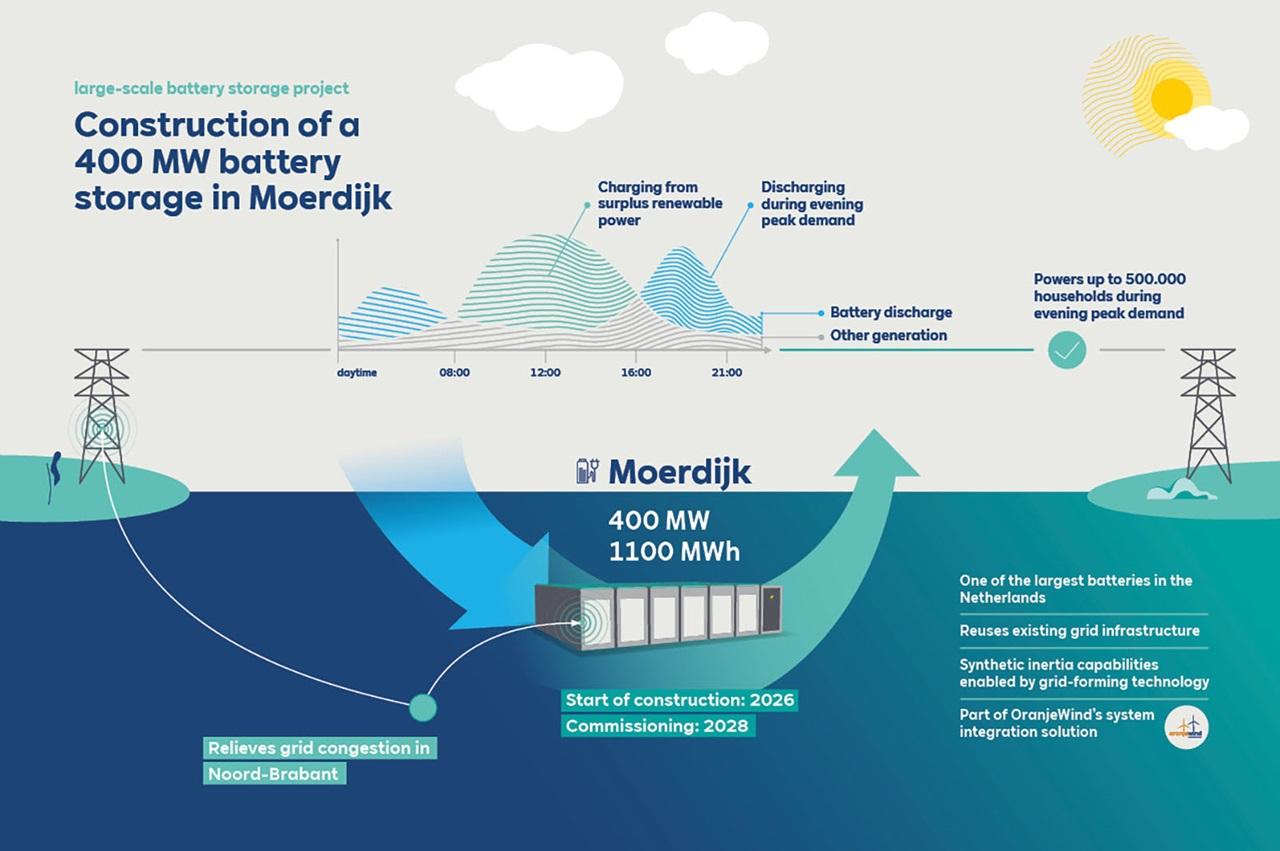
Battery storage can absorb electricity when supply is abundant and return it to the network when additional output is required. At utility scale, the installation combines battery modules with power conversion equipment, transformers, protection systems and controls that coordinate charging and discharging.
The power conversion system manages the movement of electricity between the battery’s direct current circuits and the alternating current network. Its operation must remain coordinated with battery management systems that monitor cell conditions and with the protective equipment governing the site’s grid connection.
Response time is an important characteristic of battery storage. Statera identifies a response capability of less than one second for Carrington, allowing output to change rapidly when the system receives a suitable instruction. Actual availability depends on the plant’s operating condition, stored energy and the requirements of the service being delivered.
The engineering scope also includes the civil and electrical infrastructure needed to connect the installation to the transmission network. Statera has identified a 400kV connection at Carrington, placing substantial requirements on switchgear, transformers, protective systems and commissioning activities.
The project reached financial close in November 2025 with £235 million in debt financing. That transaction supported its construction and remains separate from the new Ares equity investment in Statera’s wider portfolio.
Thurrock combines two forms of flexible electricity infrastructure. Its 300MW battery storage system, with 600MWh of energy capacity, was energised in August 2025. A neighbouring 450MW flexible generation facility uses gas-fired reciprocating engines, creating a combined nominal power rating of 750MW across the two installations.
The technologies have different operating characteristics. Battery systems can change output rapidly but are limited by the energy they have stored. Reciprocating engine plants produce electricity using fuel and can sustain generation for longer periods, provided fuel supplies and operating conditions permit.
Thurrock Power reached first engine firing in May 2026 during its commissioning programme. Statera identified 95 reciprocating engines for the installation and stated that the plant was designed to reach full output in less than eight minutes. The company has not provided a new technical commissioning milestone in the October investment announcement.
The ability to combine these technologies creates different options for responding to changing electricity demand. Batteries can support rapid system balancing, while flexible generation can contribute during longer periods when additional electricity is needed. Their use depends on available capacity, commercial dispatch arrangements and the technical conditions applying to the grid connection.
Battery storage also has the ability to absorb excess electrical production, whereas a conventional gas-fired engine plant cannot store surplus electricity without separate equipment. The flexibility provided by each installation is consequently defined by the type of service it can deliver rather than the power rating alone.
Generation output from gas engines remains associated with fuel consumption and emissions. These characteristics distinguish the technology from electricity storage and must be considered when assessing its role within a power system increasingly supplied by wind, solar and other low carbon generation.
Asset performance depends on control and maintenance arrangements after commissioning. Batteries require monitoring of temperature, charge balance and module condition, while reciprocating engines introduce servicing requirements associated with mechanical components, combustion systems and fuel delivery.
The portfolio investment places those different operational responsibilities within a common ownership structure. Statera will continue managing the assets and their development, with Ares joining as a long-term equity partner rather than assuming direct responsibility for day-to-day plant operation.
The wider investment programme is intended to support the company’s ambition to deliver 7GW of flexible capacity by 2030. Its development pipeline includes additional battery storage, dispatchable generation and longer-duration technologies, although individual projects remain subject to their respective planning, financing and construction requirements.
Statera chief executive Tom Vernon has linked the Ares investment to that 2030 delivery target. Keith Derman, partner and head of infrastructure equity at Ares, identified the role of flexible infrastructure in the UK electricity system as a reason for the transaction.
The distinction between the 1.9GW investment portfolio and the 16GW development pipeline is important. The former describes the assets included in the ownership agreement, while the latter encompasses projects at different stages that are not necessarily financed, constructed or operating.
Additional equity capital can support future development decisions, but bringing infrastructure into service still requires the successful completion of physical construction, equipment testing and grid connection procedures. Capacity does not become commercially available simply because ownership or financing arrangements have changed.
Statera has not identified additional generating or storage capacity commissioned directly as a result of the October transaction. The next measurable developments will come from progress at construction-stage projects such as Carrington and the continued operation and completion of the facilities included in its UK flexibility portfolio.