United Kingdom National Nuclear Laboratory (UKNNL) has launched a strategic plan organised around five Science Missions intended to guide its research, specialist capability development and investment as Britain expands its nuclear energy programme and continues the long-term management of existing nuclear assets. The programme spans next-generation reactors, domestic nuclear fuel, support for operating facilities, plutonium stewardship and environmental restoration.
The five-year strategy, launched on 12 October, is intended to organise UKNNL’s research priorities as advanced reactor design, fuel supply and long-term management of nuclear liabilities create different demands for experimental evidence. Specific funding allocations and construction commitments will follow separate programme decisions. Each mission will have to translate scientific work into results usable by plant operators, developers or public authorities.
Future Energy, the first mission, concerns the evidence needed to assess and eventually deploy new nuclear energy systems. Reactor proposals depend on an extensive supporting case covering fuel behaviour, structural materials, thermal performance and the response of safety systems under demanding conditions. Physical testing, modelling and independent evaluation are needed before a proposed reactor technology can be treated as suitable for a particular operating environment. UKNNL intends its scientific work to inform those judgements rather than to substitute for licensing or project approvals.
The Fuel mission addresses a different constraint: the availability of secure domestic capacity to produce and qualify fuel for reactors already operating and those proposed for the future. Fuel manufacturing is closely tied to the design of the reactor using it, because composition, geometry, enrichment, cladding and operating temperature influence performance and safety. Developing national capability consequently means sustaining specialist knowledge and facilities as well as identifying suitable industrial production routes. The plan also identifies possible future exports to allied nuclear countries, without presenting these as committed commercial orders.
Fleet Support focuses on the current nuclear estate, where operators need evidence to sustain safe and reliable operation over long periods. Material ageing, inspection findings and the behaviour of equipment under repeated thermal and mechanical loads can all affect maintenance and life-extension decisions. Laboratory examination of irradiated components and analysis of operational evidence help establish which changes are manageable and where replacements or further inspection may be required. UKNNL’s role is to supply the underlying science and specialised facilities on which those decisions can draw.
The Plutonium Science mission addresses the safe, secure and sustainable stewardship of the UK’s plutonium inventory and other nationally important nuclear materials. Storage conditions, material stability, measurement methods and potential treatment processes require evidence before long-term management routes can be evaluated. Even a technically viable option must pass safety, security and policy tests, and the strategic plan does not select a final disposition route for the inventory.
Environmental Restoration and Health connects work on nuclear liabilities with protection of people and the environment. Characterising contaminated materials, selecting treatment methods and producing robust evidence for safe waste management each demand laboratory methods adapted to complex radioactive substances. UKNNL also identifies the recovery of rare radioisotopes for nuclear medicine and space applications as an area within this mission. Such recovery depends on the composition and condition of available material, and remains subject to stringent handling and quality requirements.
The laboratory identifies four specialist research centres as central to delivery: the Active Handling Centre at Windscale, the Nuclear Materials Research Centre at Sellafield, the Uranium Research Centre at Preston, and the Nuclear Technology Development Centre at Workington. These facilities provide different environments and capabilities for studying radioactive materials, fuel systems and prospective nuclear technologies. The plan also refers to professional hubs at Warrington, Stonehouse and Culham, supporting activity beyond the individual laboratory sites.
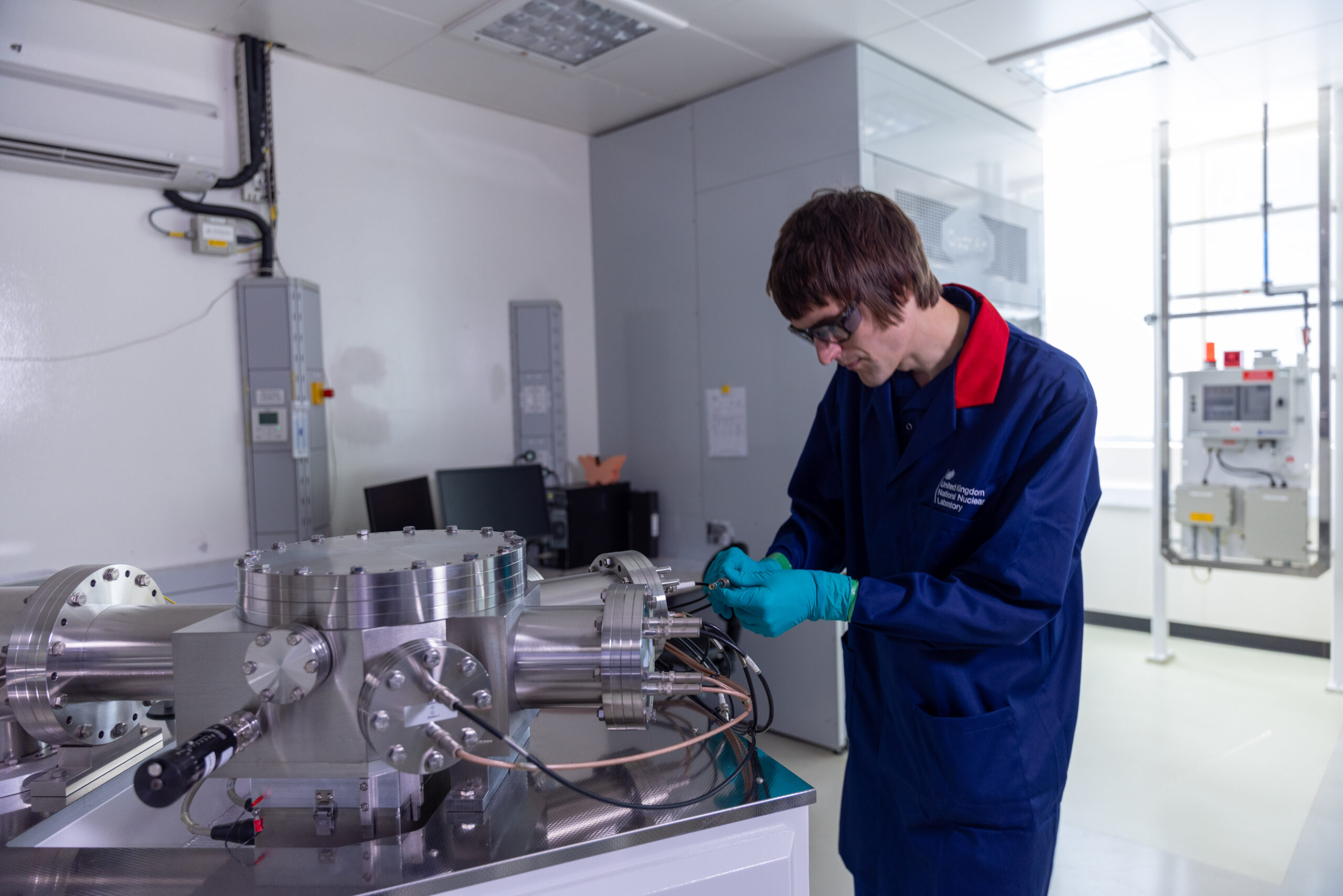
Work with highly radioactive materials depends on shielded handling systems, controlled environments, secure sample transfer and measurements that can be traced and repeated. Experimental methods often have to be maintained over decades because material qualification evidence may remain relevant throughout an asset’s service life. Retaining technical staff and specialist equipment is consequently part of maintaining a national nuclear capability, particularly where the number of suitable facilities is small.
UKNNL plans to reinvest in Laboratory Directed Research to build expertise for the missions. Its longer-term “Lab of the Future” ambition would connect scientific teams, specialist facilities and external collaborators more closely. Working across nuclear programmes will require secure access to experimental records, consistent data handling and personnel capable of interpreting results generated by different instruments and laboratories. The digital programme remains an ambition without a separately costed delivery schedule.
Reactor qualification, fuel development and decommissioning each call for different experimental evidence, which must be traceable and acceptable to the relevant regulator or operating organisation. Testing nuclear materials can require sustained access to specialist laboratories, reference methods and staff able to reproduce measurements over long periods. UKNNL’s government-owned, operationally independent remit includes maintaining those capabilities across multiple programmes, even where no single commercial contract would fund them in full. Individual reactor developers and licensees nevertheless retain responsibility for their own engineering and safety cases.
UKNNL will now need to turn the five missions into funded programmes, facility priorities and scientific outputs that can inform real engineering decisions. The published plan does not specify spending by mission or dates for each proposed digital system. Its progress will be judged through the evidence available to reactor developers, fuel producers, operators and organisations responsible for nuclear materials and legacy sites.