Nordex Group recorded 2,810MW of wind turbine orders in the third quarter of 2026, a 29.5% increase on the 2,170MW booked in the corresponding period last year. The German manufacturer reports stronger demand across several markets, with Türkiye, Germany and the United States the leading contributors during the quarter.
The figures cover Nordex’s Projects segment, excluding service contracts. Customers placed orders for 427 turbines destined for ten countries between July and September. Those commitments represent future equipment supply and should not be confused with turbines already manufactured, exported, installed or connected to the grid.
For the first nine months of 2026, Nordex booked 7,733MW, an increase of 16.1% from 6,661MW in the equivalent 2025 period. Türkiye accounted for more than 900MW during the latest quarter, while orders from the US have exceeded 1.3GW since the start of the year. Germany also remained a significant market within the company’s European order portfolio.
Average selling price, measured in euros per megawatt of ordered capacity, was €0.90m in the third quarter against €0.93m a year earlier. Across the first nine months, the measure was €0.93m/MW, compared with €0.92m/MW in the previous year. Nordex attributes the quarterly difference mainly to the mix of projects and regions, describing the underlying pricing environment as stable.
The average value per megawatt can change when customers order different turbine variants or when transportation, tower and supply obligations vary by contract. Larger machines and different site conditions alter the mix of equipment within the reported capacity, so the measure is not a uniform factory-gate price for a standard turbine. Nordex has not disclosed a constant-scope comparison that would isolate underlying changes in selling prices.
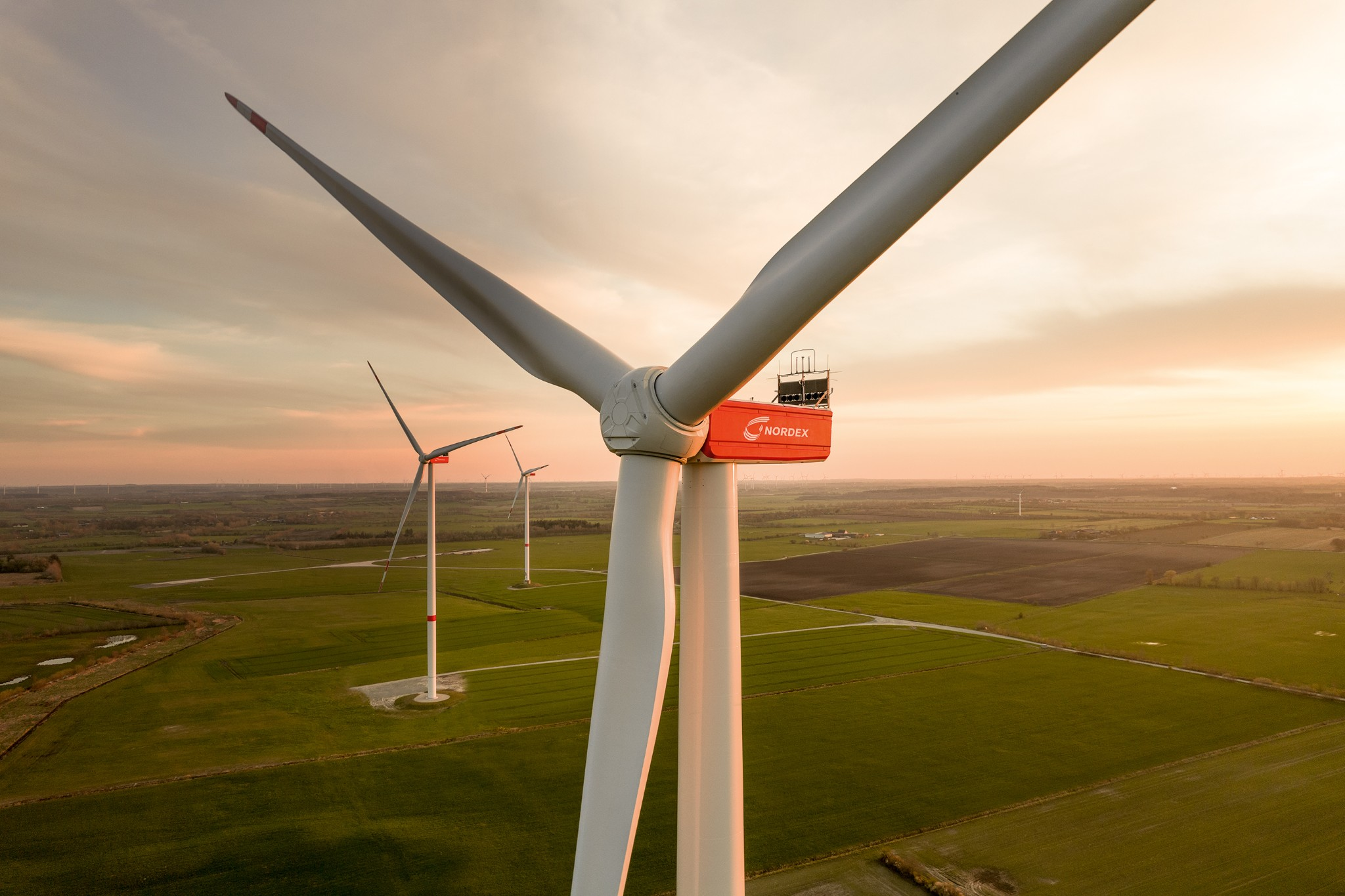
Nordex makes onshore wind turbines in the 4MW to more than 7MW class, supplying projects with different physical and electrical constraints. The choice of turbine depends on wind conditions, available land, planning restrictions, grid connection arrangements and the size of the individual project. Greater rated capacity can reduce the number of turbines required for a particular installed megawatt total, but does not remove the need to match rotor, generator and tower design to a site.
Once a project moves from contract to execution, a turbine order becomes a sequence of engineering and purchasing decisions. Tower sections, blades, nacelles, electrical equipment and control systems have to match the turbine configuration and the site’s conditions. Manufacturing schedules must then align with foundations, access routes, heavy transport and grid connection work that sit partly outside the supplier’s direct control.
Contracts move through engineering release, procurement, component production and delivery before individual wind farms can be completed. Acceptance milestones and contractual terms affect when a turbine supplier recognises revenue, while project delays can change production scheduling. The quarterly intake therefore indicates future work for factories and logistics partners, with deliveries and earnings reported separately.
Nordex maintains a manufacturing network spanning Germany, Spain, Brazil, India, the United States and Türkiye. That footprint offers several possible supply routes, but the company has not assigned the new orders to individual factories. Allocation will depend on available manufacturing capability, transport costs, supplier contracts and any applicable local content requirements; an increase in Turkish orders, for example, cannot by itself confirm additional output at the Turkish facility.
The geographic mix affects transport and project sequencing as well as factory planning. Deliveries to distant markets can require different port arrangements, heavy-haul routes and site-access windows, while national grid requirements determine the electrical configuration accepted by each customer. These obligations are resolved against individual contracts as the order book moves into execution.
Service work enters at a different point in the equipment lifecycle. Once a wind farm has been commissioned, inspections, condition monitoring, planned maintenance and replacement components support its continuing operation. The newly reported order intake excludes that activity, and it cannot establish additional service revenue without the associated contract disclosures.
The company’s production portfolio is concentrated on larger onshore machines, where drivetrain performance, aerodynamic loading, grid compliance and access for component replacement influence design and lifecycle costs. Turbine size has increased across the industry, but larger equipment also creates manufacturing and logistics challenges, including handling long blades, heavy nacelles and tower sections. Supplier capacity and qualified production processes are therefore important when a stronger order book moves towards execution.
The group reports having commissioned more than 64GW of wind capacity across over 40 markets since 1985, with approximately €7.6bn in consolidated sales during 2025. Its workforce exceeds 11,100. These scale measures provide context for the supply commitments now being taken on, but do not demonstrate that Nordex has brought new manufacturing capacity into operation during the quarter.
The 7,733MW intake across January to September gives Nordex a larger volume of contracted turbine work than at the same point in 2025. Factory allocation, component sourcing and transport will have to be matched to project-specific construction schedules. The company’s next operating report will reveal how much of that new demand has moved into actual production and deliveries.