Toshiba Electronic Devices & Storage has made the first shipment from an expanded nearline hard disk drive production line in Laguna, Philippines, increasing manufacturing capacity for storage systems used in data centres serving AI, cloud and enterprise workloads.
Toshiba Information Equipment Philippines has started nearline production at its Laguna Technopark facility, extending work that had previously been concentrated at Carmelray Industrial Park. The company intends to nearly double annual output by FY2027 compared with FY2025 when measured by total storage capacity rather than the number of drives shipped.
Using storage capacity as the production measure reflects the way hard disk manufacturing is changing because a factory can ship a similar number of physical drives while delivering substantially more petabytes when each unit stores more data. Increasing output therefore involves both additional manufacturing capacity and the ability to build progressively higher capacity products without reducing yield.
Laguna had previously focused mainly on drives for personal computers, whereas nearline products are designed for continuous operation in large storage arrays where reliability, vibration behaviour, power consumption and predictable error rates carry different requirements. Bringing those drives into the facility changes both the product mix and the test regime surrounding each completed unit.
Nearline hard disks remain widely used for large data repositories because magnetic storage continues to offer low cost per terabyte where access speed is less critical than total capacity. AI training data, cloud services, video and conventional enterprise information continue to increase the volume of material retained even where the most performance sensitive workloads are handled by solid state storage.
Toshiba is increasing capacity per drive alongside factory output, with its M12 series providing 30TB to 34TB in a conventional 3.5 inch nearline format. The design uses shingled magnetic recording together with Toshiba’s microwave assisted magnetic recording technology and glass substrates to place more recorded data inside the same enclosure.
Shingled magnetic recording raises density by allowing adjacent data tracks to overlap slightly, which increases the amount of information stored on each platter surface. Because rewriting one track can affect a neighbouring track, the host system has to manage writes in defined zones rather than treating every sector as independently rewritable at any time.
That behaviour makes host managed SMR more suitable for storage architectures designed around the recording method than for general desktop use. Large operators can organise data placement and rewriting around the physical characteristics of the media, gaining additional capacity while accepting more deliberate management of how information is written.
Glass substrates allow thinner, rigid platters to be used inside the standard enclosure, helping manufacturers fit additional recording surfaces into the drive. As platter count and track density increase, however, head alignment, vibration control, surface quality and thermal stability all become more demanding because the recording heads operate extremely close to spinning media.
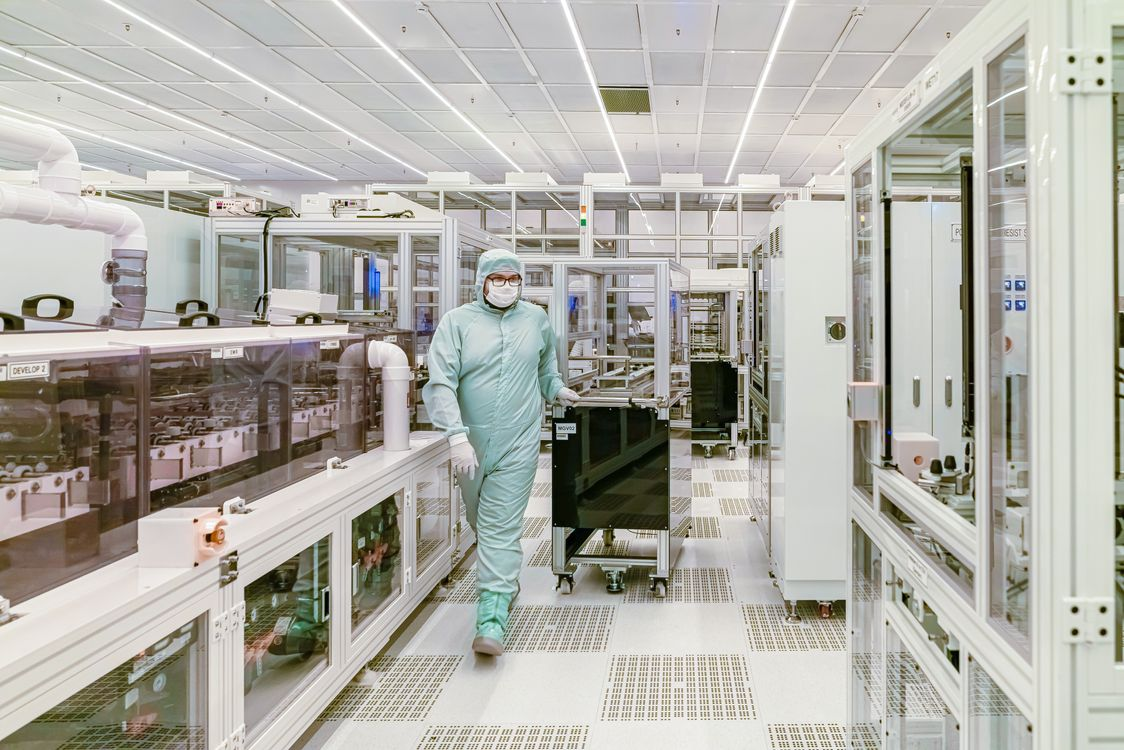
Manufacturing therefore requires controlled assembly environments, precision handling, servo calibration, firmware loading and extensive electrical and mechanical testing before shipment. Additional final assembly stations alone would not double usable output if component preparation, calibration or test remained unchanged, so capacity has to increase across several linked stages.
Higher capacity drives also place more embedded value into every unit before final testing. A defect found late in production can mean scrapping multiple platters, heads and other precision components that have already passed through several manufacturing operations, making process control and early defect detection increasingly important as drive capacity rises.
Toshiba’s Philippine storage business dates to 1996 and now operates three manufacturing facilities across Laguna Technopark and Carmelray Industrial Park. Adding nearline production at another site gives the company more room to increase output while distributing work across a broader local manufacturing base.
Data centre demand links that expansion directly with growth elsewhere in computing infrastructure because AI accelerators and servers generate and consume large datasets that have to be retained after processing. Compute capacity can rise faster than economical storage capacity when investment concentrates too heavily on processors, leaving hard disk manufacturers to increase the number of exabytes they can supply from existing product formats.
The first shipment confirms that the Laguna expansion has moved beyond equipment installation into working production, while the FY2027 target requires sustained ramping from that starting point. Toshiba now has to increase the amount of storage leaving the factory without allowing higher platter counts, tighter tolerances or more demanding test requirements to erode manufacturing yield.