International Federation of Robotics data shows global shipments of professional service robots increased by 24% to almost 250,000 units during 2025, with transport and logistics remaining the largest application.
The World Robotics 2026 Service Robots report puts transportation and logistics at 117,500 units, up 21% from the previous year and equivalent to 47% of professional service robot shipments recorded by the federation. The category covers robots used for transport, material flow, and delivery processes rather than fixed industrial manipulators working inside conventional production cells.
That distinction is important, but increasingly less useful when looking at how factories and warehouses operate. A production line may use fixed robots for welding, assembly, or machine tending while autonomous mobile robots move parts between processes. Both belong to automation, but they solve different constraints and are counted in different IFR datasets.
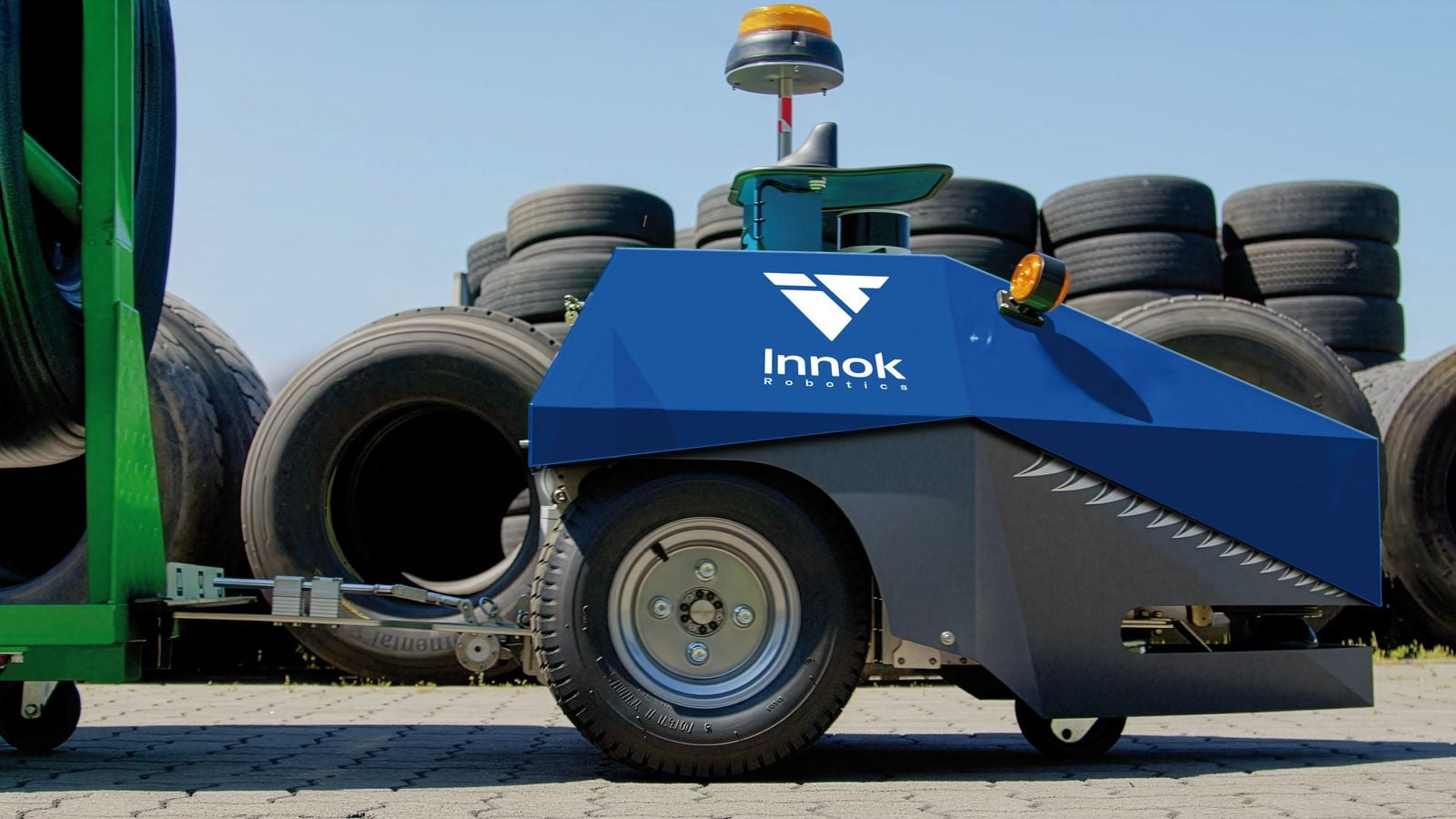
Transport and logistics robots have benefited from that gap between highly automated production equipment and less automated material movement. Conventional conveyors remain efficient where routes and volumes are stable, but mobile robots can be deployed without fixing every route into the floor plan. That gives manufacturers and distribution operators more flexibility when layouts, product mixes, or throughput requirements change.
For factories, the operational question is increasingly how mobile robots interact with fixed automation. Material has to arrive at the correct workstation, in the correct sequence, without creating congestion around people or machinery, so fleet software and plant integration can matter as much as navigation performance.
The IFR says direct sales remain the main commercial model globally, although robot as a service arrangements continue to expand. In the United States, service based models are already the dominant commercial route for professional service robots.
That changes the capital calculation for operators. Buying a fleet places equipment cost and utilisation risk with the customer, while a service model can shift more of the hardware, maintenance, and scaling burden towards the supplier. The attraction is strongest where demand varies or where a site wants to increase capacity without committing to a large fleet before the workflow has been proven.
Hospitality remained the second largest professional service robot application in the 2025 data, followed by professional cleaning. Those markets differ considerably from industrial logistics, but they contribute scale to navigation, fleet management, sensing, and human interaction technologies that can also influence machines used in factories and warehouses.
The report also provides a useful counterweight to the attention surrounding humanoid robots. Around 7,000 full size humanoids taller than 140cm were sold globally for professional and commercial applications during 2025, excluding machines intended only for research, development, and entertainment.
The figure is significant because humanoids are frequently discussed as a route to automating workplaces designed around people. In theory, a robot with a human-like form can use doors, tools, workstations, and aisles without an operator rebuilding the environment around a specialist machine. In practice, the commercial installed base remains small compared with purpose-built service robots.
The IFR identifies safety standards, training and maintenance costs, manipulation capability, programming, and the absence of a sufficiently strong business case as continuing barriers. Many current humanoid systems also remain specialised, with some depending on human teleoperation rather than operating as fully autonomous general-purpose workers.
Industrial users will compare those systems with less glamorous alternatives on cycle time, availability, maintenance, safety, and total cost. A humanoid that can perform several tasks may reduce the need for dedicated equipment, but flexibility has to compensate for the higher complexity of balancing, perception, manipulation, and control.
Medical robotics shows how specialised service machines can scale once the application and economics become established. The IFR recorded 8,400 surgical robots sold during 2025, an increase of 57%. The regulatory and commercial conditions are very different from industrial logistics, but the growth demonstrates that service robot markets can accelerate quickly once technology becomes embedded in a defined workflow.
The latest figures follow separate IFR data showing the global industrial robot fleet passing five million units. The two datasets should not be combined, but together they show automation expanding both inside fixed production cells and across the movement, service, and support processes surrounding them.
For manufacturers, the more immediate signal is still logistics rather than humanoids. Nearly 118,000 transport and logistics robots were shipped in one year, putting mobile material movement firmly into commercial scale. Humanoids may widen the range of tasks automation can address, but the current market is being built primarily by machines designed to solve narrower problems repeatedly and reliably.