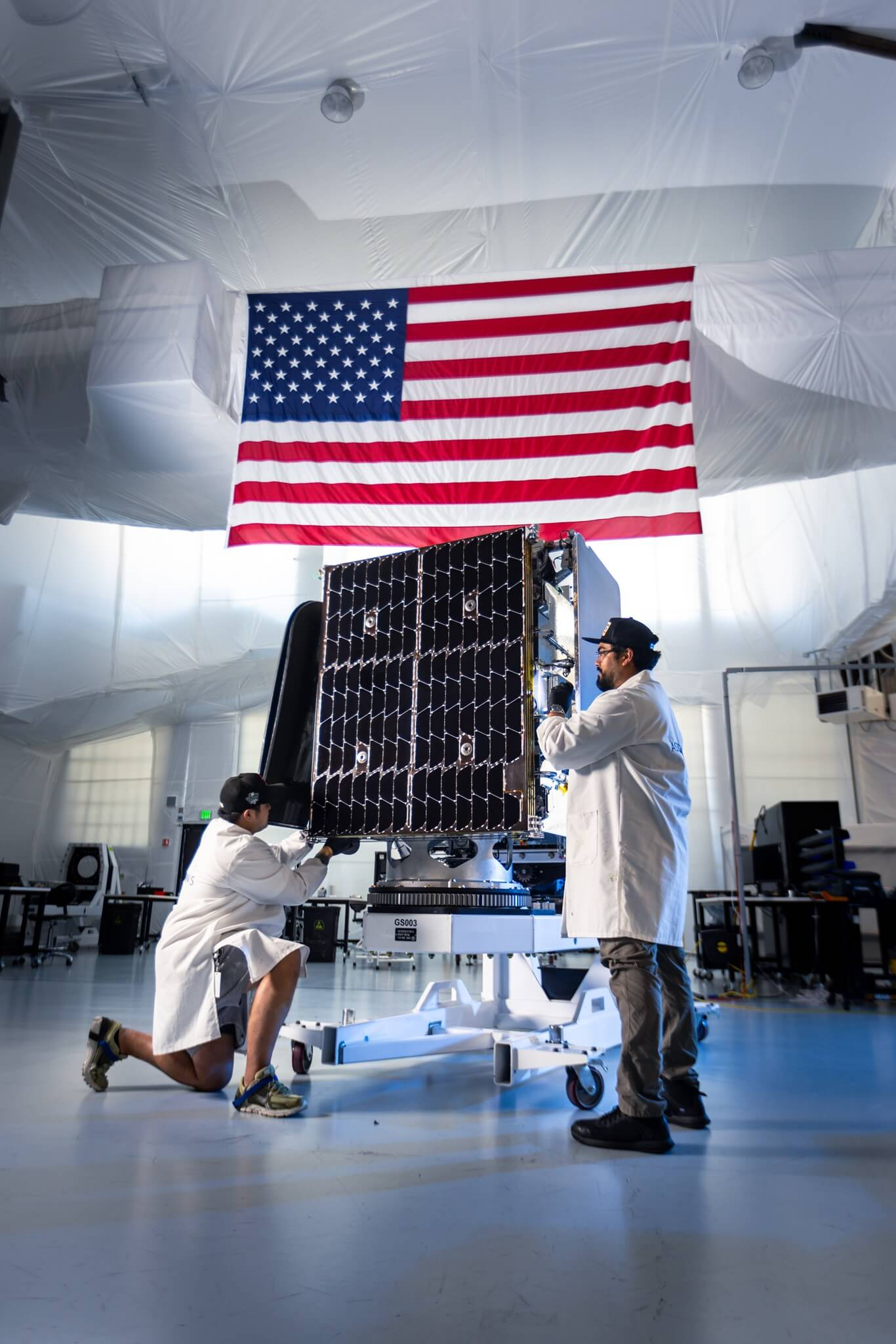
Astranis has secured approval for a $468 million credit facility from the Export-Import Bank of the United States to increase domestic satellite production and support launches for an expanding international customer base.
The financing is intended to fund satellite equipment, launch costs, and insurance while increasing the company’s ability to manufacture and operate spacecraft in the United States. J.P. Morgan’s Securitized Products Group served as sole arranger and structuring agent for the transaction.
EXIM’s board considered the Astranis facility on 24 September, listing the company as the borrower and identifying satellite equipment, launch costs, and insurance among the supported expenditure. Astranis announced approval on 30 September as a means of expanding American production capacity for commercial and government customers.
The company designs, builds, and operates satellites from a 153,000 square foot headquarters in Northern California. It says five spacecraft are currently in orbit, with more satellites due to launch against more than $1.2 billion of commercial contracts.
Customers named by Astranis include operators and service providers in Thailand, Taiwan, Oman, and Saudi Arabia, alongside United States government work. The business is built around smaller high orbit satellites intended to provide dedicated capacity for individual markets or customers rather than relying solely on very large conventional geostationary spacecraft.
That architecture changes some of the production economics. Smaller spacecraft can be built and launched in batches, allowing common hardware and manufacturing processes to be repeated across successive missions. The potential advantage depends on whether electronics, structures, integration, software, and test procedures can be standardised far enough to shorten build cycles without compromising reliability.
Manufacturing capacity becomes a constraint once orders increase. Space companies can build a commercial backlog more quickly than they can train production teams, expand cleanroom and integration space, qualify suppliers, or increase environmental test throughput. Satellite electronics also depend on specialist components and long qualification cycles, limiting how quickly output can be raised simply by adding capital.
Astranis is attempting to use a common production base across a widening range of missions. Its MicroGEO spacecraft underpin communications services, while other programmes extend the company’s high orbit platform into government and specialised missions. Reusing manufacturing infrastructure and design elements can improve factory utilisation, although configuration control becomes more demanding as customers request different payloads and operating requirements.
Government backed finance is particularly relevant where production and export revenue are separated by long build and deployment cycles. Manufacturers can incur substantial costs in hardware, labour, testing, launch preparation, and insurance before a customer receives an operational service capable of generating contracted revenue.
The EXIM facility also links satellite manufacturing with export policy. The agency’s Make More in America initiative is intended to support export-oriented domestic production as well as conventional overseas purchases of American goods. In Astranis’s case, international satellite contracts provide the export demand while much of the engineering and production work remains inside the United States.
The transaction arrives amid wider investment in satellite manufacturing on both sides of the Atlantic. Airbus has begun industrial work on additional OneWeb spacecraft, while SES and Elveo are planning European manufacturing capacity for direct-to-device systems. Astranis occupies a different orbit and commercial model, but each programme depends on making spacecraft production more repeatable.
The $468 million facility will not be spent only on factory equipment. Launch and insurance costs are included in the supported transaction, reflecting the unusual capital cycle of satellite manufacturing. A finished spacecraft does not deliver its intended service until it has passed environmental testing, reached orbit, and completed commissioning, so financing has to extend well beyond the point when hardware leaves the production floor.
That makes production planning inseparable from launch planning. Increasing factory output without matching launch availability can leave completed satellites waiting on the ground, while delayed manufacturing can waste reserved launch capacity. Insurance, regulatory work, and commissioning add further dependencies after assembly is complete.
For Astranis, the manufacturing task is now to convert a large contracted workload and additional financing into repeatable spacecraft throughput. Capital can expand capacity, but supplier performance, test bottlenecks, skilled labour, and launch schedules will determine how quickly that capacity becomes operating infrastructure in orbit.
The EXIM facility gives the company more room to scale those activities in the United States. The useful measure will be the rate at which satellites move through production, test, launch, and commissioning against the backlog, rather than the size of the credit line on its own.