RRD has established a common digital manufacturing architecture across its international production network, linking shop-floor equipment, enterprise planning, robotics, and artificial intelligence through a shared data foundation.
The company calls the programme Systematic Manufacturing, Automation & Robotic Transformation, or SMART. It connects facilities and equipment across North America, Europe, and Asia so that production planning, inventory, equipment condition, capacity, and customer demand can be managed through more consistent data and operating processes.
RRD works across print, packaging, labels, marketing materials, and related manufacturing services, where workloads can range from repeated high volume jobs to short runs with substantial variation. Scheduling becomes more difficult when factories operate different equipment, data structures, and local planning processes.
The SMART architecture is intended to reduce that fragmentation. Industrial Internet of Things sensors and cloud platforms link shop floors directly to enterprise resource planning systems, while standard data models synchronise production planning and inventory management between locations. AI and machine learning tools then use those data for predictive maintenance, demand forecasting, and automated material planning.
The value lies less in adding dashboards than in changing production decisions. RRD says incoming demand and material availability can be used to adjust schedules dynamically, while projects can be routed or divided according to capacity, freight logic, and proximity to distribution sites.
That type of capacity balancing can be valuable in a geographically distributed manufacturing business. An interruption at one facility does not necessarily have to stop a customer programme if suitable equipment, materials, quality controls, and data are available elsewhere. The difficult part is making nominally similar operations produce equivalent work without lengthy requalification or manual translation between systems.
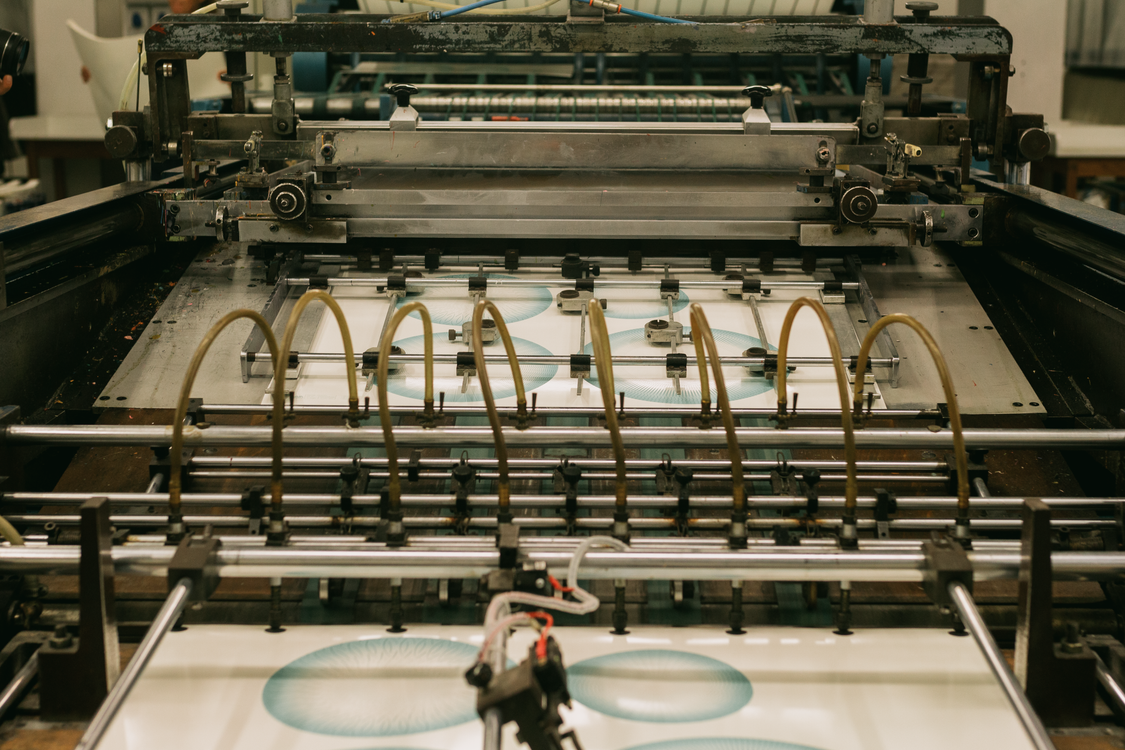
RRD is supporting the digital architecture with physical investment. Recent machinery additions include sheetfed offset presses, digital presses, flexographic label presses, 57-inch die cutters, folder-gluers, and finishing equipment. The company says greater equipment standardisation is intended to support consistent quality controls and faster transfer of work between domestic and international sites.
The system also integrates collaborative robots and automated inline sheet scanning. RRD says the scanning technology can reduce press setup time and paper spoilage while automation around repetitive tasks can increase capacity without interrupting active customer work.
Those applications show why industrial digitalisation works best when it remains tied to physical constraints. Predictive maintenance matters only if a warning reaches maintenance teams early enough to prevent a stoppage. Production scheduling works only when it reflects actual machine availability, material stock, tooling, labour, and downstream finishing capacity.
The SMART programme links those shop-floor signals with enterprise demand and inventory information rather than treating digitalisation as a separate corporate IT layer. RRD says the shared architecture can react to changes in orders and material availability and rebalance work across its network.
Working capital is part of the equation. Better visibility of inventory and production capability can reduce the need for individual plants to hold excess material as protection against uncertain schedules. The same network view can also expose dependencies where one specialist operation, substrate, or finishing process limits capacity across several sites.
Resource efficiency forms another part of the programme. RRD says predictive scheduling and asset digital twins can reduce energy consumption and material waste, while automated inline inspection is intended to cut spoilage during setup. For customers with environmental reporting requirements, more standardised data can also provide clearer evidence around material use.
Workplace safety is included through automation of high-risk mechanical positioning and routine administrative tasks. RRD says the changes move personnel towards technical support and quality control roles, increasing the importance of workforce training alongside equipment and software investment.
RRD operates in 30 countries, making a common architecture a larger undertaking than connecting several machines inside one smart factory. Individual sites have different equipment ages, products, network infrastructure, skills, and customer requirements. Standardisation has to create transferable data without erasing process differences that still matter on the production floor.
The programme reflects a broader shift in Industry 4.0 investment from isolated machine connectivity towards network-level manufacturing control. Early projects often focused on collecting data from one asset or demonstrating predictive maintenance at a single site. The more difficult step is coordinating orders, materials, capacity, and logistics across several plants while preserving local production discipline.
For RRD, the useful measure will be how often the shared architecture changes a real production decision: preventing a breakdown, moving work before a bottleneck develops, reducing material consumed during setup, or transferring a job between regions without compromising quality. The technologies are familiar individually. Applying them as one operating system across a geographically distributed manufacturing network is the more substantial industrial task.