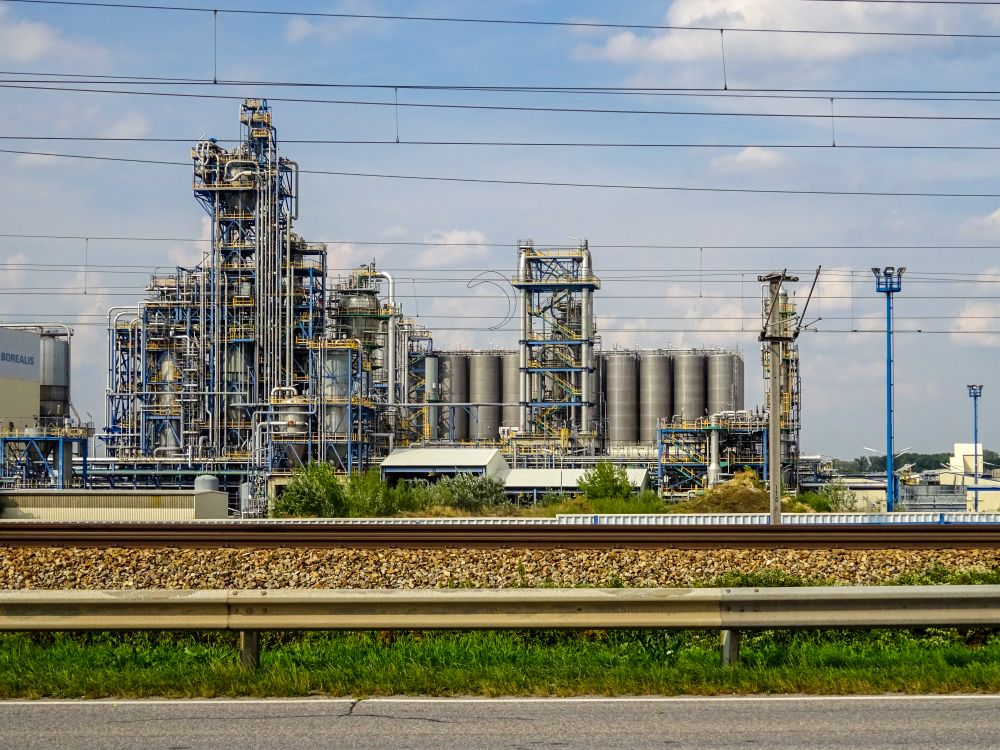
Arkema has commissioned new hydrogen production equipment at its Jarrie site near Grenoble, strengthening the feedstock position of a chemical complex that has been reorganised around hydrogen peroxide, chlorate, and perchlorate production.
The investment is significant because hydrogen is an essential process input for Jarrie’s hydrogen peroxide operation. Changes to neighbouring and upstream chemical activities reduced the amount available from existing processes, requiring Arkema to secure a more independent source for the product lines it intends to retain.
Jarrie has undergone substantial restructuring after disruption across the south Grenoble chemical platform, including the loss of historical salt supplies associated with Vencorex. Arkema responded by refocusing the operation and discontinuing several chlorine and derivatives activities while retaining production where it holds stronger market positions.
The site remains Arkema’s largest hydrogen peroxide production operation, with annual capacity of around 115,000 tonnes. Hydrogen peroxide from Jarrie serves applications including water treatment, healthcare, electronics, food-related processing, and other industrial uses, while the site also manufactures chlorate and perchlorate products.
Hydrogen availability is fundamental to peroxide production. Industrial hydrogen peroxide is generally manufactured using the anthraquinone process, in which a working solution is alternately hydrogenated and oxidised before hydrogen peroxide is extracted and purified.
Reliable hydrogen supply therefore affects whether the process can operate continuously at the required production rate. Historically, the Jarrie platform could obtain hydrogen as a co-product of chlorine and caustic-soda manufacture. When chlorine production is reduced or stopped, that internal balance changes even if demand for hydrogen peroxide remains.
The remaining peroxide plant then needs an alternative hydrogen source or has to reduce output for reasons unrelated to the peroxide market itself. Jarrie’s engineering plans have recognised that dependency for several years, with dedicated hydrogen investment used to preserve production as the wider chemical platform has changed.
The latest commissioning reflects the same process requirement under a more difficult industrial backdrop. The site now operates with a narrower product base, leaving Arkema to replace shared inputs and utilities that were previously generated within a more integrated chemical complex.
That problem is common across large process sites. Integrated operations derive part of their competitiveness from shared feedstocks, pipelines, utilities, storage, and by-products. One plant can generate a stream consumed by another, reducing transport and external purchasing.
When one activity closes, those internal exchanges can disappear. The remaining operations may need dedicated replacement equipment simply to preserve existing output rather than increase capacity.
At Jarrie, hydrogen had been part of an interconnected production system rather than a commodity delivered independently to the site. Maintaining industrial-scale peroxide production therefore requires sufficient on-site generation or another dependable supply route, together with compression, purification, controls, and the safety systems associated with handling a highly flammable gas.
The investment also improves resilience. European chemical producers have spent several years reassessing dependence on single feedstock suppliers, utility providers, and neighbouring plants after energy-price shocks and reductions in regional capacity.
A production unit can remain technically efficient but still become vulnerable if a material previously supplied by an adjacent process disappears. Installing dedicated hydrogen production gives Arkema greater control over one of the critical inputs to its peroxide operation.
The site remains regulated as an upper-tier Seveso operation, so hydrogen production introduces requirements around ignition control, leak detection, ventilation, pressure management, and emergency response. Commissioning therefore means both the production and safety systems have been integrated into the operating plant.
The economics are also specific to a continuous chemical operation. Producing hydrogen on site requires capital and energy, but external supply can be expensive and less resilient when large continuous volumes are required. The relevant comparison is therefore not simply the unit price of hydrogen but the cost of interrupted peroxide production if supply becomes unreliable.
Arkema has already absorbed substantial restructuring costs around Jarrie. Committing further investment to the hydrogen supply indicates that the group continues to see an industrial role for the site’s peroxide business despite the contraction of other operations around it.
The new unit does not restore Jarrie’s previous integrated configuration. It establishes a different operating model in which fewer product lines are supported by dedicated infrastructure designed around the activities Arkema intends to keep.
The performance of that model will now depend on whether the site can maintain reliable hydrogen peroxide output while carrying less shared infrastructure than before. Commissioning the hydrogen unit removes one critical dependency; it does not remove the broader competitiveness pressures facing European chemical production.