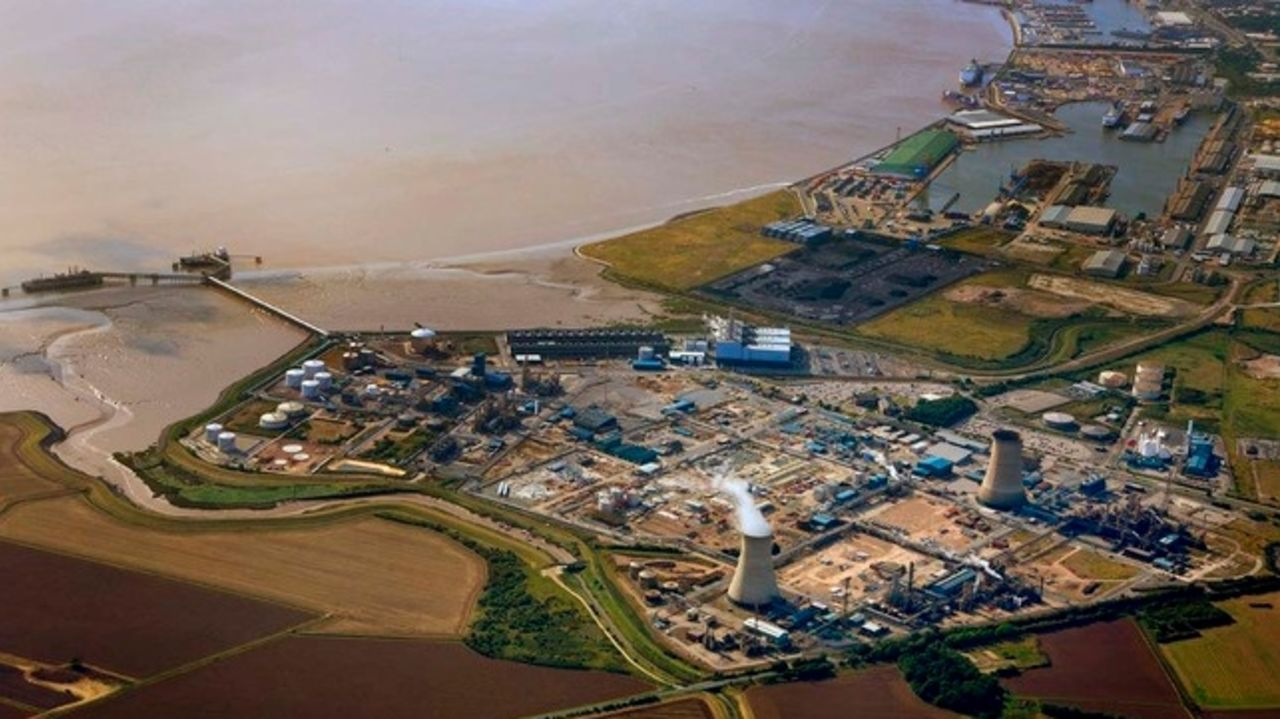
INEOS is idling all three of its acetyls plants at Saltend Chemicals Park in Hull, removing what the company describes as Europe’s last remaining world-scale acetyls units from production as it responds to the cost of natural gas.
Two units have already stopped and the third is due to come offline within days. The plants manufacture acetic acid, acetic anhydride, and ethyl acetate, intermediates used across pharmaceuticals, food products, detergents, coatings, adhesives, textiles, construction materials, and other industrial supply chains. INEOS says the three units support almost 4,000 skilled jobs when associated employment is included.
The Hull operation has substantial installed capacity. INEOS lists annual capacity of 500,000 tonnes of acetic acid, 150,000 tonnes of acetic anhydride, and 200,000 tonnes of ethyl acetate. The production units form part of the 370-acre Saltend Chemicals Park on the Humber and distribute material across Europe by road, rail, and ship, supported by storage in Belgium, Spain, and Norway.
INEOS says the plants remain technically efficient but cannot absorb the energy penalty attached to European production. The company puts European gas prices at around 12 times US levels. Gas is also a feedstock in acetyls production rather than simply an energy source, making the price differential more direct than it is for a factory able to reduce fuel consumption without changing its raw-material economics.
The company also argues that replacement material imported from the US or China would carry a higher production carbon footprint than output from Hull. Those figures are company estimates, but the underlying production shift is straightforward: if European capacity closes while demand remains, customers still require the same intermediates and sourcing moves to another asset.
The decision comes as energy prices continue to influence UK manufacturing investment. Recent research among UK manufacturers found energy costs constraining growth or investment for a large majority of respondents even as companies continued to plan automation and capacity spending. Chemical production is particularly exposed because continuous processes combine high energy demand with capital-intensive equipment that cannot be relocated cheaply.
Acetyls also sit unusually deep in industrial value chains. Acetic acid is a starting material for derivatives used in coatings, polymers, pharmaceuticals, and food applications. Acetic anhydride is used in pharmaceutical and chemical synthesis, while ethyl acetate is a solvent used in inks, paints, adhesives, and other formulations. Removing local production therefore changes sourcing, inventory, and logistics requirements for manufacturers consuming those intermediates.
The Hull plants operate within a cluster that provides port access, utilities, specialist maintenance, and links to other chemical and energy businesses around the Humber. Large process sites benefit from shared infrastructure, so a prolonged reduction in throughput at one major operation can also affect services supporting neighbouring plants.
Mothballing a large chemical unit is also more involved than pausing a discrete assembly line. Equipment condition, maintenance, inspection, utilities, feedstock contracts, and workforce availability all influence how quickly capacity can return, particularly when an outage extends for months rather than weeks.
Downstream customers will have to account for longer supply routes if imported acetyls replace Hull production. Industrial intermediates are commonly bought under supply arrangements built around specification, delivery schedules, and production planning rather than sourced as interchangeable retail commodities. Alternative suppliers can be qualified, but the change can increase lead times, freight exposure, and inventory requirements.
Those effects become more important in regulated or tightly controlled manufacturing processes, where a new raw-material source may require technical review before it can be introduced. Even when the chemical specification is nominally unchanged, customers may need assurance over consistency, documentation, packaging, or handling before switching supply.
For Saltend itself, the longer the units remain offline, the more important maintenance and workforce retention become to any eventual restart. Process plants deteriorate if preservation work is neglected, while experienced operators and maintenance specialists are difficult to replace quickly once they have moved elsewhere.
INEOS has not set a restart date and describes the shutdown as a mothballing until further notice. Customers must therefore manage the immediate supply effect without knowing whether European capacity will return in months or remain unavailable for longer.
The three Hull units now provide a practical test of the economics facing mature European chemical assets. The equipment remains in place and demand for the products continues; the unresolved question is whether energy and feedstock costs allow that capacity to compete with production elsewhere strongly enough for INEOS to restart it.