Google will invest at least €13 billion in Finnish digital and supporting infrastructure during 2027 and 2028, tying the expansion to long-term nuclear contracting, new wind generation, battery storage, and closer coordination with the country’s transmission system.
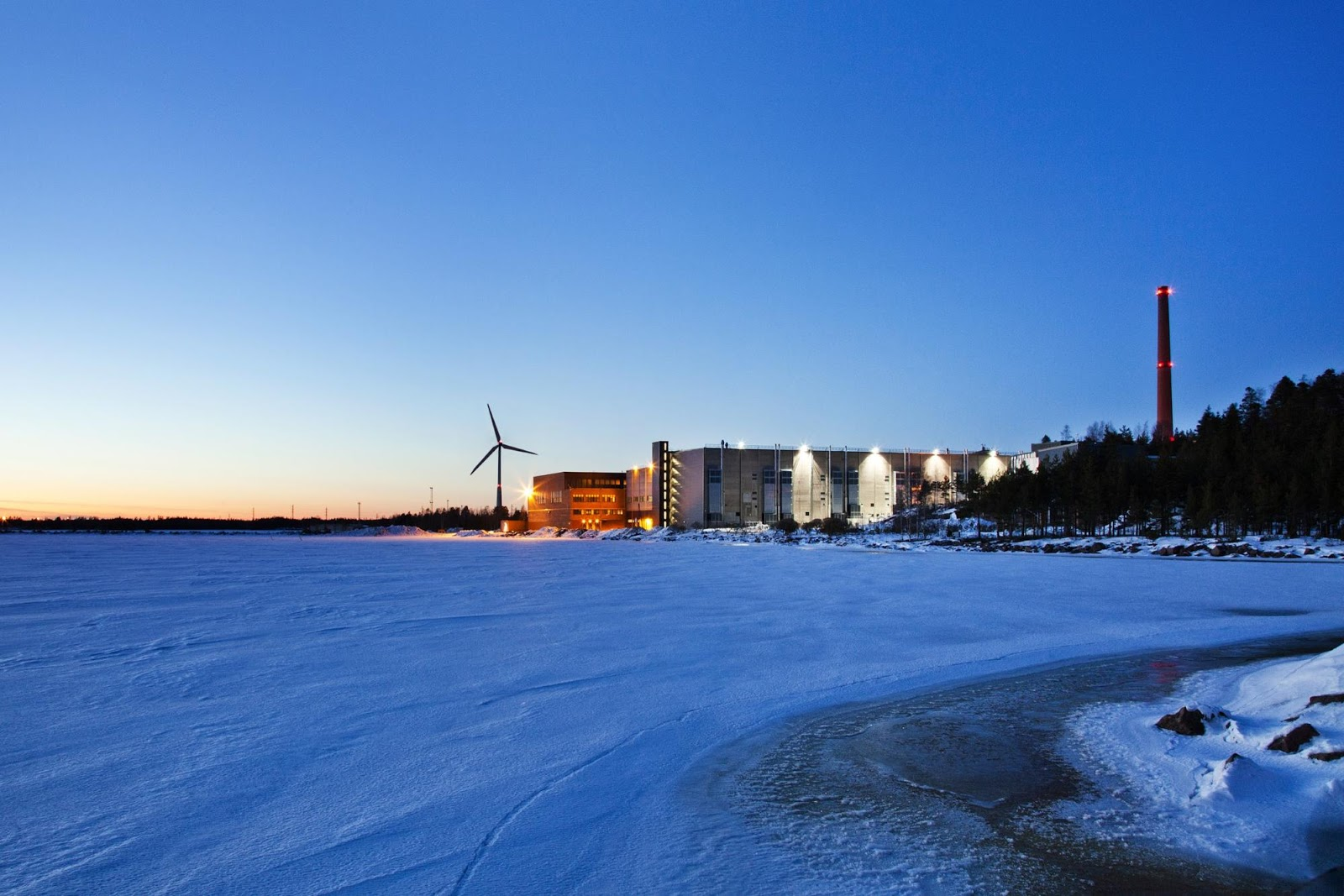
The programme covers data-centre and associated infrastructure investment in Hamina, Kajaani, Muhos, and Vaala. Google describes it as its largest single investment in Europe, but the physical scale of the electrical arrangements makes the announcement as much an energy-infrastructure programme as a computing one.
A central element is a 22-year power purchase agreement with Fortum covering electricity from the Loviisa nuclear power plant. The contract begins in 2028 at a smaller volume and is intended to reach up to 50% of the plant’s generation capacity during the 2030–2049 period.
Fortum says the agreement provides the long-term revenue certainty needed to continue an approximately €1 billion programme extending Loviisa’s operating life to 2050. Around €700 million of the required capital expenditure and approximately 80% of the projects needed for the lifetime extension remain subject to investment decisions.
Loviisa currently supplies about 10% of Finland’s electricity and directly employs approximately 580 people. Fortum says the plant could not continue operating beyond 2030 without the lifetime-extension programme, making Google’s electricity demand part of the commercial case for retaining existing nuclear capacity.
The PPA is also expected to enable another 10 MW increase in plant output, in addition to a previously planned 38 MW uprate expected to enter service in 2028.
Google and Fortum have signed a wider memorandum of understanding covering possible new nuclear generation, renewables, flexibility, and energy-portfolio services. The companies will also explore business models that could improve the economics of potential new reactors at the Loviisa site, although no new-build decision has been made.
The renewable part of Google’s Finnish power portfolio is more immediate. Additional onshore wind PPAs with Valorem and Suomen Hyötytuuli bring the total new-to-grid wind capacity supported by the company in Finland to 629 MW.
Google is also working with its partners to allow those wind assets to participate in Fingrid’s ancillary-service markets. That would allow generation contracted primarily to support data-centre demand to contribute to frequency and balancing requirements elsewhere on the electricity system.
A new contracted 94 MW battery system is planned close to Google’s Kajaani site and is expected to connect to the Finnish grid in late 2027. The battery is intended to provide short-duration flexibility during periods when demand and generation are poorly matched, including cold conditions with low wind output.
That combination reflects the power requirement of modern data-centre development more accurately than a simple renewable-energy procurement figure. A large computing facility requires continuous electrical supply, while wind output varies and batteries provide flexibility for limited durations rather than replacing firm generation indefinitely.
The nuclear PPA, wind contracts, storage, and grid work therefore perform different functions. Loviisa supplies firm low-carbon generation, wind adds new energy to the system, the battery can respond quickly to short-term imbalances, and transmission planning determines whether the physical network can deliver electricity to the new loads.
Google is working with Fingrid and Business Finland to identify locations where additional infrastructure can use existing grid capacity more efficiently. The company’s planned expansion in northern Finland is intended partly to take advantage of stronger available capacity near low-carbon generation rather than concentrating further electrical demand in the south.
That becomes important when individual industrial loads can reach hundreds of megawatts. Transmission systems are planned over much longer periods than many digital projects, and a data-centre campus can create substantial local demand before a new transmission line or major substation reinforcement could normally be permitted and built.
Location therefore becomes an electrical-engineering decision as much as a property decision. Land, fibre connectivity, cooling conditions, and workforce all matter, but a project with inadequate access to firm grid capacity remains a collection of buildings without the power needed to operate them.
The scale of the Finnish programme pushes that relationship further. Google estimates that the 2027–2028 construction phase could support more than 37,000 jobs nationwide, including around 16,000 construction roles, although those figures include indirect economic effects rather than representing permanent Google employment.
Once the facilities are operating, the company projects support for around 7,000 jobs annually across direct technical roles and the wider supply chain. The engineering supply requirement will include electrical equipment, cooling systems, backup power, network infrastructure, building services, controls, and maintenance alongside the computing hardware itself.
Data-centre demand has become a significant planning issue for power systems precisely because AI infrastructure is expanding on a timescale that generation and grid developers cannot always match. Adding the load first and solving the power system later risks congestion, delayed connections, or higher costs being passed across the wider network.
The Finnish arrangements attempt to address those constraints before the new facilities reach full operation. Long-term electricity contracting supports existing nuclear investment, new wind PPAs add generation, the Kajaani battery adds flexibility, and location decisions are being coordinated with the transmission operator.
None of those measures removes the need for wider system investment as other industrial users electrify. A dedicated corporate PPA does not reserve electrons on a private path from a reactor to a server hall, and additional load still changes the conditions under which Finland’s generation and transmission fleet has to operate.
That is why the €13 billion commitment has an industrial consequence beyond AI. The computing investment is large enough to influence decisions about nuclear life extension, renewable construction, battery deployment, and where major electrical loads should connect. Finland is effectively testing whether digital infrastructure can be expanded alongside the power assets it requires instead of allowing the two investment cycles to run independently.