Betolar and ScaleWolf are restructuring the next €3 million of ScaleWolf’s existing investment commitment around two specialist operating companies focused on metal extraction and critical-infrastructure protection.
The revised arrangement allocates €1 million to additional convertible capital notes issued by Betolar Plc and €2 million to direct equity investments in new Metal Extraction Technology Oy and Critical Infrastructure Protection Oy subsidiaries.
The structure follows the strategic partnership announced in June, when ScaleWolf agreed to support commercialisation of Betolar’s proprietary metal-extraction technology and development of the Otanmäki mine-tailings project in Finland.
Betolar says progress at Otanmäki and further validation of its technology have led the parties to direct more of the committed capital into focused operating businesses rather than leaving the entire investment at parent-company level.
Metal Extraction Technology, or MET, has been assigned a pre-money valuation of €25 million. Critical Infrastructure Protection, or CIP, has an agreed pre-money valuation of €10 million. If the planned investments complete, ScaleWolf would own approximately 4% of MET and around 9% of CIP.
Those investments are conditional. The subsidiaries must become sufficiently operational by the middle of December 2026 and definitive agreements must be completed. If those conditions are not achieved, the €2 million earmarked for the subsidiaries will instead go into another issuance of Betolar convertible capital notes.
Betolar intends to retain ownership of its current and future intellectual property at parent-company level. The subsidiaries would receive licences to use relevant technology and pay licence fees and royalties back to Betolar on arm’s-length terms.
That creates a capital-light structure in which the listed technology business owns the underlying intellectual property while individual operating companies raise and deploy capital around particular industrial markets.
The model can be useful where commercialisation requires substantially more physical investment than technology development itself. A materials process may be proven through laboratory and pilot work, but building a mining-recovery plant, infrastructure system, or other industrial deployment introduces project engineering, equipment, permitting, construction, commissioning, and operating costs.
Separating those activities gives project investors exposure to a specific opportunity without requiring them to finance unrelated parts of Betolar’s portfolio. It can also make it easier to bring strategic partners into individual businesses where they contribute customers, industrial sites, engineering capability, or project finance.
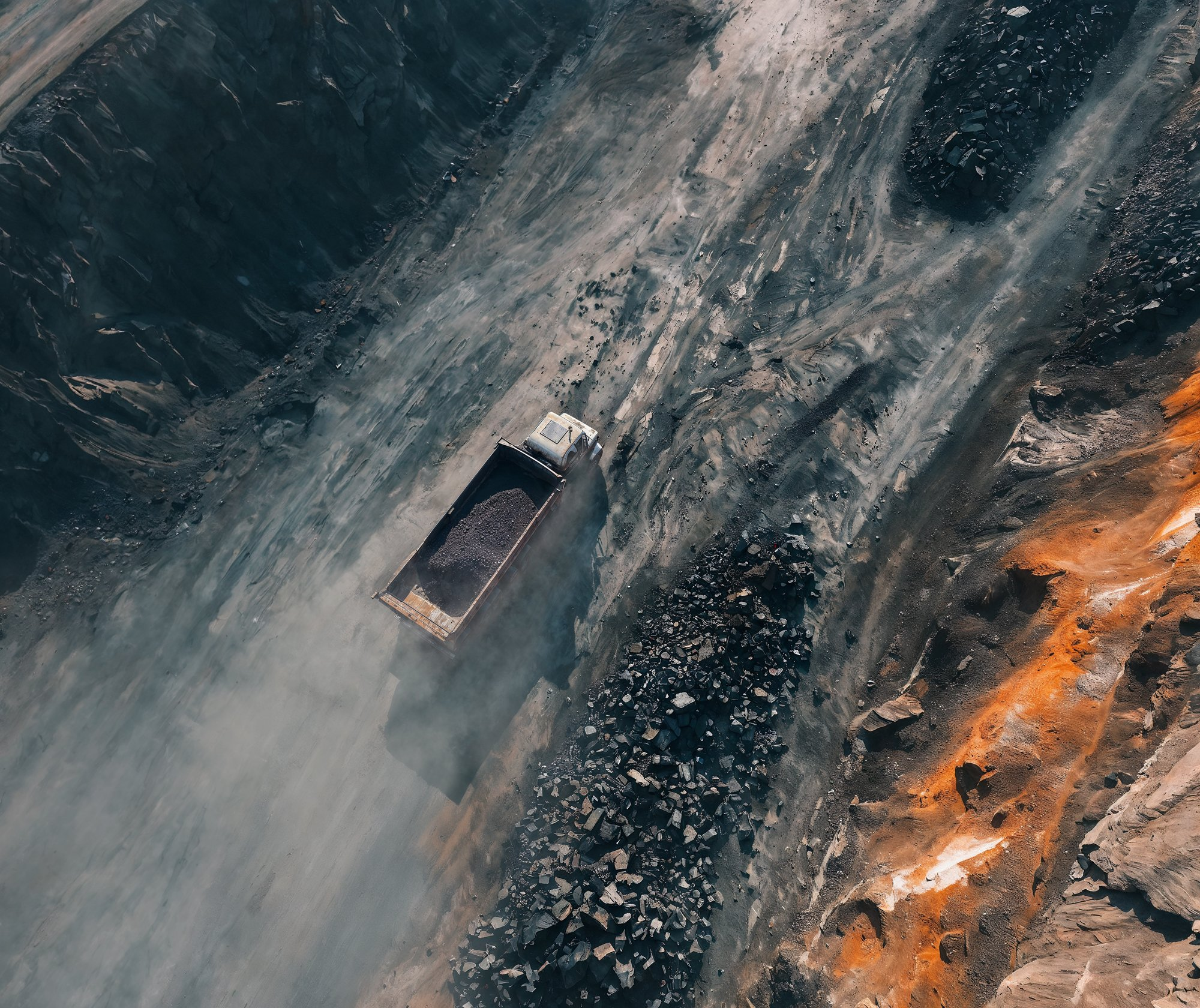
MET is the clearer example because it has an identifiable development project behind it. The Otanmäki work is focused on recovering valuable materials from historic mine tailings, turning waste generated during earlier mining activity into a potential secondary raw-material resource.
Tailings can look attractive because mining and initial size reduction have already taken place, but economic recovery remains difficult. Material composition varies, useful metals can occur at relatively low concentrations, and the process still has to achieve acceptable recovery without consuming excessive reagents, energy, or water.
A technically successful extraction step is therefore only the beginning. Commercial deployment requires stable feed characterisation, process design, equipment selection, residue handling, environmental controls, product qualification, and an economic case capable of carrying the cost of the plant.
ScaleWolf intends to invest up to a further €8 million in aggregate in MET and a related project special-purpose vehicle by year-end, subject to definitive investment arrangements. That potential follow-on commitment could become more significant than the current restructuring if Otanmäki progresses towards physical deployment.
The CIP subsidiary broadens the partnership into applications including subsea infrastructure, power grids, data centres, and defence. Betolar has not provided enough technical detail in the latest announcement to define the eventual products or deployment model precisely, so the commercial proposition remains less mature than the metal-extraction activity.
What can be established is that Betolar intends to use its materials technology in infrastructure-protection applications where durability, physical resilience, environmental exposure, and construction performance can create demanding qualification requirements.
That makes customer acceptance a long-cycle process. Critical infrastructure operators generally require technical evidence, testing, standards compliance, and predictable service life before introducing new materials into assets where failure has serious operational consequences.
The subsidiary structure may help by giving each technology area its own management focus, valuation, investment agreements, and route for additional partners. It also creates a discipline: an operating company eventually has to convert development work into contracts and revenue rather than remaining indefinitely inside a broader research portfolio.
For Betolar, that distinction is central to the capital-light model. Retaining the IP only creates value if licensees and subsidiaries build projects capable of generating licence fees, royalties, or equity appreciation for the parent.
The next milestones are therefore relatively practical — establish the two subsidiaries as operating businesses, complete definitive funding agreements, advance Otanmäki, and demonstrate that the underlying technologies can attract additional industrial capital beyond the current ScaleWolf commitment.