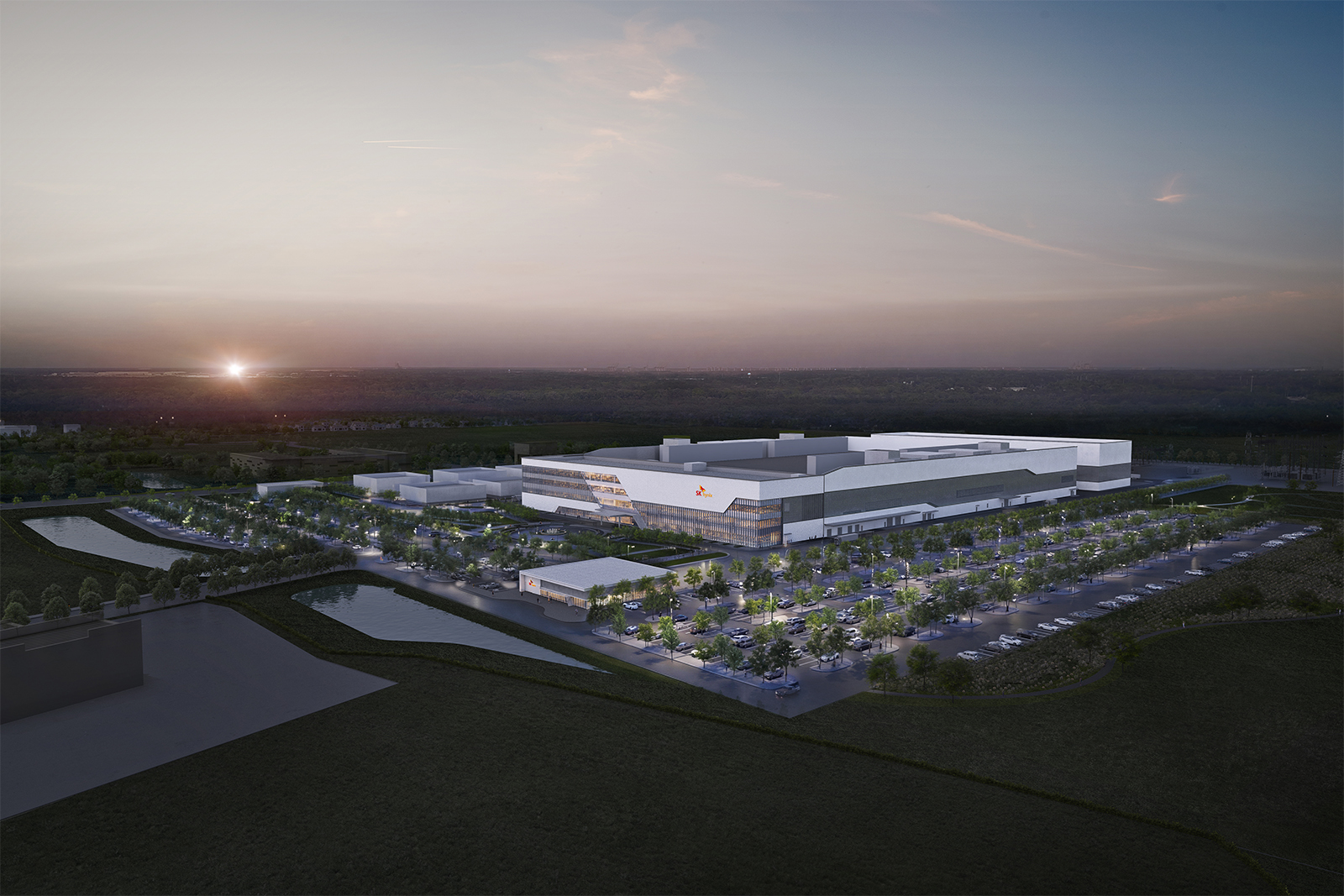
Blue Point One has broken ground on a $3.7 billion low-carbon ammonia plant in Louisiana, moving a previously sanctioned industrial carbon-capture project into construction ahead of planned production in 2029.
The development is owned by a joint venture involving CF Industries, JERA, and Mitsui, with respective stakes of 40%, 35%, and 25%. Capital contributions to the main ammonia facility are allocated according to those ownership levels.
The plant at Modeste is designed for average annual ammonia production of 1.4 million tonnes. CF Industries expects it to become the world’s largest single ammonia production facility when completed, although construction, commissioning, and operating performance still separate that forecast from an operating record.
The process will use autothermal reforming, or ATR, to produce hydrogen from natural gas before combining it with nitrogen in ammonia synthesis. The configuration is intended to create a concentrated carbon dioxide stream that can be captured, compressed, transported, and placed into permanent geological storage.
The partners expect 98% of the carbon dioxide generated during production to be captured and permanently sequestered. Earlier project engineering put the quantity at approximately 2.3 million tonnes of carbon dioxide a year.
That figure relates to process emissions from the ammonia plant rather than every greenhouse-gas emission associated with extracting and transporting natural gas, producing electricity, building equipment, or moving the finished ammonia. Low-carbon is therefore a more accurate description of the project than carbon-free.
A joint venture involving Occidental subsidiary 1PointFive and Enbridge will transport and permanently sequester the captured carbon dioxide. The gas is intended for the Pelican Sequestration Hub in Louisiana, making the ammonia plant dependent on carbon-management infrastructure beyond the boundary of its own process equipment.
That creates another operating interface. Capturing carbon dioxide at the reformer is useful only if dehydration, compression, transport, injection, and storage remain available at sufficient capacity to keep pace with ammonia production.
Blue Point One reached final investment decision in 2025, when CF Industries, JERA, and Mitsui formalised the joint venture and committed to construction. Long-lead equipment work then progressed while engineering and permitting continued.
The 26 August groundbreaking marks the transition into visible site construction rather than another preliminary development announcement. The partners have a defined ownership structure, financing commitment, process configuration, carbon-storage route, and 2029 production target.
CF Industries will also invest another $550 million over four years in shared infrastructure at the Blue Point complex. Those facilities include scalable systems capable of supporting the ammonia plant and potential future production or fertiliser investments.
Storage and loading are particularly important for a plant designed to serve customers beyond Louisiana. World-scale ammonia production requires tank capacity and transport infrastructure capable of handling large continuous output even when ship, rail, pipeline, or customer schedules do not align exactly with plant operation.
Linde is separately investing more than $400 million in an on-site air-separation unit to supply oxygen and nitrogen. Nitrogen is required for ammonia synthesis, while oxygen supports the ATR process used to make hydrogen.
The air-separation unit is therefore production-critical rather than a peripheral utility. An interruption to nitrogen or oxygen supply can restrict the main plant even when reforming, synthesis, compression, and storage equipment remain mechanically available.
CF Industries expects more than 100 permanent manufacturing jobs once the complex is operational and approximately 3,900 construction jobs over four years. The difference between those figures reflects the nature of modern continuous-process plants, where very large capital assets can operate with comparatively modest permanent staffing once construction and commissioning are complete.
The output is intended for both established agricultural markets and newer energy applications. Ammonia is already manufactured at global scale for nitrogen fertilisers, while energy companies are investigating lower-carbon ammonia as a fuel, hydrogen carrier, and input to power-generation or marine applications.
JERA and Mitsui give the project a direct connection to prospective Japanese demand. That market is exploring imported lower-carbon fuels as part of a broader energy strategy, creating a possible premium outlet beyond conventional fertiliser customers.
Whether those emerging applications justify higher production costs will depend on policy support, emissions accounting, fuel economics, and customer willingness to pay for lower-carbon attributes. Blue Point One can also supply traditional agricultural customers, giving it access to an established ammonia market if energy demand develops more slowly.
The project still relies on natural gas, so its emissions performance depends heavily on the carbon-capture system and on upstream methane and energy impacts outside the plant boundary. Maintaining a 98% capture rate through real-world operating disturbances will be a more useful measure than the design percentage alone.
Reliability will matter because the carbon chain and ammonia process are linked. A chemical plant configured around routine carbon capture cannot simply treat sequestration as optional equipment whenever transport or injection capacity becomes unavailable without changing the emissions profile of the resulting product.
Blue Point One also differs from lower-carbon ammonia schemes built around electrolytic hydrogen from renewable electricity. ATR with carbon capture retains natural gas as the hydrogen feedstock but attempts to remove most of the process carbon dioxide before release.
That route can potentially achieve larger volumes without waiting for the quantities of low-cost renewable electricity required by a world-scale electrolyser complex, although it remains dependent on gas supply and permanent carbon storage.
The emerging ammonia market is already experimenting with ways to value emissions reductions separately from physical delivery. Envision Energy recently transferred low-carbon ammonia attributes to PepsiCo through a book-and-claim arrangement, allowing environmental attributes to move independently of the physical product.
Blue Point One instead places billions of dollars into new production, carbon capture, air separation, storage, loading, and sequestration infrastructure. Its economics will depend on how effectively those assets operate together once the construction workforce leaves.
Construction now carries the immediate project risk. The programme has to coordinate civil works, structural steel, reforming equipment, synthesis systems, compressors, pressure vessels, air separation, electrical infrastructure, storage, controls, pipelines, and carbon-management interfaces before commissioning can start.
The partners have until 2029 to complete that work and bring the process through start-up. If the facility reaches its planned production and capture rates, it will provide one of the larger operating references for combining conventional ammonia manufacture with carbon sequestration.
If it falls materially short, the scale will make the shortcomings equally instructive. Blue Point One has progressed beyond deciding whether low-carbon ammonia can attract investment; $3.7 billion has been committed. The next question is whether the engineering can deliver 1.4 million tonnes a year while the associated carbon stream disappears underground as reliably as the product leaves the site.