The UK Government should appoint a minister with explicit responsibility for critical chemical capabilities and produce a long-term chemicals-sector roadmap within 12 months, according to advice published by the Council for Science and Technology.
The advice appeared on 25 August but was originally sent to the Prime Minister on 30 July, so it should be read as a newly published policy intervention rather than a response written to developments that emerged later in August. Its central argument is that chemicals underpin food, healthcare, energy, defence, critical infrastructure and advanced manufacturing, while responsibility for the sector is fragmented across government.
The Council for Science and Technology makes two principal recommendations. It wants a named minister accountable for safeguarding strategically important chemical capabilities and coordinating policy across departments, supported by a cross-government unit or taskforce with access to independent technical and industrial expertise.
The second recommendation is a sector roadmap setting out the capabilities, supply chains, assets, skills and regulatory conditions Britain is likely to need through to 2035. Rather than assuming every chemical must be made domestically, the council says government should distinguish between production that is strategically essential in the UK and needs that can be met reliably through diversified international supply, partnerships, stocks or substitution.
That distinction is important because chemical supply is difficult to judge from tonnage alone. A comparatively small stream of a specialist intermediate, industrial gas, fluorochemical or high-purity material can be critical to a much larger downstream process. If one qualified source disappears, the practical problem can spread into testing, reformulation, certification, inventory and customer approval long before the missing volume looks significant in national statistics.
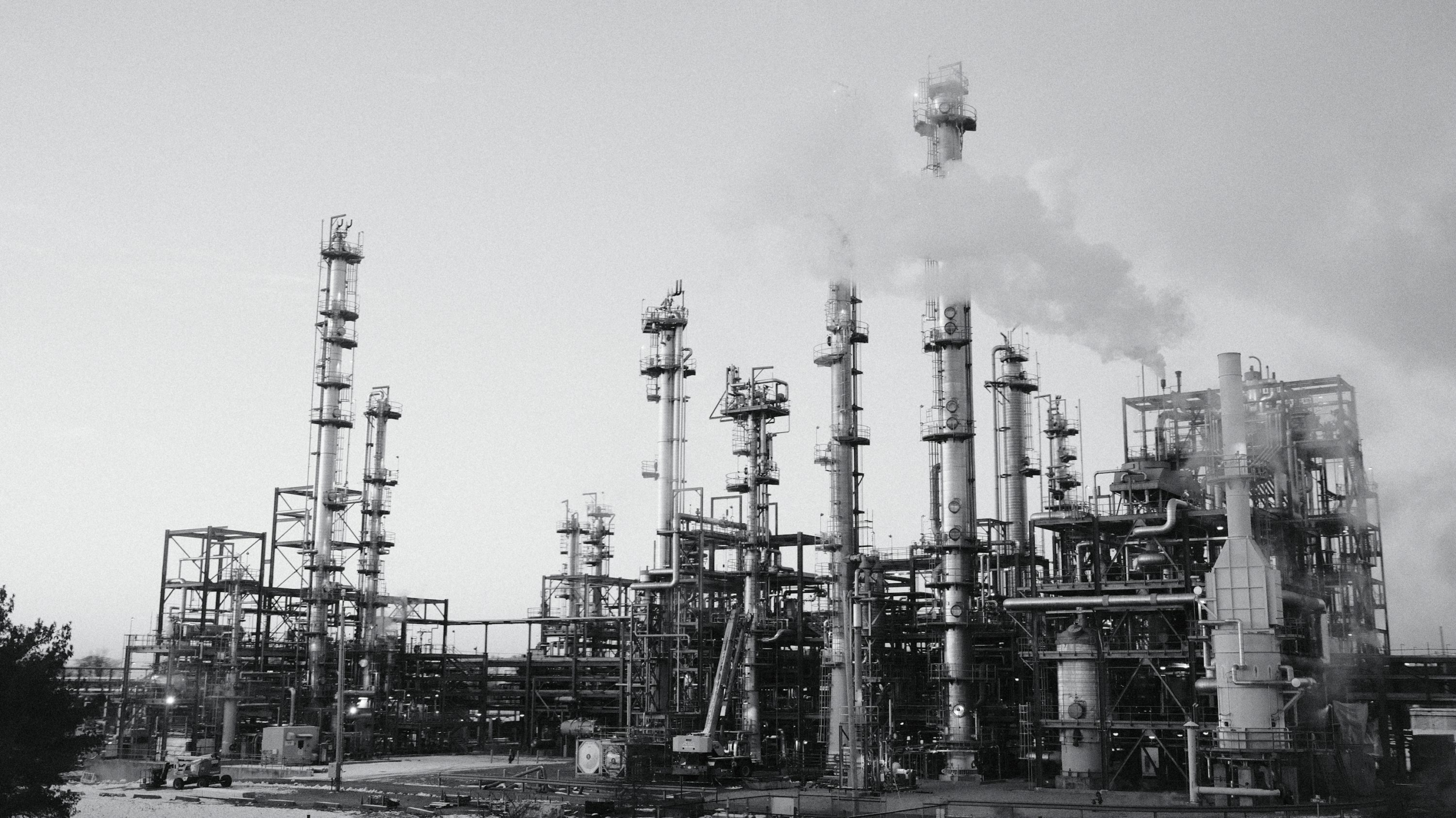
The council points to high energy costs, ageing infrastructure and under-investment in innovation as pressures affecting the sector internationally, with the UK also facing regulatory complexity, policy instability and the absence of a long-term strategy. Those factors are particularly visible in industrial clusters including Teesside, the Humber, Runcorn and Widnes, and Grangemouth, where individual sites share utilities, logistics, feedstocks, by-products and skilled labour.
That interdependence makes plant closures harder to assess in isolation. AGC Chemicals Europe’s consultation over its Hillhouse operation is one recent example of a site whose products feed several industrial markets. Replacing a specialist grade from another country may be commercially possible, but changing supply can still require technical qualification, longer logistics routes and greater inventory.
The recommendations arrive after government announced a £350 million Critical Chemicals Resilience Fund in May. That programme is intended to support strategically important producers and sites and followed earlier interventions around Grangemouth and carbon dioxide supply from the Ensus bioethanol plant on Teesside. The council’s argument is that individual funding decisions need to sit inside a clearer view of which capabilities matter and why.
A roadmap would also have to address the economics of long-lived process assets. Chemical plants can require substantial capital simply to maintain safe and reliable production, before owners consider major efficiency or decarbonisation projects. A company deciding whether to refurbish a British plant will compare future energy exposure, feedstock availability, regulation, market demand and infrastructure with alternative production locations over a period measured in years rather than one budget cycle.
Energy and carbon costs therefore sit beside regulation in the council’s five proposed priority areas. It also calls for sustainable feedstocks, better access to finance and shared infrastructure, stronger innovation pathways and a credible transition towards a lower-carbon and more circular industry. Those priorities overlap because new processes frequently need both technical development and large physical assets before they can reach commercial scale.
Regulation remains one of the more difficult trade-offs. The council wants a proportionate framework that protects people and the environment while providing enough certainty for investment and innovation. It specifically calls for reduced UK-EU market-access friction and clarity over UK REACH, where manufacturers have had to plan around a chemicals regime that has diverged institutionally from the European system while supply chains remain closely connected.
Predictability does not mean weakening controls. Chemical manufacturing involves hazardous substances, emissions, waste streams and legacy environmental liabilities that require stringent management. The industrial complaint is more often that uncertain or repeatedly changing requirements make it harder to compare investment options and commit capital to equipment that may remain in service for decades.
There are also signs that investment can continue where owners see a workable operating case. Tioxide Materials restarted titanium dioxide production at Greatham this month, with a phased ramp planned into 2027. Other sites are moving in the opposite direction, reinforcing the council’s point that the UK needs a way to distinguish strategic capability from capacity that cannot be justified indefinitely.
The council does not provide that list. Its recommendation is that government create the framework and evidence base needed to make those choices, including analysis of market dynamics, infrastructure dependencies and the financial case for intervention. That avoids pretending that every closure is a security threat or that every strategically useful plant should be subsidised permanently.
The harder task will be maintaining policy long enough for industry to respond. Chemical manufacturers make investment decisions against energy contracts, environmental permits, customer qualification cycles and equipment lives that outlast individual ministerial terms. A roadmap produced within 12 months would only become useful if those decisions are followed by stable implementation, otherwise the sector will have acquired another strategy document while the underlying plants continue ageing on schedule.