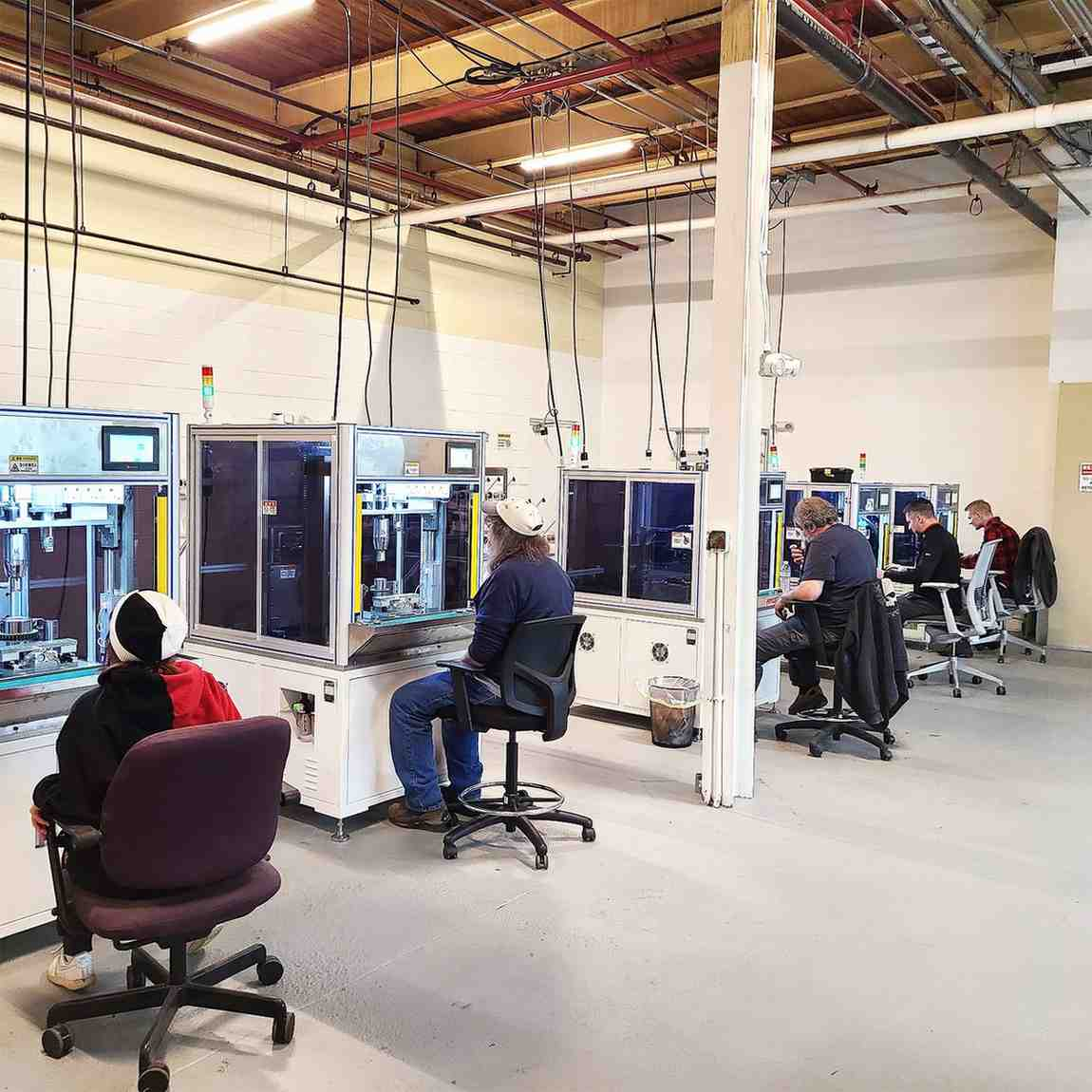
ePropelled is expanding its US manufacturing footprint from 20,000 to 80,000 square feet using $60 million of government support, increasing domestic capacity for electric motors, electronic speed controllers, and complete propulsion systems used in uncrewed aircraft and other advanced mobility applications.
The New Hampshire programme is intended to increase production capacity by more than four times. Planned investment covers precision motor manufacture, electronic speed controller assembly, automated production equipment, complete propulsion-system integration, environmental testing, quality assurance, and additional engineering capability.
The scale-up therefore reaches beyond additional factory floor space. Electric propulsion systems combine rotating machines, power electronics, software, sensors, mechanical interfaces, wiring, thermal management, and control functions, all of which have to operate together within defined weight, efficiency, temperature, and reliability limits.
Manufacturing more motors without expanding controller production or test capacity would simply move the production constraint elsewhere. ePropelled’s programme is structured around a broader factory flow, with additional equipment intended to support assembly, verification, and release of finished propulsion systems rather than increasing one manufacturing operation in isolation.
The company describes its products as dual-use and supplies technology for government and commercial applications. Its portfolio includes electric motors, starter-generators, electronic speed controllers, and power-management systems for aerial, ground, and surface uncrewed platforms, with engineering and manufacturing activity extending beyond the US into the UK and India.
The US investment concentrates on domestic production at a time when propulsion supply chains are receiving closer scrutiny. Uncrewed aircraft can depend on comparatively small components that are nevertheless critical to final assembly, including magnets, bearings, semiconductor devices, controllers, connectors, sensors, and specialist motor materials.
A shortage or restriction affecting any one of those components can halt production even where the airframe, software, and final assembly capacity remain available. Expanding propulsion manufacture therefore depends partly on whether upstream suppliers can increase output alongside the new plant.
The company has not disclosed the final annual number of motors or propulsion systems it expects to manufacture once the expansion is complete. Its claim of more than four times current capacity should therefore be treated as a factory-capability measure rather than a forecast of confirmed unit production.
Automation will determine how effectively the additional 60,000 square feet is converted into output. Electric motor manufacture can involve winding, magnet installation, rotor and stator assembly, balancing, bonding, mechanical inspection, electrical testing, and final calibration, while controllers add populated electronics, firmware, heat-management components, and functional testing.
Those operations become more demanding where equipment is intended for aerospace or defence use. Customers can require traceability of components, controlled manufacturing processes, configuration records, and test evidence linking individual assemblies with specified performance standards.
Automated test systems can raise throughput while capturing consistent data, provided the test process keeps pace with assembly. A factory capable of assembling more propulsion units than it can inspect or qualify does not have useful extra production capacity; it has an increasingly expensive queue.
ePropelled is also adding environmental-test capability. Drone propulsion hardware can encounter vibration, temperature extremes, dust, moisture, repeated thermal cycling, and changes in atmospheric conditions depending on the vehicle and operating envelope. Qualification therefore extends beyond measuring thrust or motor efficiency under laboratory conditions.
Testing motors and controllers together can identify faults that are harder to isolate at component level. Thermal behaviour, switching strategy, software calibration, current draw, motor winding characteristics, and mechanical loading can interact, making complete-system verification increasingly important as propulsion architectures become more integrated.
The investment follows expansion of ePropelled’s electronic-control and intelligent power-management portfolio during 2026. Integrating motors with associated controllers potentially simplifies procurement and system matching for customers, but it places more configuration and software-management responsibility inside the propulsion supplier’s own factory.
Hardware revisions, firmware versions, test procedures, and approved motor-controller combinations have to remain controlled as production grows. A larger operation therefore requires stronger manufacturing data and quality systems as well as more physical equipment.
The $60 million government support reflects the strategic value being attached to propulsion components within the expanding uncrewed-systems market. Conventional aerospace manufacturing is built around comparatively low volumes of expensive platforms; smaller uncrewed aircraft can create demand for propulsion hardware in quantities that require a different manufacturing model.
ePropelled says the expanded plant will serve US government programmes, allied partners, and commercial customers. A final completion date has not been disclosed, leaving equipment installation, recruitment, commissioning, and production ramp-up as the next measurable stages.
Moving from 20,000 to 80,000 square feet gives the company room to increase machinery and headcount substantially. Turning that space into four times the qualified propulsion output will depend on supplier capacity, automated production performance, environmental testing, workforce growth, and whether customer demand arrives at the same rate as the machines.