Plaskimia has unveiled an industrial development platform combining cold plasma, continuous flow chemistry, and artificial intelligence to create synthesis routes using lower temperatures, smaller reaction volumes, and reduced quantities of selected catalysts and solvents.
The French deep technology company is building on 13 years of research at Chimie Paris-PSL. Intended markets include fine chemicals, pharmaceuticals, flavours and fragrances, cosmetics ingredients, and fluorinated compounds.
Reactions investigated through the platform can operate between two and ten times faster than conventional synthesis, according to the company. Selected use cases have indicated carbon dioxide reductions of up to 80%, although results will vary with the chemistry, existing process, electricity source, and industrial scale.
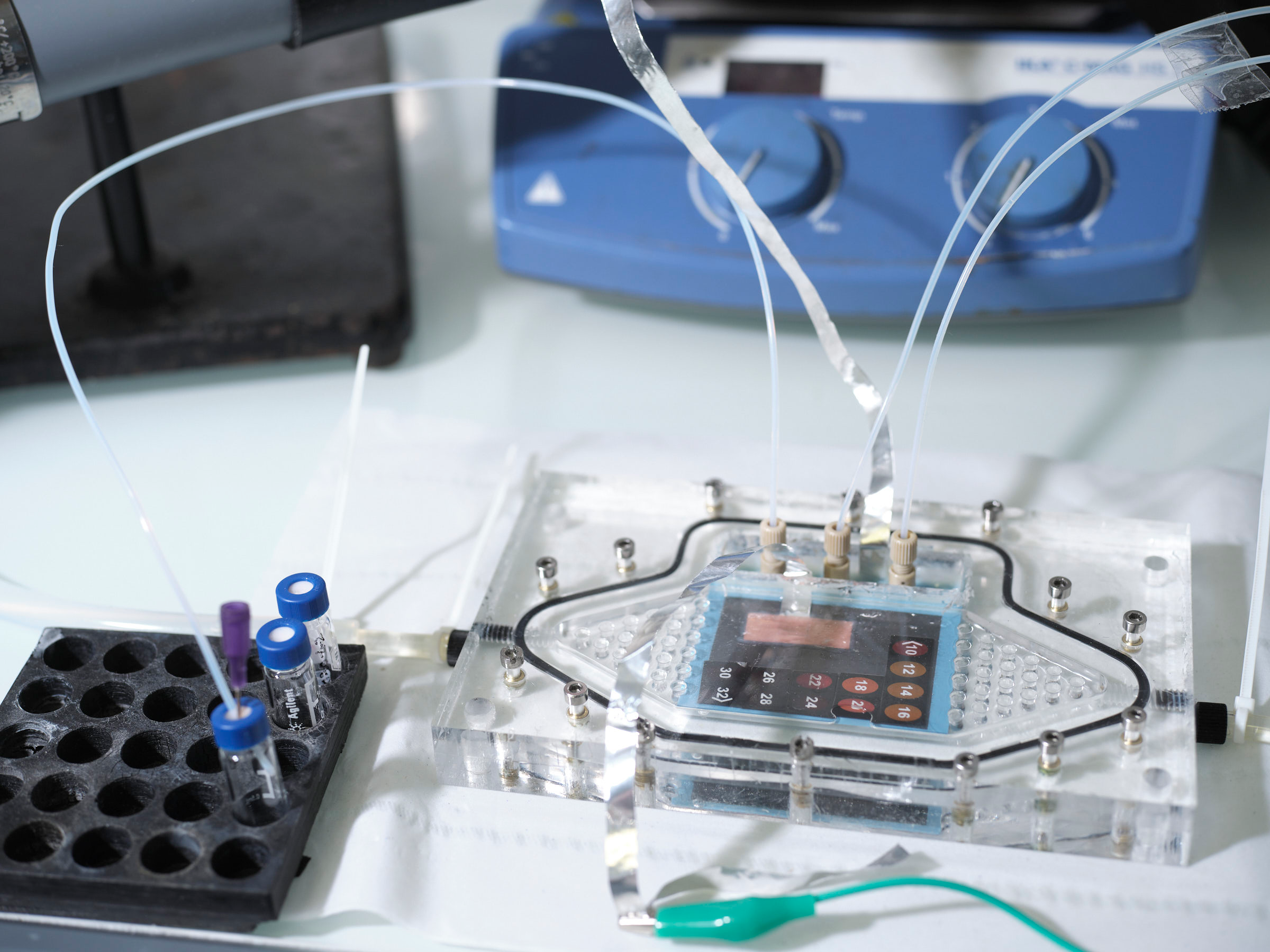
The platform consists of two connected elements. PlasmaFlow circulates gases and liquids continuously through microreactors, where cold plasma creates reactive species capable of initiating or accelerating a chemical transformation.
PlasmAI records reaction conditions and analytical results, then uses the expanding dataset to propose experimental parameters, optimise existing reactions, and identify alternative synthetic routes. Each experiment adds evidence that can be used to guide subsequent development.
Cold plasma can generate highly energetic electrons while keeping the bulk process close to ambient temperature. Molecules can therefore be activated without heating the entire reactor contents to the same energy level.
Continuous flow operation changes the process environment further because reagents pass through a small reaction volume with controlled residence time, heat transfer, mixing, and plasma exposure. Hazardous intermediates can potentially be generated and consumed without accumulating in a large batch vessel.
“For decades, innovation in chemistry has focused on discovering new molecules,” said Laurent Boitard, Chief Executive Officer of Plaskimia. “We believe the next revolution will be about how they are made.”
Chemical and pharmaceutical producers are under pressure to reduce energy consumption, solvent use, emissions, hazardous inventory, and waste while maintaining yield, purity, throughput, and regulatory control. Many established processes were developed when energy was cheaper and environmental constraints were less demanding.
Those routes may rely on high temperature, elevated pressure, lengthy batch times, metal catalysts, multiple purification stages, or large solvent volumes. Improving them incrementally can reach a point where the original reactor concept becomes the main limitation.
Changing an established synthesis remains difficult because plant materials, mixing, heat transfer, impurity profiles, analytical methods, downstream separation, and customer registrations are connected to the approved process. A more efficient reaction can still fail commercially when purification or equipment life becomes worse.
Work on lower-impact active pharmaceutical ingredient production has shown how flow chemistry can reduce resource use while keeping reliability and lifecycle assessment in view. Plaskimia is adding plasma activation and a learning system to that broader process intensification approach.
Electrification is also spreading through supporting process equipment. Larger heat exchanger systems for industrial heat pumps, thermal storage, carbon capture, and chemical processing reflect demand to recover and reposition heat rather than allowing it to leave a plant as waste.
Plasma chemistry could avoid some thermal duty entirely, although electricity consumption must be measured across the complete process. A lower reactor temperature does not guarantee a lower carbon footprint when plasma generation, gas handling, pumping, separation, purification, or analytical work consumes substantial energy.
The carbon benefit will also depend on electricity supply. An electrified process operating on low-carbon power can reduce exposure to fossil fuel combustion, while the same equipment on a carbon-intensive grid may deliver a smaller improvement.
Scale-up remains the principal engineering test. Microreactors provide strong control over heat and mass transfer, but industrial production may require larger flow rates, parallel channels, extended operating periods, or the numbering-up of reactor units.
A reaction that performs well for several hours in the laboratory must remain stable in the presence of feedstock variation, fouling, electrode wear, plasma instability, pump variation, and deposits. Cleaning and maintenance may determine whether a continuous process achieves its intended availability.
Artificial intelligence can narrow the experimental search space, although useful models depend on consistent analytical data and technically meaningful parameters. Chemical datasets are often small, proprietary, and biased towards successful experiments, leaving domain expertise central to interpretation.
Plaskimia has worked with Sanofi since 2019 on medicinal chemistry applications and holds several international patent families under an exclusive commercialisation licence. The company is now seeking to move from research collaboration towards laboratory and early industrial pilots.
Professor Michael Tatoulian, Chief Scientific Officer and co-founder, said the research team had spent 13 years controlling plasma reactivity until it became sufficiently precise and reproducible for conventional chemical development.
Commercial users will require evidence on yield, selectivity, purity, energy per kilogram, equipment life, cleaning, safety, and total production cost. They will also need a credible route for transferring the process into qualified manufacturing.
The platform now has to demonstrate that plasma, continuous flow, and artificial intelligence can operate together as a maintainable production technology. Promising reaction data will only become industrial advantage when the process remains stable under the longer and less forgiving conditions of a chemical plant.