Scania Industrial Batteries has been selected as MacLean Engineering’s primary battery supplier for an expanding portfolio of battery electric underground mining equipment.
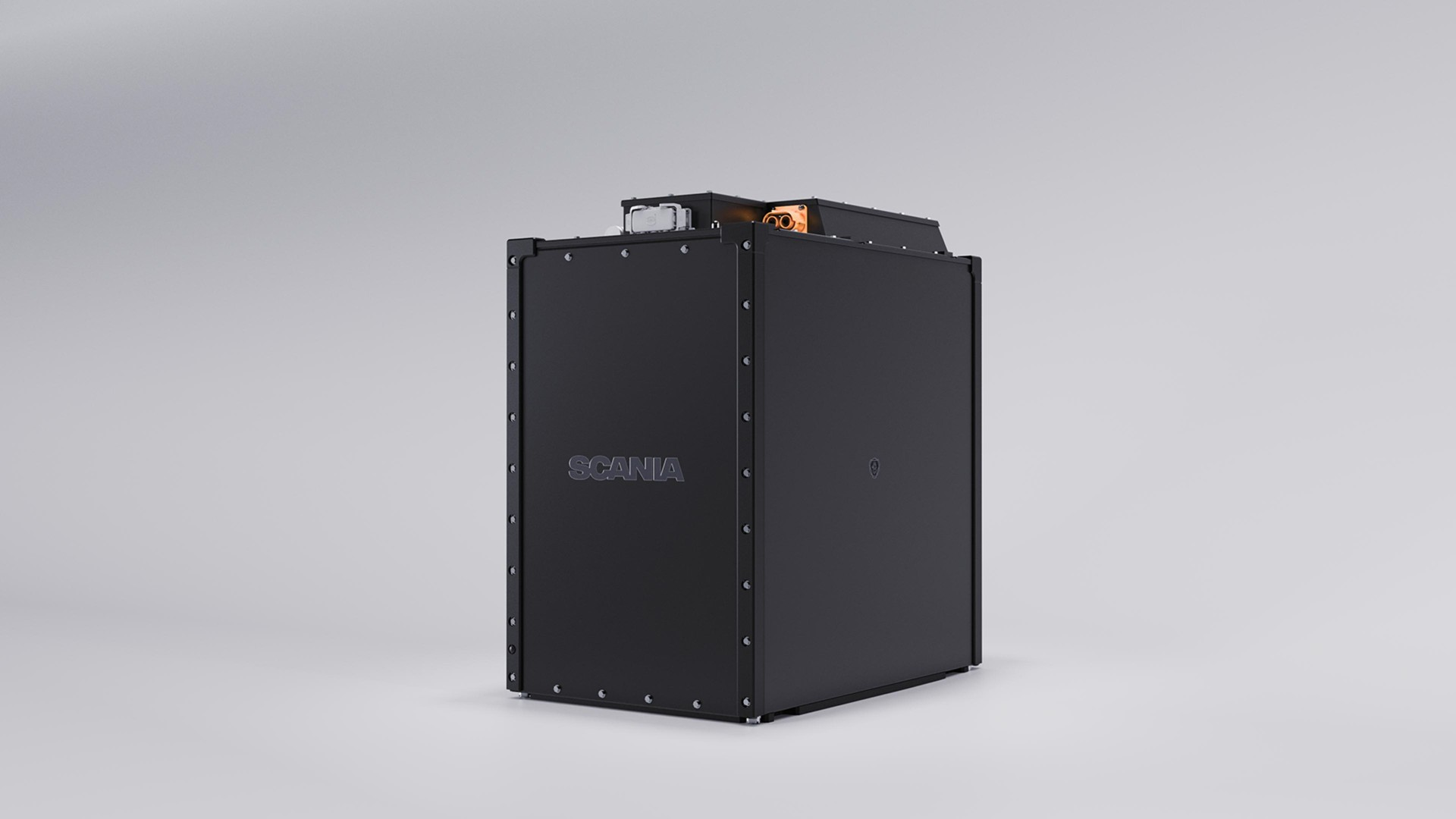
Under the agreement, Scania will supply Core 800 battery packs for MacLean’s mobile mining platforms, while the companies cooperate on system integration, deployment support, maintenance, and future vehicle programmes.
The Core 800 provides 97kWh of installed energy at a nominal voltage of 691V. Liquid thermal management and Scania’s proprietary battery management system are integrated within a pack designed for demanding off-road environments.
Scania’s broader industrial battery architecture supports powertrains from 400V to 800V and scalable energy capacities between 21kWh and 768kWh. More than 2,000 of its battery systems are already operating in underground mines worldwide.
MacLean selected Scania following a global assessment covering performance, operational reliability, regulatory compliance, service capability, long-term support, and technician safety. The review gave particular attention to reducing arc-flash incident energy during maintenance.
“Electrification in demanding off-road applications places exceptionally high requirements on safety, reliability and system integration,” said Elin Åkerström, Managing Director at Scania Industrial Batteries. “We are applying our deep expertise in electrified power solutions to support customers like MacLean as they transition to zero-emission operations in some of the world’s most challenging environments.”
Underground mining creates a strong operating case for electrification because diesel engines introduce heat, exhaust gases, and particulate emissions into confined workings. Removing combustion equipment can reduce part of the ventilation and cooling load while improving conditions around operators and maintenance teams.
Battery integration remains demanding because mining vehicles operate on steep gradients, carry heavy loads, and tolerate impact, vibration, dust, water, mud, and variable temperatures. Space available for batteries is constrained by vehicle geometry and the need to preserve payload, visibility, ground clearance, and manoeuvrability.
Duty cycles may alternate between traction, hydraulic demand, braking, loading, and stationary operation, producing rapidly changing power requirements. The battery must deliver peak output without exceeding cell, connector, cable, or cooling limits.
Thermal management governs performance and service life. Heat generated during high-power discharge and rapid charging must be removed evenly, while operation in colder conditions may require controlled warming.
Large temperature differences within the pack can accelerate uneven degradation, causing some modules to reach operating limits before the rest of the system. Battery management software must therefore coordinate cell balancing, power limits, fault response, and communication with the vehicle controller.
Charging strategy becomes part of mine planning. Operators can use fixed charging points, opportunity charging during breaks, battery swapping, or a combination of methods depending on shift patterns, travel distance, machine utilisation, and available electrical infrastructure.
Mine power networks may require substations, distribution equipment, cables, chargers, control software, and protection upgrades before a large electric fleet can be deployed. Electrifying the vehicle without upgrading the site can transfer the operational constraint from fuel supply to charger availability.
The partnership follows Scania’s presentation of battery electric, gas, and diesel commercial vehicle options, where duty cycle and infrastructure determine the appropriate powertrain. Underground mining concentrates operations within a controlled site, although durability and safety requirements are considerably more severe.
Battery projects for specialist vehicles are also moving towards modular platforms. Volklec’s participation in a modular battery programme for automotive and defence applications reflects the value of configurable packs that can support several vehicles without repeating the entire engineering process.
Standardisation reduces development time, but each MacLean machine still requires mechanical, electrical, thermal, software, and safety integration. Pack mounting must control shock loads, high-voltage interlocks must respond correctly, and the vehicle controller must coordinate battery limits with traction and hydraulic demand.
Service capability will influence fleet confidence because mines cannot tolerate long waits for specialist battery support when a machine is central to production. Diagnostic access, trained technicians, spare modules, remote monitoring, and clear isolation procedures all contribute to equipment availability.
Battery condition data can move maintenance away from fixed replacement assumptions. State of health, temperature history, charge throughput, cell balance, and fault records can identify packs requiring attention before reduced capacity begins to affect the shift plan.
Kevin MacLean, Chief Executive Officer of MacLean Engineering, said Scania had demonstrated technical capability, transparency, and a collaborative approach during the assessment. He added that the partnership would support customers seeking electrification as fuel costs continue to rise.
The agreement gives MacLean an established battery platform rather than requiring the mining equipment manufacturer to develop cells and packs independently. Scania gains a primary supply position within a market where harsh operating experience will influence future industrial battery design.
Battery electric mining equipment will be judged on tonnes moved, machine availability, charge time, safety, and operating cost. The Core 800 has passed MacLean’s supplier assessment; the longer test will be its performance underground, where production leaves little room for technology that depends on controlled conditions.