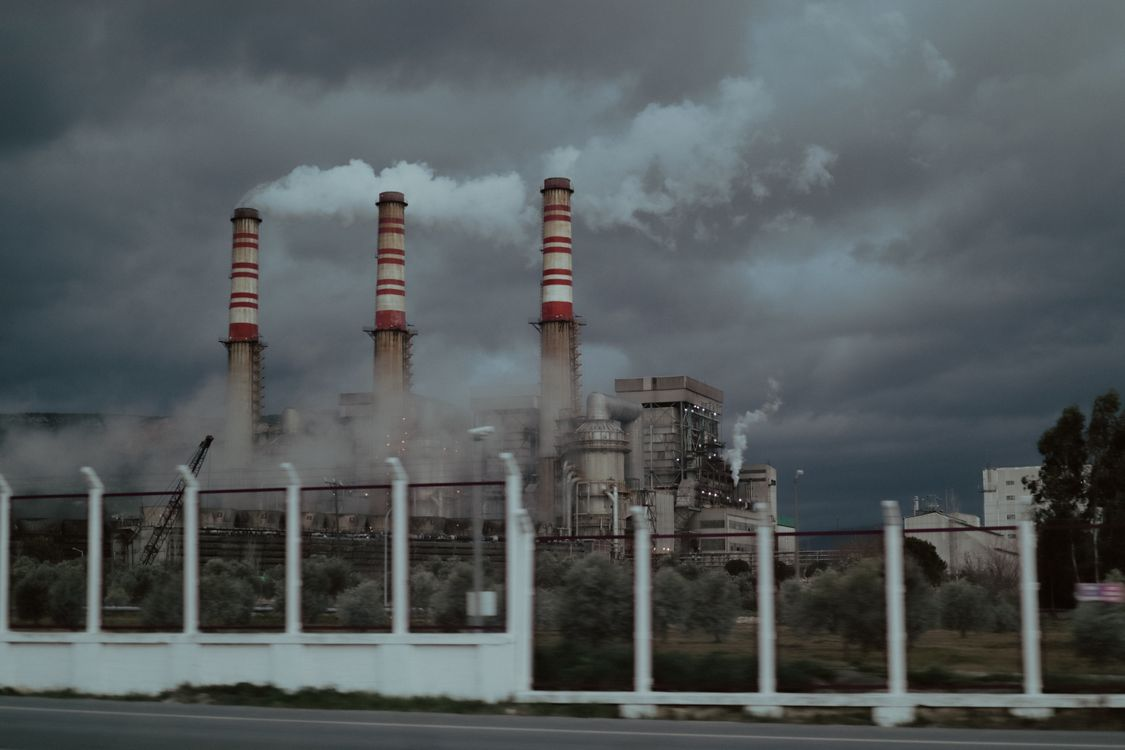
Acciaierie d’Italia‘s attempt to suspend an order closing hot-end operations at the former Ilva steelworks in Taranto has failed, leaving Italy’s largest steelmaking site facing a court-mandated shutdown of its blast-furnace area.
The Milan Court of Appeal rejected an application from Acciaierie d’Italia and Ilva in extraordinary administration to halt enforcement of the closure order. The shutdown is due to take effect by 28 October unless the legal, environmental, or industrial position changes before then.
The proceedings centre on environmental authorisation and health protections surrounding a plant that has spent years caught between industrial policy, employment, strategic steel capacity, and pollution litigation. Earlier court action required measures addressing risks to residents in Taranto, Statte, and surrounding areas.
The latest ruling leaves the hot-end order in force. Those installations contain the high-temperature processes used to convert raw materials into crude steel and are central to the integrated production route at Taranto.
Taranto is Italy’s only integrated steelworks operating blast furnaces on this scale. Shutting the hot-end would therefore remove a domestic production capability that cannot be replaced simply by continuing downstream rolling operations with imported semi-finished material.
Around 8,000 people are directly employed at the site, with contractors and suppliers adding a wider industrial workforce dependent on production levels. Local supplier organisations have already linked employment decisions to uncertainty over the plant, showing how quickly disruption at the primary works moves through the surrounding industrial economy.
The technical consequences of stopping a blast furnace also differ sharply from shutting ordinary production machinery. Furnaces are designed for long continuous campaigns, with refractory linings, burden systems, hot-blast equipment, gas handling, and associated plant engineered around sustained operation.
A managed shutdown can protect more of that equipment than an uncontrolled interruption, but restarting still requires inspection, repair, raw-material preparation, utilities, environmental permissions, and substantial engineering work. If the site remains idle for a prolonged period, the condition and economics of individual assets become increasingly important to any later restart plan.
The ruling arrives while the Italian government is still trying to establish a viable industrial future for Taranto. Public participation has remained under consideration alongside private investment, while decarbonisation is expected to form part of any long-term production strategy.
That transition is likely to involve electric arc furnaces and direct reduced iron, replacing part of the conventional blast-furnace route with processes capable of operating at lower carbon intensity. Italy has also supported hydrogen-based DRI development as part of its work on future steelmaking technology.
Moving from integrated blast-furnace production to electric and DRI-based steelmaking is not a simple equipment substitution. The change affects raw-material supply, scrap requirements, electricity demand, grid connections, natural gas or hydrogen infrastructure, casting arrangements, plant layout, and the economics of downstream operations.
The difficult part is maintaining sufficient steel output while that replacement system is designed, financed, permitted, and built. Taranto’s existing equipment remains part of national steel supply while the lower-carbon route is still under development, which is why environmental enforcement and industrial continuity have repeatedly collided around the site.
The plant supplies flat steel into automotive, appliance, tube, machinery, and other manufacturing chains. Downstream facilities within the wider group also rely on material originating from the primary site, so a prolonged reduction in Taranto output would increase the requirement for alternative feedstock and potentially alter transport, inventory, cost, and lead-time assumptions elsewhere.
The court’s decision reduces the scope for maintaining the existing operating position while a longer-term solution is negotiated. Health and environmental requirements now sit against a defined shutdown deadline, meaning any alternative has to satisfy legal constraints as well as employment and production objectives.
Further government, company, or judicial action remains possible before 28 October, and the configuration of future steelmaking at Taranto is not settled. What has changed is the amount of time available to resolve it while the existing hot-end continues operating.
The next several weeks will determine whether the site enters a controlled transition towards a different production route or a deeper interruption with uncertain restart prospects. Either outcome extends well beyond Taranto’s plant boundary because Italy’s only integrated blast-furnace steelworks remains connected to thousands of jobs and a much wider manufacturing supply chain.