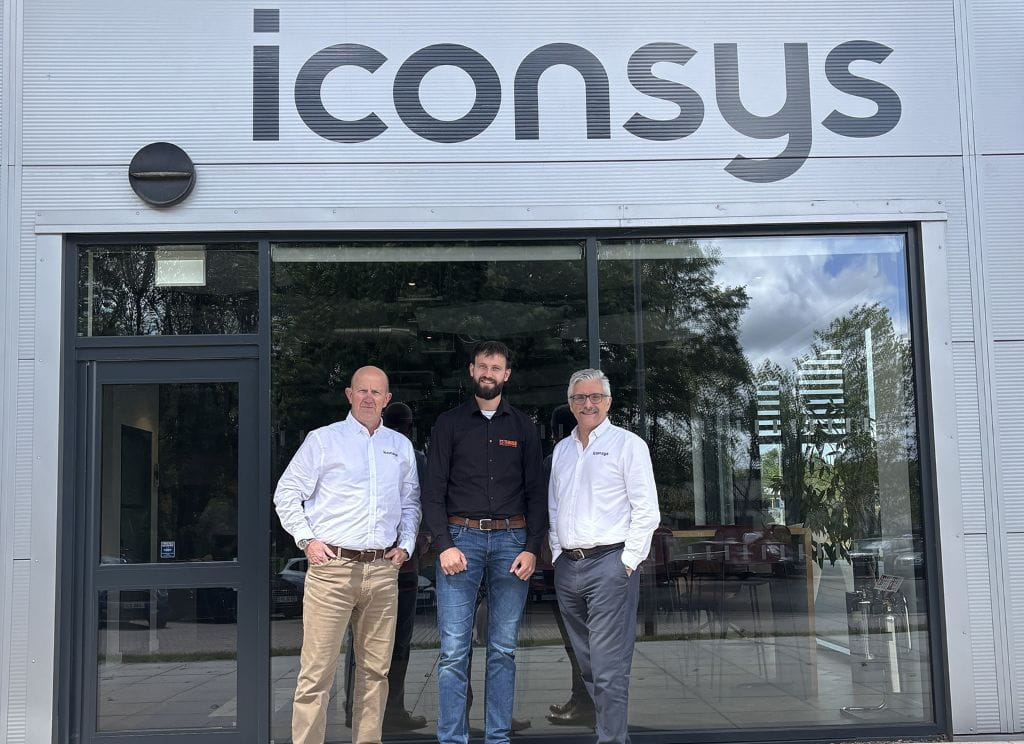
Enginuity and the Confederation of British Metalforming have signed a memorandum of understanding covering workforce development, apprenticeships, employer engagement, and manufacturing skills policy.
The partnership will connect Enginuity’s labour market analysis and skills programmes with CBM’s network of approximately 200 companies operating across metalforming and associated engineering activities. Direct employer evidence will be used to identify capability gaps and shape training provision.
Metalforming includes forging, pressing, rolling, casting, tube manufacture, fastener production, heat treatment, and specialist fabrication, with companies supplying automotive, aerospace, construction, defence, energy, rail, and general engineering customers.
Many of those businesses are small or medium sized manufacturers with limited internal training capacity. Recruiting apprentices, navigating funding rules, selecting providers, and releasing experienced employees to supervise new entrants can impose a disproportionate burden on smaller operations.
Through closer coordination around apprenticeship standards and occupational requirements, the organisations intend to make training more responsive to current production needs. They will also combine evidence from manufacturers when engaging with policymakers on recruitment, investment, technology adoption, and workforce planning.
Technical requirements within metalforming are becoming broader. Process knowledge remains essential across tooling, material behaviour, tolerances, lubrication, heat treatment, inspection, and safe machine operation, but employees are increasingly expected to work with automated handling, machine vision, sensors, digital records, simulation, and connected equipment.
That combination creates a difficult training balance because new entrants need enough practical understanding to recognise how a process behaves physically, while experienced employees may require additional digital and analytical skills. Separating those groups weakens the transfer of knowledge between established production practice and newer technology.
Electrification is creating further change within automotive supply chains. Some components associated with internal combustion engines are declining, while demand is growing for battery enclosures, lightweight structures, electrical steels, thermal systems, and power electronics assemblies.
Suppliers must decide whether to retrain existing employees, recruit specialists, or invest in processes beyond their traditional capability. Those choices often need to be made before a new customer programme has reached stable production, increasing the risk attached to both hiring and equipment investment.
Defence, aerospace, and energy contracts bring a different set of workforce demands. They can provide long-term work, but suppliers need documented competence, inspection capability, controlled processes, and sufficient supervisory capacity before they can enter regulated programmes.
A shortage of experienced quality engineers, welders, metallurgists, maintenance technicians, or production engineers can prevent a company from accepting work even when machinery is available. Skills constraints therefore affect the utilisation of existing capital as well as the decision to invest in new equipment.
Aggregating demand across several businesses can make specialist provision commercially viable. One manufacturer may need only a small number of learners in a particular discipline, but the requirement becomes more attractive to a provider when several companies identify the same gap.
Delivery will need to extend beyond broad national frameworks. Manufacturers require accessible short courses, reliable regional providers, suitable apprenticeship standards, and support for experienced employees who supervise workplace learning while continuing to meet production targets.
Workforce data must also distinguish between general recruitment pressure and shortages tied to particular processes or locations. A national pool of engineering applicants offers little assistance to a manufacturer seeking a press tool designer, metallurgist, or maintenance technician within commuting distance of a specific plant.
Retention carries equal weight because manufacturing competes with utilities, infrastructure, construction, digital technology, and other industries for many of the same skills. Pay, shifts, progression, management quality, equipment condition, and the availability of varied technical work all influence whether trained employees remain.
The agreement gives CBM members a route to shape Enginuity’s work using current operating evidence, while Enginuity can apply greater scale and policy reach to problems that individual manufacturers cannot solve independently.
It also creates an opportunity to connect workforce planning more closely with capital investment. Identifying training requirements before new machinery is installed gives companies more time to prepare operators, maintenance staff, quality teams, and production engineers rather than discovering capability gaps after commissioning.
Manufacturing skills programmes are ultimately judged by whether companies can recruit, train, and retain the people needed to run increasingly automated processes without losing the practical knowledge on which product quality still depends.