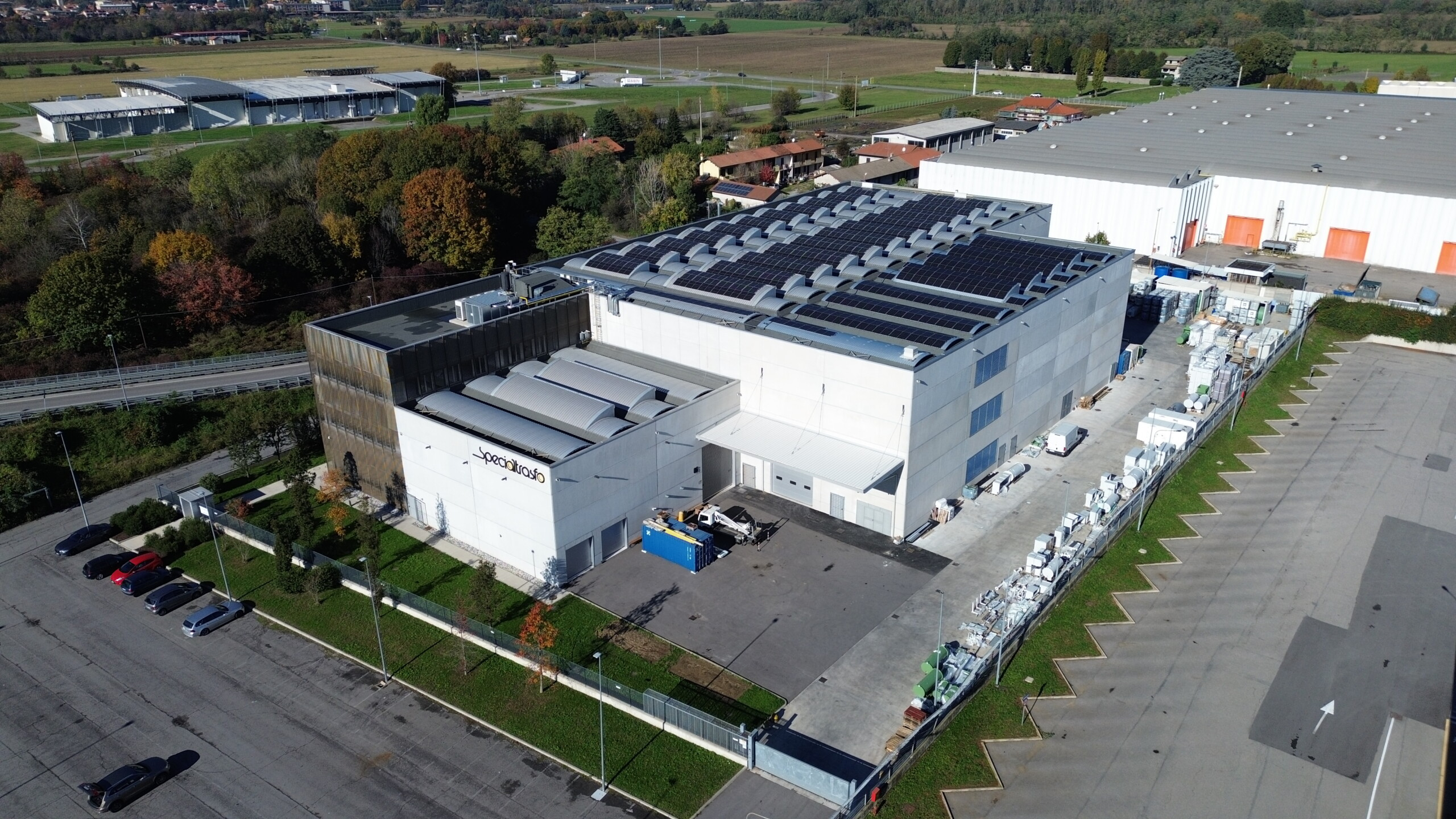
ABB has completed its acquisition of Specialtrasfo, an Italian manufacturer of specialised medium-voltage transformers used in industrial power conversion and other demanding electrical applications.
The transaction adds three production sites in Italy and more than 130 employees to ABB’s Motion business. Specialtrasfo generated approximately €80 million in revenue during 2025, around half of which came through an existing supply relationship with ABB.
Financial terms have not been disclosed. Following completion of the deal announced in May, Specialtrasfo will become part of ABB Motion’s High Power division while continuing to supply its established external customers.
The company manufactures converter and rectifier transformers for systems in which electrical power must be adapted to suit large drives, electrochemical processes, metals production, mining, marine equipment, offshore installations, and other high-load industrial applications.
Unlike standard distribution equipment, these transformers operate alongside power electronics that can generate harmonics and rapidly changing electrical loads. Designs have to account for insulation stress, thermal performance, mechanical forces, cooling, duty cycles, and the operating characteristics of the connected converter or rectifier.
ABB has already integrated Specialtrasfo products with motors, drives, switchgear, generators, and packaged electrical systems. Bringing the design and manufacture of the transformer into the group should allow more of those interfaces to be developed and tested as a complete electrical train.
A transformer specified alongside the drive, motor, and switchgear can be matched more closely to the application’s voltage, harmonic, cooling, and protection requirements. That reduces the amount of interface engineering required between suppliers and lowers the risk that an incompatibility appears during commissioning.
Specialtrasfo will retain its external customer base, preserving a route for equipment manufacturers and engineering contractors that require its transformer capability without purchasing a complete ABB system. The arrangement also prevents the acquisition from becoming solely an internal capacity transfer.
Demand for specialised medium-voltage equipment is rising as industrial plants electrify larger mechanical and thermal loads. Compressors, pumps, rolling mills, electrolysers, furnaces, marine propulsion, and processing systems can all require electrical arrangements that cannot be assembled economically from standard products.
Transformer capacity has consequently become a constraint within parts of the energy and industrial equipment market. Factories rely on specialised winding, insulation, assembly, drying, impregnation, and test processes that cannot be expanded at the same pace as demand for electrical infrastructure.
Additional floor space is only part of the requirement. Production depends on electrical steel, copper or aluminium conductors, insulation materials, specialist engineers, skilled winders, test equipment, and supply chains capable of maintaining quality over long project periods.
European manufacturers are responding through acquisitions and capital investment. Siemens has committed €300 million to expand switchgear production in Germany, reflecting demand from data centres, renewable generation, transport, grids, and industrial electrification.
Custom transformer work remains difficult to standardise completely because each installation may involve a different voltage, enclosure, cooling method, duty cycle, footprint, or environmental condition. Platform designs and digital engineering can shorten development, but specialised industrial processes still require application-specific calculations and testing.
ABB’s ownership should allow greater use of common components, modelling tools, and manufacturing systems while preserving the engineering required for converter and rectifier applications. The group may also connect transformer operating data more closely with information from drives, motors, and switchgear.
Condition monitoring is gaining importance as operators seek to extend asset life and prevent unplanned outages. Temperature, load, insulation condition, vibration, and cooling performance can indicate deterioration before a failure interrupts production.
When transformer information is analysed alongside motor and converter data, engineers can identify whether an abnormal condition originates in the electrical equipment or in the process being driven. That supports more targeted maintenance than servicing each component on an isolated schedule.
The acquisition therefore expands ABB’s service opportunity as well as its production base. Responsibility for a larger share of the electrical train allows the company to provide diagnostics and lifecycle support across interfaces that would otherwise sit between several suppliers.
Customers will still need equipment choice and interoperable systems, particularly where large plants contain assets from several manufacturers. Continued external supply from Specialtrasfo should help retain that flexibility while ABB integrates the Italian operation into its broader portfolio.
With electrical infrastructure demand rising and lead times remaining difficult across parts of the market, the acquired sites give ABB additional control over a specialised manufacturing capability that is expensive to recreate. The value will lie in maintaining Specialtrasfo’s application expertise while connecting it with ABB’s larger engineering, production, and service network.