Siemens and FuelCell Energy have signed a memorandum of understanding to develop integrated fuel cell power projects with capacities exceeding 100MW.
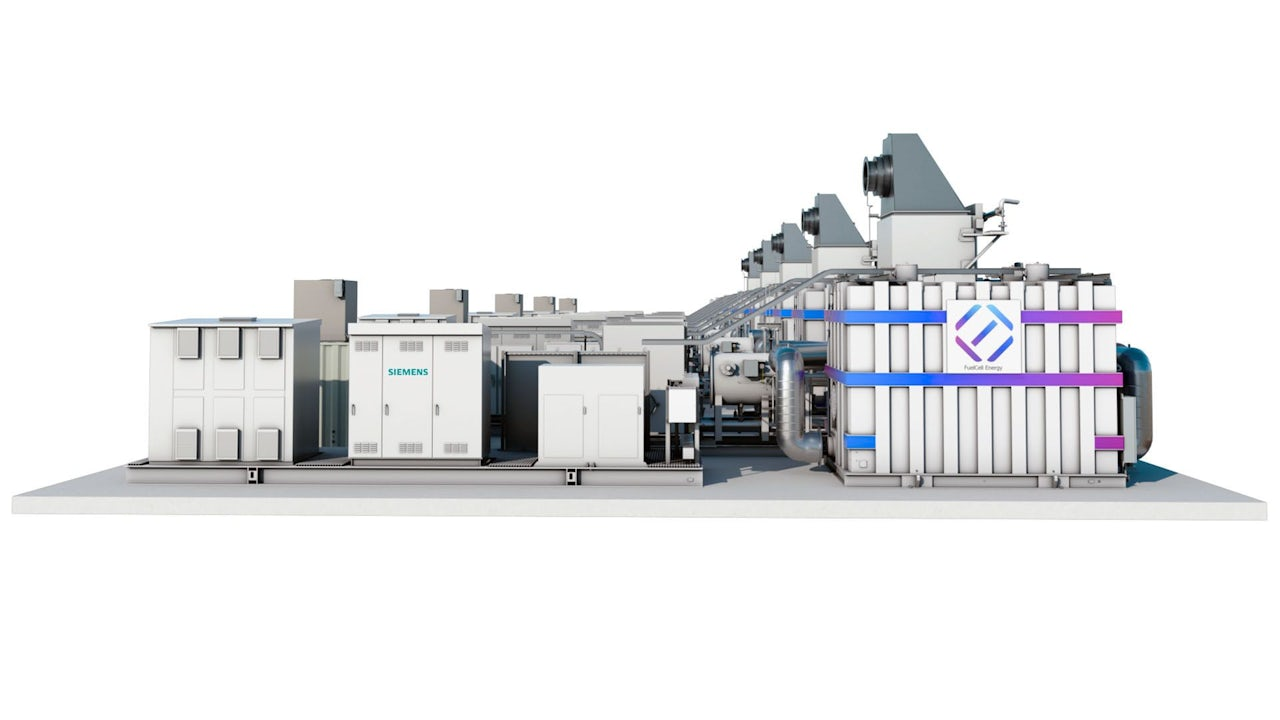
The companies intend to combine FuelCell Energy’s generation technology with Siemens electrical balance of plant engineering, medium-voltage equipment, battery storage, microgrid controls, and project integration capability.
Initial work will cover joint engineering, pilot developments, and the identification of applications that can be transferred into larger commercial installations. Proposed configurations include modular electrical systems and medium-voltage direct-current architectures alongside more conventional alternating-current infrastructure.
Siemens will design and supply the electrical equipment needed to connect, control, protect, and distribute the output from the fuel cell plant. Depending on the project, that scope may include transformers, switchgear, power conversion, protection systems, cabling, storage interfaces, and controls.
FuelCell Energy brings an installed generation base approaching 1GW. Its systems are intended to produce continuous local power, distinguishing them from intermittent renewable sources and making them applicable to industrial sites, data centres, utilities, campuses, and infrastructure requiring firm electrical output.
A project above 100MW moves the technology into a capacity range comparable with large manufacturing complexes, major data centre campuses, and utility generation assets. Building at that scale requires more than replicating a small module across a larger site.
Electrical collection systems, fuel supply, water and heat management, maintenance access, redundancy, protection, site layout, and grid connection all have to be engineered around the customer’s load profile. Equipment must also remain serviceable without removing an excessive share of the plant from operation.
Battery storage could absorb rapid fluctuations in demand that are less suited to the steady operating characteristics of a fuel cell installation. Microgrid controls would then coordinate the generation units, storage, public network connection, and critical loads while maintaining voltage, frequency, and power quality.
Power-intensive developments are increasingly seeking on-site generation as grid connection queues lengthen and available capacity becomes constrained. Data centres are among the most prominent customers, but semiconductor plants, advanced manufacturing facilities, logistics campuses, and electrified process operations face similar limitations.
Distributed generation can bring capacity into operation before a complete grid reinforcement is available, while also providing resilience where a short interruption would damage production, data, materials, or safety-critical systems.
Large local plants nevertheless create their own infrastructure requirements. Fuel, water, electrical distribution, maintenance facilities, environmental permits, and an operating strategy for interaction with the public network must all be secured.
The carbon performance will depend on the fuel and plant configuration. Fuel cells can convert fuel into electricity efficiently and with lower local pollutant emissions than conventional combustion, but the resulting greenhouse gas profile varies according to whether the feedstock is natural gas, biogas, hydrogen, or another source.
Useful heat recovery can improve total efficiency where a nearby process or district network can absorb the output. Some fuel cell configurations may also produce concentrated carbon dioxide streams that are more straightforward to capture than dilute exhaust from combustion equipment.
Siemens’ role centres on the electrical architecture connecting those elements. The company is increasing its physical equipment capacity through a €300 million expansion of German switchgear production, responding to demand from grid operators, industrial sites, data infrastructure, and renewable projects.
Electrical balance of plant frequently determines how quickly a new energy project can be delivered. Generation equipment may dominate the project description, but transformers, switchgear, protection studies, cabling, controls, and grid interfaces often contain the longest procurement and engineering stages.
Repeatable modular packages could shorten part of that process. When fuel cell blocks, storage, and medium-voltage systems use controlled interfaces, developers can complete more design work in advance and order long-lead equipment before every site detail has been finalised.
Standardisation has limits once local grid codes, site conditions, fuel arrangements, and customer loads are introduced. A data centre with highly stable electrical demand will require a different control and redundancy strategy from a process plant with large motors, furnaces, or intermittent production cycles.
The memorandum does not yet represent a confirmed order for a 100MW installation. Commercial deployment will depend on customer demand, fuel economics, project finance, permitting, site availability, and the ability to obtain electrical equipment within the required schedule.
Siemens and FuelCell Energy will now develop the engineering model and identify initial projects capable of supporting the proposed scale. Their progress will depend on whether modular fuel cell generation and electrical integration can provide firm power faster than conventional network expansion while retaining acceptable cost, efficiency, and fuel security.