Olympus has launched ENDOEYE ULTRA across EMEA markets, expanding its surgical videoscope portfolio for minimally invasive procedures.
The platform combines 4K visualisation with observation modes including infrared, yellow enhancement, and narrow band imaging. Olympus is placing the system within its ENDOEYE line, with emphasis on surgical visualisation, handling, and operating room efficiency.
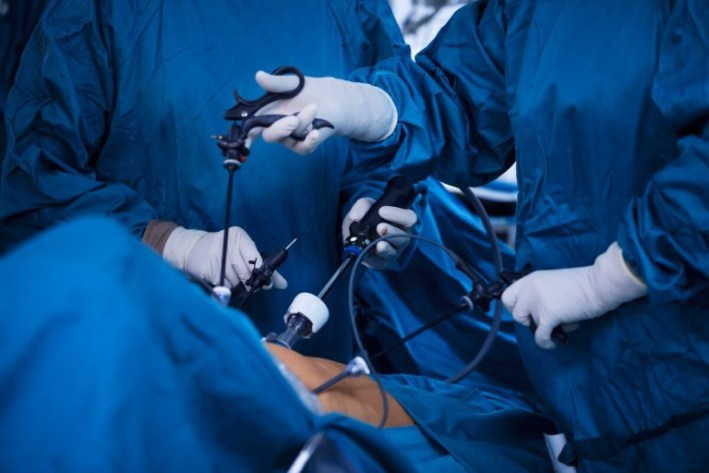
Minimally invasive surgery relies heavily on camera systems, light sources, scopes, displays, image processing, and instrument ergonomics. Surgeons work through small incisions while relying on visual information to identify tissue, navigate anatomy, and operate with precision. Improvements in image quality, handling, and workflow can influence both clinical performance and operating room utilisation.
Modern surgical imaging platforms are no longer judged by resolution alone. They must combine optics, electronics, software, sterilisation compatibility, ergonomic design, digital integration, and service reliability. A videoscope that performs well in the operating room has to work as part of a wider system, including processors, monitors, recording tools, light sources, surgical instruments, and hospital maintenance routines.
Workflow efficiency remains a strong driver for hospitals. Operating rooms are expensive clinical environments, and providers are under pressure to manage procedure volumes, staff capacity, room turnaround, equipment availability, and capital budgets. Imaging equipment that reduces handling friction, supports clearer visualisation, or simplifies equipment set-up can contribute to better use of theatre time when deployed within a well-managed system.
Medical device manufacturers are increasingly developing platforms that combine hardware performance with software-enabled functions. Imaging modes, digital processing, and system connectivity are becoming as important as mechanical design. That creates opportunities for improved clinical support, but it also increases the engineering and validation burden because software, electronics, optics, and usability all interact inside regulated products.
Lifecycle management is becoming more important across medical technology. Hospitals often seek upgrade routes, service continuity, and compatibility with existing infrastructure rather than wholesale replacement at every technology change. That pattern can be seen in adjacent medical imaging, where upgrade routes for existing systems are being used to extend capability while protecting earlier capital investment.
Surgical videoscopes sit within a demanding manufacturing category. Products must meet strict requirements for optical performance, cleanability, electrical reliability, software control, material compatibility, documentation, and regulatory approval. Small changes in weight, cable movement, illumination, or image processing can affect clinical use, but each change also carries design control, testing, and production implications.
Regulatory expectations remain high because these devices operate directly inside surgical procedures. Manufacturers need quality systems that can control hardware, software, materials, electronics, labelling, and post-market surveillance across multiple jurisdictions. Product support continues after launch through service, feedback, updates, training, and clinical troubleshooting.
Procurement conditions are also changing. Hospitals increasingly assess capital equipment against clinical value, operational efficiency, service support, and compatibility. A higher specification device that adds complexity can be harder to justify than a system that improves visualisation while fitting cleanly into established workflows.
ENDOYE ULTRA adds to a medtech direction in which precision engineering, digital imaging, and clinical workflow are becoming inseparable. Better surgical visualisation is valuable, but its full effect depends on reliability, usability, integration, and support. The operating room is a technical environment, and devices that succeed there must improve both what clinicians see and how the system behaves around them.